Horse Racing Betting Odds at Cork (Mallow): How to Read the Prices, SP vs Early Price, and Each-Way Explained
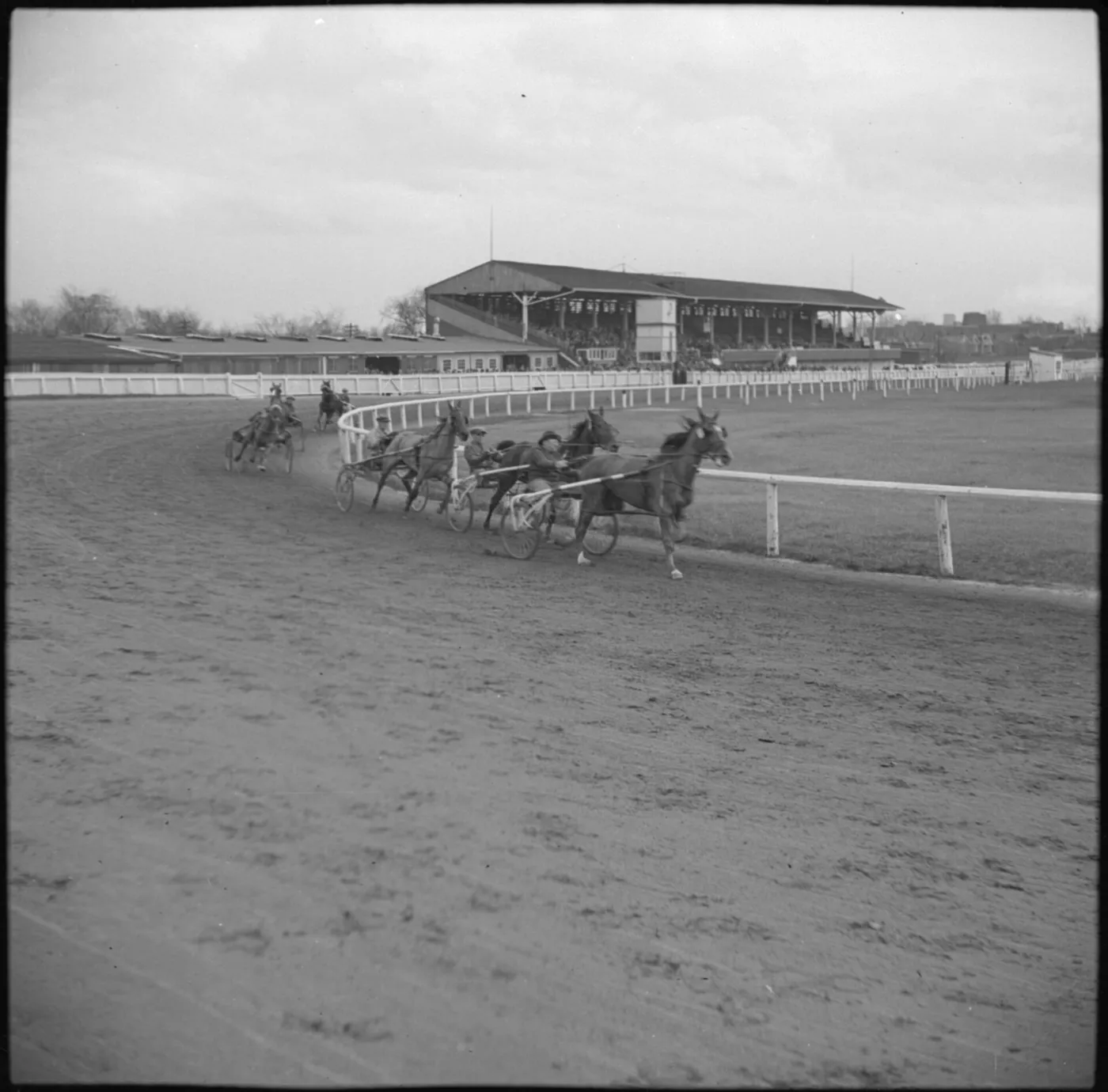
Cork Racecourse, out in Mallow, hosts both flat and National Hunt racing through much of the year, from big Easter fixtures to quiet midweek evenings. Whether you're heading down to the track or betting from your couch in Douglas, understanding how the odds work will make you a lot better informed. This guide explains how racing odds at Cork are formed, how to read them, and what to watch out for.
18+ only. Any prices below are illustrative, not real odds for any race. Cloudbet, which we link to, is licensed in Curaçao and is not licensed by the Gambling Regulatory Authority of Ireland (GRAI). Irish gambling law changed in 2026; read our Irish law guide.
18+. Crypto deposits. Cloudbet is licensed in Curaçao and is NOT licensed by the GRAI. Irish gambling law changed in 2026: only GRAI-licensed operators may lawfully take bets from Irish customers. Ad: we may earn a commission. Bet only what you can afford to lose.
About Cork Racecourse
Cork Racecourse is in Mallow, Co. Cork, roughly half an hour or so north of the city. It's a right-handed track that stages flat racing and jump racing, and the fixture list is published by Horse Racing Ireland (HRI). Its meetings range from big-crowd festivals to low-key evening cards. Always check the HRI fixture list and the racecourse website for current dates, as fixtures can be moved or abandoned because of the weather.
How to read racing odds
Fractional odds
Irish bookmakers, especially on course, mostly show fractional odds. 5/1 means you win €5 for every €1 staked, plus your stake back. 4/6 means you win €4 for every €6 staked.
Decimal odds
Online and crypto sites, such as Cloudbet, use decimal odds. Decimal odds include your stake: 6.00 is the same as 5/1, and 1.67 is roughly 4/6.
| Fractional | Decimal | Implied chance | €10 returns |
|---|---|---|---|
| 4/6 | 1.67 | 60% | €16.67 |
| Evens | 2.00 | 50% | €20 |
| 2/1 | 3.00 | 33% | €30 |
| 5/1 | 6.00 | 17% | €60 |
| 10/1 | 11.00 | 9% | €110 |
| 33/1 | 34.00 | 3% | €340 |
Implied probability and the overround
Convert every horse's price into an implied chance (1 ÷ decimal odds) and add them up. In a fair book, that would be exactly 100%. In reality, it's always more, often well over 110% or 120% in big fields. That excess is called the "overround", and it's the bookmaker's built-in margin. The bigger the field, the bigger the overround tends to be.
Where racing odds come from
Early prices and ante-post
Bookmakers usually price up a race the evening before or on the morning of the race. These are often called "early prices". For big races, there may be "ante-post" prices days or weeks in advance. Ante-post bets typically lose if your horse doesn't run, unless the bookmaker offers a "non-runner no bet" concession.
The on-course betting ring
At Cork, as at other Irish tracks, on-course bookmakers stand in the betting ring and offer prices on each race. Prices move up and down as money comes in. Watching prices shorten or drift in the ring is part of the fun of a day at the races.
Starting Price (SP)
The Starting Price is the official price of each horse at the moment the race starts, calculated from on-course prices. If you take "SP", your bet is settled at whatever that price turns out to be.
Best Odds Guaranteed (BOG)
Some bookmakers offer BOG: if you take an early price and the SP turns out bigger, you're paid at the bigger price. Check whether your bookmaker offers this, and on which races; terms vary and can be withdrawn.
The Tote
The Tote is a pool betting system: all stakes go into a pool, a deduction is taken, and the rest is shared among winning tickets. You don't know the final dividend until after the race. Tote dividends can be higher or lower than the SP, depending on how the pool is bet.
Early price vs SP: which is better?
There's no universal answer. If a horse you like drifts in the market before the off, the SP will be bigger than the early price. If it shortens, the early price was better. Some things to bear in mind:
- Taking an early price locks in your odds. That's useful if you think the horse will be well backed.
- SP is often better for horses that drift or for punters who don't want to monitor the market.
- BOG, where available, gives you the better of the two, but it's a promotion, not a right.
Each-way betting at Cork
An each-way bet is two bets in one: half on the horse to win, half on it to place. The place part pays a fraction of the win odds if the horse finishes within the places. Typical place terms (check your bookmaker's exact terms):
| Runners | Race type | Places paid | Fraction |
|---|---|---|---|
| 5–7 | Any | 2 | 1/4 |
| 8+ | Non-handicap | 3 | 1/5 |
| 12–15 | Handicap | 3 | 1/4 |
| 16+ | Handicap | 4 | 1/4 |
Each-way example (illustrative)
You bet €5 each-way (€10 total) on a horse at 10/1 in a 16-runner handicap, with four places at 1/4 odds.
- If it wins: the win part returns €55 (€5 × 10 + €5), and the place part returns €5 × 2.5 + €5 = €17.50. Total: €72.50.
- If it finishes 2nd to 4th: the win part loses, and the place part returns €17.50. Total: €17.50 back from €10 staked, a €7.50 profit.
- If it finishes 5th or worse: you lose the €10.
Watch out for non-runners: if horses are withdrawn and the field drops, the place terms can change. A 16-runner handicap that ends up with 15 runners may only pay three places.
What affects the odds at Cork
The going
Ground conditions are reported officially, from firm to heavy. Cork can get very testing ground in winter and after rain. Some horses handle soft ground far better than others, and the market moves when the going changes. Check the going on the morning of racing and again before the race.
Course configuration
Cork is right-handed. Some horses run noticeably better going one way round than the other. Previous course form at Cork can be relevant, but sample sizes for any one horse are small.
Draw (flat races)
In flat races, horses start from numbered stalls. Whether a high or low draw helps depends on the course, the distance and the ground. Look at recent results over the same course and distance, but don't treat one or two meetings as proof.
Trainers and jockeys
The market reacts to which jockey is booked, and to trainer form. Big yards often attract a lot of money, which can shorten their horses' prices beyond what the form justifies.
Market moves
A horse being heavily backed (shortening) can mean people with information fancy it, or simply that a lot of casual money is going on a popular name. A drifting horse isn't necessarily a non-trier. Market moves are information, not guarantees.
A simple approach to a Cork race
- Check the going and any changes.
- Read the race conditions: is it a handicap, a maiden, a novice chase?
- Look at recent form, especially on similar ground and over similar distances.
- Note any course form at Cork or on right-handed tracks.
- Decide what price you'd consider fair for your selection.
- Compare that with early prices, and decide whether to take a price or SP.
- Choose win or each-way, depending on the field size and terms.
- Stake small, and record the bet.
Common mistakes with racing odds
- Thinking short odds mean "safe". Odds-on favourites lose regularly.
- Backing big-priced horses each-way in small fields. With only two places paid at 1/4 odds, the place part often barely covers the stake.
- Ignoring non-runner rules. Ante-post bets usually lose if your horse doesn't run.
- Chasing. Seven or eight races a day makes it easy to bet more and more to win back losses.
- Multiple bets. Doubles, trebles and "Lucky 15s" are fun, but the bookmaker's margin is applied on every leg.
Going to the races at Mallow
If you go to Cork Racecourse in person, a few practical points:
- Bring ID if you look young. On-course bookmakers and the Tote won't take bets from anyone under 18.
- Set your budget at home and bring it in cash, leaving cards behind if that helps you stick to it.
- Watch the betting ring before the first race to get a feel for how prices move.
- Look at the horses in the parade ring. You don't need to be an expert to notice a sweating, edgy horse.
- Arrange a lift or check public transport times; Mallow is reachable by train from Cork and Dublin.
18+. Crypto deposits. Cloudbet is licensed in Curaçao and is NOT licensed by the GRAI. Irish gambling law changed in 2026: only GRAI-licensed operators may lawfully take bets from Irish customers. Ad: we may earn a commission. Bet only what you can afford to lose.
Where Cloudbet fits in
Cloudbet lists horse racing markets on major meetings, using decimal odds and crypto. Coverage of Irish meetings like Cork varies, so check the site on the day. It's licensed in Curaçao and is not licensed by the GRAI, so there's no Irish complaints route and Irish safer-gambling rules don't apply. If you want those protections, use a bookmaker on the GRAI register or bet on course. We never explain how to get around blocks or restrictions.
Working out a fair price yourself
The odds only mean something when you compare them with your own view of a horse's chance. A simple way to do it:
- Write down the horses you think have a real chance, and give each a rough percentage. Make sure your percentages add up to 100%, including a share for "the rest".
- Turn each percentage into a fair decimal price: 100 ÷ percentage. A 20% chance is a fair price of 5.00 (4/1).
- Compare with the bookmaker's price. If you think a horse has a 20% chance and it's 7.00 (6/1), the price looks generous to you. If it's 4.00 (3/1), it looks short.
Your percentages will often be wrong, and that's fine. The point is to stop you backing horses simply because you like the name or the trainer. Over time, if you keep records, you'll see whether your estimates are any good.
Flat vs jumps odds at Cork
Cork races under both codes, and the odds behave a little differently in each:
| Factor | Flat racing | National Hunt (jumps) |
|---|---|---|
| Key variable | Speed, draw, pace | Jumping, stamina, ground |
| Fallers | Not applicable | Fallers and unseated riders add risk |
| Field sizes | Vary widely | Often large in handicap hurdles |
| Ground sensitivity | Matters | Often matters even more in winter |
| Typical season | Spring to autumn | Mainly autumn to spring |
In jump races, the chance of a fall or unseated rider means even well-fancied horses carry extra risk, and odds-on shots in chases can come unstuck at a single fence.
Rule 4 deductions
If a horse is withdrawn late, after the market has formed, bookmakers may apply a "Rule 4" deduction to winning bets on the remaining horses, because the race has become easier to win. The size of the deduction depends on the withdrawn horse's price. For example, if a short-priced favourite is withdrawn at the start, the deduction could be a significant chunk of your winnings. It applies to bets taken at a fixed price before the withdrawal; SP bets are usually unaffected because the SP is formed without the withdrawn horse. Check how your bookmaker applies it.
Dead heats
If two horses finish exactly level for a place, the photo finish declares a dead heat. Your stake is typically split: half is settled as a winner at the full odds and half as a loser. For place bets, dead heats for the final place are treated in a similar way. It's a quirk worth knowing so you don't feel short-changed when it happens.
Forecasts, tricasts and jackpots
Beyond win and each-way, you can bet on:
- Forecast: picking the first two in the correct order.
- Reverse forecast: the first two in either order (two bets).
- Tricast: the first three in the correct order.
- Tote jackpot and placepot: picking winners or placed horses across several races for a pool dividend.
These can pay big, but they're much harder to land and the deductions or margins are significant. Treat them as a bit of fun with small stakes.
Finding information about Cork runners
Good information beats gut feeling. Useful, free or low-cost places to look include:
- Horse Racing Ireland (HRI): official fixtures, entries, declarations and results.
- Racecards in the papers and online: recent form figures, weights, jockeys and trainer comments.
- Race replays: watching how a horse actually ran often tells you more than its finishing position. A horse that was badly hampered and finished sixth might be better than one that won an uncompetitive race.
- Going reports: the official going and any updates on the day.
Be careful with paid "tipping services" and social media accounts promising sure things. Nobody can guarantee results in racing, and anyone claiming they can is someone to avoid.
Evening meetings and smaller cards
Summer evening meetings at Cork are popular social occasions, often with smaller fields and less-exposed horses. With fewer runners, the overround can be lower, but each-way terms are also less generous, and lightly raced horses are harder to assess. It's a good setting to bet small and focus on enjoying the evening, rather than trying to make a big score from races where the information is thin.
Responsible gambling
A day at the races should be a good day out, not a financial headache. Set a limit before you go, don't borrow money to bet, and walk away if you're chasing. If gambling is affecting your life, the Problem Gambling Helpline is free, confidential and open 24/7 on 1800 936 725 (Northern Ireland: 08000 886 725). More on our responsible gambling page.
In short
Racing odds at Cork come from bookmakers' early prices, the on-course ring (which sets the SP) and the Tote. Learn to convert odds into implied chances, understand the overround, know when to take a price or SP, and check each-way terms carefully. The going, the course and market moves all affect prices, but none of them make any horse a sure thing. Bet small and enjoy the racing.
Questions players ask
Where is Cork Racecourse?
In Mallow, Co. Cork, north of Cork city.
What is the SP in horse racing?
The Starting Price: the official price of each horse when the race starts, based on on-course prices.
Is it better to take an early price or SP?
It depends. Early prices lock in your odds; SP can be bigger if the horse drifts. Best Odds Guaranteed, where offered, gives you the better of the two.
How does an each-way bet work?
Half your stake is on the horse to win and half on it to place, with the place part paid at a fraction of the odds.
What is the overround?
The total of all implied chances in a race above 100%, representing the bookmaker's margin.
Is Cloudbet licensed in Ireland?
No. Cloudbet holds a Curaçao licence and is not licensed by the GRAI.
Where can I get help?
The Problem Gambling Helpline, 1800 936 725, free and open 24/7.
18+. Crypto deposits. Cloudbet is licensed in Curaçao and is NOT licensed by the GRAI. Irish gambling law changed in 2026: only GRAI-licensed operators may lawfully take bets from Irish customers. Ad: we may earn a commission. Bet only what you can afford to lose.
If betting is costing you more than money, free and confidential help is there 24 hours a day, 365 days a year: the Problem Gambling Helpline run by Dunlewey Addiction Services for Gambling Care, on 1800 936 725 (from Northern Ireland: 08000 886 725). Source: grai.ie.