Are Online Casinos Legal in Ireland? Where Casino Gaming Stands in 2026 and What Happens Next
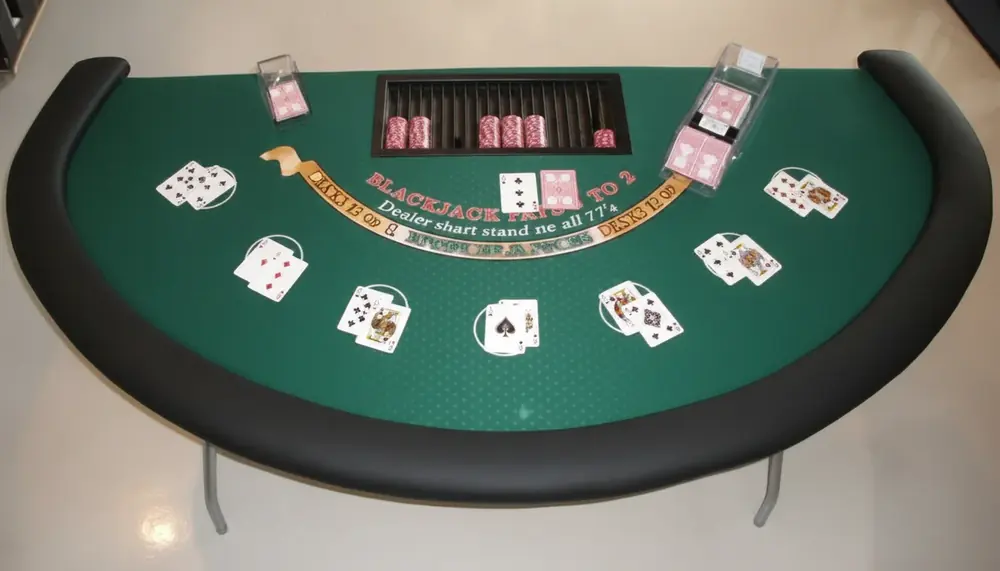
It's one of the most-searched gambling questions in the country, and for years the honest answer was "it's complicated". In 2026, it's still a bit complicated, but much clearer than it was. Ireland now has a regulator, the Gambling Regulatory Authority of Ireland (GRAI), and a licensing system that will cover online casino games. The catch is that casino licences are being phased in after betting licences. Here's the full picture, without spin.
18+ only. This is general information, not legal advice. This page contains no affiliate links. For the wider legal picture on betting, see our Irish law guide.
The short answer
- Under the Gambling Regulation Act 2024, offering online casino games (gaming) to people in Ireland requires a GRAI licence.
- GRAI gaming licences are expected to be introduced in 2027–28, after betting licences, which began applying to remote betting from 1 July 2026.
- Offshore online casinos currently marketing to Irish players are not GRAI-licensed.
- The law's heaviest penalties target operators and promoters, not individual players, but using unlicensed casinos means you have no Irish protections.
- We won't help anyone get around blocks or restrictions.
Casino gaming vs betting: why the distinction matters
Irish law has always treated betting and gaming differently.
- Betting means wagering on the outcome of an event, like a horse race or a football match. Bookmakers have been licensed for decades, and remote bookmakers were brought into the licensing system in 2015 through the Betting (Amendment) Act.
- Gaming means playing a game of chance for money, like slots, roulette or blackjack. Gaming was governed by the Gaming and Lotteries Act 1956, which was written long before online casinos existed.
Under the old law, there was no licence for online casinos at all. Casino-style gaming in person was heavily restricted, which is why Ireland has "private members' clubs" rather than full casinos. Online casinos operated from abroad in a legal grey area.
What the 2024 Act changed
The Gambling Regulation Act 2024 brings betting, gaming and lotteries under one framework, both online and in person. Key features include:
- A single regulator, the GRAI, responsible for licensing, supervision and enforcement.
- Separate licence types for betting, gaming and lotteries, for business-to-consumer and business-to-business activities.
- A national gambling exclusion register for people who want to self-exclude.
- A Social Impact Fund to support research, education and treatment.
- Rules on advertising, sponsorship and promotions, including limits on inducements.
- Bans on gambling by under-18s and strong age-verification requirements.
- Serious penalties for unlicensed operators, with fines up to €20 million or 10% of turnover, and prison terms up to eight years for some offences.
The licensing timeline
| Date | Step |
|---|---|
| October 2024 | Gambling Regulation Act signed into law |
| March 2025 | GRAI formally established |
| 4 February 2026 | Commencement order for key licensing provisions |
| 9 February 2026 | Licence applications opened |
| 1 July 2026 | Remote betting licences began to apply |
| Later 2026 | In-person betting licences |
| 2027–28 | Gaming (including online casino), lottery and other licences expected |
The dates for 2027–28 are based on the phased approach reported so far and could move. Check the GRAI's website for the latest timetable.
So, what about online casinos right now?
As of October 2026:
- No offshore online casino holds a GRAI gaming licence, because gaming licences haven't been rolled out yet.
- Some Irish-facing bookmakers offer casino games alongside their betting, under arrangements tied to the transition. How their casino products fit in during the changeover is a matter for the GRAI and the operators; check the GRAI register and each operator's own information.
- Offshore casinos holding foreign licences (such as Curaçao) are not authorised under Irish law, and the GRAI has warned about the promotion of unlicensed operators.
We're careful here: we won't tell you that playing at an offshore casino is "legal". The honest description is that offshore casinos are not licensed in Ireland, the new law expects operators to be licensed, and players using them lose Irish protections.
Is it illegal for me to play?
The Act is aimed mainly at those who provide or promote gambling without a licence. Historically, individual players in Ireland haven't been prosecuted for playing at offshore online casinos, and the new Act's penalties focus on operators. But we can't promise how the law will be applied in future, and "not targeted" isn't the same as "protected". If you need certainty for your situation, talk to a solicitor.
What you give up at an unlicensed casino
- No Irish complaints route. If a casino refuses a withdrawal, you can't go to the GRAI.
- No Irish game-testing rules. You rely on the foreign regulator or the casino's own claims.
- No link to the national exclusion register once it's live.
- No Irish advertising and inducement rules on bonuses.
- Limited payment protection, especially with crypto.
- Possible blocking of sites or payments.
Land-based casinos and private members' clubs
Ireland has never had large Las Vegas-style casinos. Instead, gaming happened in private members' clubs, operating in a legal grey area under older laws. The 2024 Act brings in-person gaming under the GRAI's licensing too, with specific rules about premises, opening hours, machines and stakes. Again, the details roll out over time, so check the GRAI's guidance.
Gaming machines and arcades
Slot-style gaming machines in arcades and amusement centres were also regulated under older laws, with a licensing system involving local authorities. The new Act changes how gaming machines are licensed, with limits on stakes and prizes. If you're curious about local arcades, the GRAI's guidance is the place to look.
Online casino tax and winnings
Gambling winnings are generally not subject to income tax for individuals in Ireland. Operators pay betting duty and other levies. If you're paid in crypto, though, gains or losses on the crypto itself can be relevant for Capital Gains Tax. Keep records, and get advice if amounts are significant.
How to stay safe in the meantime
- Check the GRAI register before signing up anywhere.
- Be wary of offshore casinos with huge bonuses and Irish-targeted ads.
- Never share your ID with a site you can't verify.
- Don't try to get around blocks, whether on websites or bank payments.
- Use bank gambling blocks and blocking apps if you want to cut back.
- Keep spending visible: set limits in euro and track them.
How to recognise a reputable casino once licensing arrives
- It's listed on the GRAI's public register.
- It shows its licence number and company details clearly.
- It offers deposit limits, time-outs and self-exclusion.
- Its terms are clear, in plain English, with fair bonus terms.
- It has an Irish complaints process.
How Ireland got here: a longer history
To understand why online casinos were in a grey area for so long, it helps to know how old the laws were.
The Gaming and Lotteries Act 1956
This Act regulated gaming and lotteries in a world of fairground stalls, local raffles and slot machines in amusement halls. It broadly prohibited gaming where the house had an advantage, with exceptions, and allowed limited gaming machines under local permits. It said nothing about the internet, for obvious reasons.
Decades of pressure for reform
From the 2000s onwards, as online gambling grew, governments commissioned reviews. A casino regulation committee reported in 2008, and in 2013 the Government published the General Scheme of a Gambling Control Bill, proposing a single regulator and licensing system. Progress stalled for years. An interdepartmental working group revisited the issue, and a new Gambling Regulation Bill was published in 2022. It went through the Oireachtas and was signed into law in October 2024.
Why it took so long
Gambling regulation is politically and practically complicated: balancing a large betting industry and jobs, horse racing funding, charity lotteries, problem-gambling concerns and EU law. Setting up a regulator from scratch also takes time, which is partly why the licensing system is being phased in.
What the GRAI can do
The GRAI has a wide set of powers under the Act. Broadly, it can:
- Grant, refuse, suspend and revoke licences.
- Set conditions on licences, including safer-gambling requirements.
- Investigate operators and carry out inspections.
- Impose administrative sanctions, including large fines.
- Take action against unlicensed operators and those who promote them, including seeking measures to restrict access and payments, through the procedures set out in the Act.
- Maintain the national gambling exclusion register.
- Manage the Social Impact Fund.
How these powers are used in practice will become clearer as the regime beds in.
Advertising and promotions under the new rules
One of the biggest changes for players will be what you see in ads and offers. The Act includes:
- A watershed restricting gambling ads on TV, radio and on-demand services during the day, broadly from 5:30am to 9pm.
- Restrictions on advertising aimed at or appealing to children.
- Restrictions on inducements, such as certain free bets and bonuses designed to encourage people to gamble more.
- Restrictions on sponsorship, particularly around events aimed at children.
- Requirements for safer-gambling messaging in ads.
The GRAI will issue more detailed codes and guidance. In short, licensed operators will face much tighter rules on how they market to you than offshore casinos do now. Google also requires GRAI licences for gambling ads aimed at Ireland from 1 September 2026.
The national gambling exclusion register
The Act provides for a national register where people can choose to exclude themselves from all licensed gambling operators at once, rather than having to self-exclude from each site separately. Licensed operators will have to check it. This is a big step for people trying to stop gambling. Offshore casinos won't be connected to it, which is one of the most important reasons to be wary of unlicensed sites if you've ever struggled with gambling.
How other countries handle online casinos
Ireland is late to this, and it has borrowed ideas from elsewhere:
| Country | Approach |
|---|---|
| Great Britain | Online casinos licensed by the Gambling Commission under the Gambling Act 2005, with strict rules on affordability, advertising and game design. |
| Malta | A long-standing licensing hub for operators serving many countries. |
| Sweden | Moved from a state monopoly to a licensing system in 2019. |
| Netherlands | Opened a licensed online market in 2021, with strict advertising rules added later. |
| Denmark, Spain, Italy | Long-running national licensing systems for online casinos. |
The common thread across Europe is that each country licenses operators for its own residents. The EU allows member states to restrict gambling services for public-interest reasons such as consumer protection, as long as the rules are consistent and proportionate. A licence in one country doesn't automatically let an operator serve another.
Northern Ireland is different
The Republic's Act doesn't apply in Northern Ireland, which has its own gambling legislation, separate from Great Britain's. The UK Gambling Commission's online licences cover remote gambling with customers in Great Britain, and the legal position for online gambling in Northern Ireland has its own quirks. If you live or spend time in both jurisdictions, the rules that apply depend on where you are.
Casino game types, explained briefly
| Game | How it works | House edge (typical) |
|---|---|---|
| Slots | Random spins with set payouts; RTP shown per game | Varies; often 3–6% |
| Roulette | Bet on where the ball lands | About 2.7% (single zero) |
| Blackjack | Beat the dealer's hand without going over 21 | Often under 1% with basic strategy |
| Baccarat | Bet on banker, player or tie | About 1.06% on banker |
| Live dealer games | Real dealers streamed online | Same as the underlying game |
| Game shows | Wheel-based or bonus-round entertainment games | Often higher |
Whatever the game, the house edge means the casino expects to win over time. Licensed regimes typically require games to be independently tested.
Common myths
- "There's no law against online casinos in Ireland." There is now a law requiring licences for gaming; licences just aren't being issued yet.
- "A Curaçao or Malta licence makes it legal here." Foreign licences don't authorise operators under Irish law.
- "If a site accepts Irish players, it must be allowed." Accepting players and being authorised are different things.
- "Players will be arrested." The Act targets operators and promoters. We can't give legal advice, but there's no history of mass prosecution of players.
- "Licensed casinos will be the same as offshore ones." Licensed casinos will face stricter rules on bonuses, ads and safer gambling.
Some real-world scenarios
"I've money in an offshore casino account. What should I do?"
Consider withdrawing it, especially if you're not comfortable with the risks. Keep records of your deposits and withdrawals. If the casino won't pay, raise a written complaint and check whether its foreign regulator has a complaints process.
"My bank declined a payment to a casino."
Banks and card schemes can block payments to gambling merchants, especially unlicensed ones. Don't try to get around it. If you've set up a gambling block yourself, that's it doing its job.
"I saw an online casino ad on social media."
Licensed operators will need to comply with Irish advertising rules. If an ad is for an offshore casino targeting Irish users, be cautious. You can report misleading ads to the platform.
"I play social casino games with no real money."
Free-to-play social games where you can't win real money are treated differently from gambling, though some still sell virtual coins. Watch your spending on in-app purchases.
What to expect from licensed online casinos
When GRAI gaming licences arrive, you should expect licensed online casinos to offer:
- Strong age and identity checks at sign-up.
- Deposit limits, time-outs and self-exclusion tools.
- Connection to the national exclusion register.
- Clear, fair terms, especially on any promotions.
- Tested games with published return-to-player figures.
- An Irish complaints process, with the GRAI as regulator.
- Safer-gambling messaging and interventions if your play looks risky.
Some players may find licensed casinos more restrictive than offshore ones. That's by design: the aim is to reduce harm.
Using the GRAI register, step by step
- Go to the GRAI's official website. Type the address yourself rather than following a link in an ad or email.
- Find the public register of licence holders.
- Search by the operator's company name, which you'll usually find in the casino's terms and conditions or footer.
- Check the licence type: a betting licence isn't the same as a gaming licence.
- Check that the website you're on is listed as a domain the licence covers.
- If you can't find the operator, treat it as unlicensed in Ireland.
Where affiliate sites fit in
Affiliate sites like ours earn commission when readers sign up with operators. The Act and the GRAI's guidance treat promotion of unlicensed operators seriously, and the GRAI warned affiliates about this in September 2026. We've chosen not to include any operator links on this page. Elsewhere on the site, where we mention operators that aren't GRAI-licensed, we say so clearly and explain the risks. If you'd rather not deal with affiliates at all, the GRAI register is a neutral starting point.
Protecting children and young people
Under-18s can't gamble legally in Ireland, and the Act strengthens protections, including stricter age verification and limits on advertising that might appeal to children. Parents can help by:
- Using parental controls and app-store restrictions on devices.
- Keeping an eye on in-game purchases, loot boxes and "skin" gambling in video games, which can introduce gambling-like behaviour.
- Talking openly about how gambling works, including the house edge.
- Not sharing betting or casino accounts with teenagers, even as a joke.
Signs gambling might be becoming a problem
- Spending more time or money than you intended, regularly.
- Chasing losses by playing more.
- Hiding gambling from family or friends.
- Borrowing money, or using money meant for bills, to gamble.
- Feeling anxious, irritable or low when not gambling.
- Gambling to escape problems or stress.
If any of these sound familiar, it's worth talking to someone. Problem gambling is common and treatable, and there's no shame in asking for help.
Betting duty and the money side
Operators in Ireland pay betting duty and other levies. Under the new regime, licensed operators will also contribute to the Social Impact Fund, which supports research, education and treatment for gambling harm. That's another difference from offshore casinos, which contribute nothing to Irish services.
Key terms
- GRAI: the Gambling Regulatory Authority of Ireland, the new regulator.
- Gaming licence: the licence type that will cover casino games.
- Remote: gambling offered online or by phone, rather than in person.
- B2C / B2B: business-to-consumer (operators) and business-to-business (suppliers) licences.
- Exclusion register: the national list of people who have self-excluded from licensed gambling.
- Inducement: an offer, like a free bet or bonus, designed to encourage gambling.
- RTP: return to player, the long-run percentage of stakes a game pays back.
What to watch for in the next two years
- The GRAI's detailed rules and codes on gaming, advertising and safer gambling.
- The opening of gaming licence applications.
- The national exclusion register going live.
- Enforcement action against unlicensed operators and affiliates.
- Rules on in-person gaming, private members' clubs and gaming machines.
We'll update this page as things change, but always check the GRAI's own announcements for the latest position.
Practical questions people ask us
Will Irish bookmakers' casino sections still be available?
That depends on how the GRAI handles the transition for existing operators and on each operator's licence status. If you use a casino section on an Irish bookmaker's site, check that the operator appears on the GRAI register and read any notices they've published about the changeover.
Can I use a casino while on holiday abroad?
Gambling laws apply based on where you are. If you're in another country, that country's rules apply, and many countries have their own licensing systems that block foreign operators. Don't assume a site you can use at home is allowed elsewhere, or the reverse.
Is a "sweepstakes" or "social" casino the same thing?
Some sites operate on a sweepstakes or virtual-currency model popular in the US. How these are treated depends on whether you can win money or money's worth. Don't assume they're outside gambling law; check the terms and the GRAI's guidance.
What about crypto casinos?
The payment method doesn't change the licensing requirement. A crypto casino is still a casino. We cover this in detail in our guide on whether gambling with crypto is legal.
Will online casinos be banned?
No. The Act's approach is to license and regulate online casino gaming, not ban it. Once licences are issued, licensed online casinos should be available to adults in Ireland, subject to the new rules.
A balanced view
Plenty of adults enjoy casino games responsibly, and the new law recognises that by creating a licensing route rather than a ban. At the same time, casino games, especially online slots, are among the forms of gambling most associated with harm, because they're fast, continuous and available around the clock. The new system tries to balance those two things. Until gaming licences are issued, players face a real gap: no licensed option, and offshore sites with no Irish protections. Being aware of that gap is the first step to making a sensible decision for yourself.
Useful places to check
- The GRAI's website: licensing updates, the public register and guidance for the public.
- The Department of Justice: background on the Gambling Regulation Act 2024 and its commencement.
- The Irish Statute Book: the text of the Act itself.
- Revenue: guidance on tax, including crypto-assets.
- The Competition and Consumer Protection Commission (CCPC): general consumer rights information.
- The Problem Gambling Helpline: support for players and families, 24/7.
Primary sources beat any summary, including ours. If something on this page and the GRAI's website disagree, go with the GRAI.
Finally, a reminder that laws can change faster than websites get updated. If you're making a decision that matters, whether about your own play or about running a business in this space, rely on the GRAI and on qualified legal advice rather than on any blog or forum, ours included.
Responsible gambling
Online casino games are fast, always available and easy to play for longer than you intended. If you're worried about how much you play, or someone close to you is, help is free and confidential. Call the Problem Gambling Helpline on 1800 936 725, open 24/7 (Northern Ireland: 08000 886 725). The HSE's helpline, 1800 459 459, can also help with addiction services on weekdays. See our responsible gambling page.
In short
Ireland now has a regulator and a licensing regime that will cover online casinos, but casino licences are expected in 2027–28, after betting licences. Offshore casinos aren't licensed in Ireland, and using them means no Irish protections. If you play, do so with your eyes open, small amounts and firm limits, and keep an eye on the GRAI's register as licensed casino options arrive.
Questions players ask
Are online casinos legal in Ireland in 2026?
Online casino gaming requires a GRAI licence under the Gambling Regulation Act 2024, but GRAI gaming licences are expected in 2027–28. Offshore casinos are not GRAI-licensed.
Can I be prosecuted for playing at an online casino?
The Act mainly targets operators and promoters. We can't give legal advice, but using unlicensed casinos means no Irish protections.
When will online casino licences be available?
Gaming licences are expected to be introduced in 2027–28. Check the GRAI website for updates.
Are casino winnings taxed in Ireland?
Gambling winnings are generally not taxed for individuals. Crypto gains may be subject to Capital Gains Tax.
Are there casinos in Ireland?
There are private members' clubs rather than large casinos. The 2024 Act brings in-person gaming under GRAI licensing.
Where can I get help?
The Problem Gambling Helpline, 1800 936 725, free and open 24/7.
If betting is costing you more than money, free and confidential help is there 24 hours a day, 365 days a year: the Problem Gambling Helpline run by Dunlewey Addiction Services for Gambling Care, on 1800 936 725 (from Northern Ireland: 08000 886 725). Source: grai.ie.