How to Bet on UFC from Ireland: Moneylines, Method of Victory, Round Props and Avoiding the 4am Mistakes
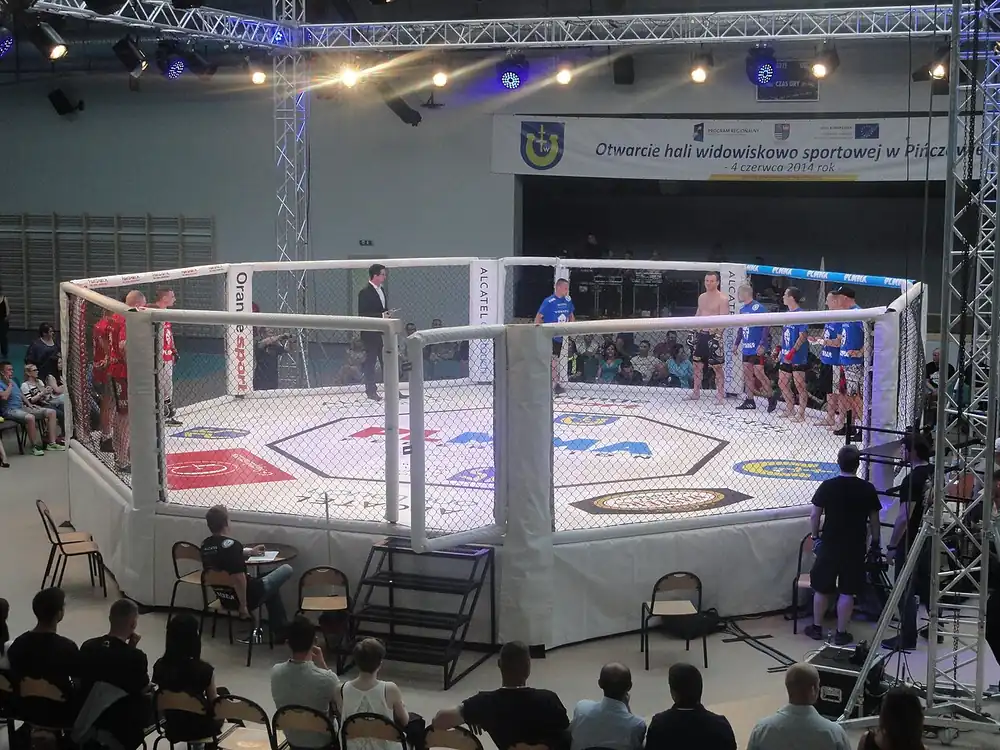
Ireland has had a soft spot for the UFC ever since Conor McGregor put Dublin on the MMA map, and fighters like Ian Garry have kept the interest alive. If you fancy putting a few euro on a fight card, this guide walks you through how UFC betting actually works: what the markets mean, how to read the odds, what to look at before a fight, and the classic mistakes people make at four in the morning with a phone in one hand and a cold cup of tea in the other.
18+ only. Odds on this page are examples to explain the maths, not predictions. The operator we link to, Cloudbet, holds a Curaçao licence and is not licensed in Ireland: it does not hold a licence from the Gambling Regulatory Authority of Ireland (GRAI), and you lose Irish consumer protections if you use it.
18+. Crypto deposits. Cloudbet is licensed in Curaçao and is NOT licensed by the GRAI. Irish gambling law changed in 2026: only GRAI-licensed operators may lawfully take bets from Irish customers. Ad: we may earn a commission. Bet only what you can afford to lose.

The licensing bit first, honestly
Ireland's Gambling Regulation Act 2024 set up the Gambling Regulatory Authority of Ireland (GRAI), and the new regime expects operators who take bets from Irish customers to be licensed. Offshore sites, including Cloudbet with its Curaçao licence, are not licensed in Ireland. In practice that means if you have a dispute over a settled bet, a frozen balance or a closed account, there's no Irish regulator to take your complaint to. You'd be relying on the operator's own terms and its overseas licensing body.
That doesn't make the betting maths any different, and everything below applies to any bookmaker. But you should make that choice knowing what you're giving up.
How a UFC fight can end, and why it matters for your bet
Before you can understand the markets, you need to know the ways a fight finishes:
- KO/TKO: a knockout, or the referee stops the fight because a fighter can't defend themselves. Doctor stoppages (for a bad cut, for example) are usually counted as TKO too.
- Submission: a fighter taps out to a choke or joint lock, or is choked unconscious.
- Decision: the fight goes the full distance and three judges score it. Unanimous, split or majority decisions all count as "decision" in most betting markets.
- Draw: rare in the UFC, but it happens.
- No contest: the fight is ruled void, for example after an accidental illegal blow early on, or an overturned result.
- Disqualification: very rare; how it's settled varies between bookmakers.
Standard UFC fights are three rounds of five minutes. Main events and title fights are five rounds. That difference changes totals and round markets completely, so always check how many rounds a fight is scheduled for.
Reading MMA odds: fractions, decimals and the moneyline
Irish bookies traditionally show fractional odds, while crypto sites and many international books show decimals. American odds (the "moneyline" with plus and minus signs) appear in a lot of UFC coverage because the promotion is US-based. Here's how they line up:
| Fractional | Decimal | American | Implied probability | €10 stake returns |
|---|---|---|---|---|
| 1/4 | 1.25 | -400 | 80.0% | €12.50 |
| 1/2 | 1.50 | -200 | 66.7% | €15.00 |
| 10/11 | 1.91 | -110 | 52.4% | €19.10 |
| 6/4 | 2.50 | +150 | 40.0% | €25.00 |
| 3/1 | 4.00 | +300 | 25.0% | €40.00 |
To turn decimal odds into a probability, divide 1 by the odds. 1 ÷ 2.50 = 0.40, or 40%. Add up the implied probabilities for both fighters and you'll get more than 100%. The extra is the bookmaker's margin. For a typical UFC fight, if the favourite is 1.50 (66.7%) and the underdog 2.60 (38.5%), the total is 105.2%, so the margin is about 5%. On undercard fights and prop markets, it's often higher.
The main UFC betting markets
| Market | What you're betting on | Difficulty |
|---|---|---|
| Fight winner (moneyline) | Who wins, however it ends | Easiest to analyse |
| Method of victory | Who wins and how: KO/TKO, submission or decision | Medium |
| Total rounds (over/under) | Whether the fight lasts past a point, e.g. 1.5 or 2.5 rounds | Medium |
| Goes the distance | Yes if it reaches the judges, no if it finishes early | Medium |
| Round betting | Who wins and in which round | Hard; big prices for a reason |
| Draw | The fight is scored a draw | Very rare, long odds |
| Fight props | Knockdowns, specific finishes, fight of the night | Hard; higher margins |
Fight winner: start here
The moneyline is where most people should start. You pick a fighter, and if they win by any method, you win. Two settlement details catch people out:
- Draws: at many bookmakers, a standard two-way fight winner bet is void if the fight is a draw, and your stake is returned. At others, a three-way market exists where the draw is its own selection, and a draw means fighter bets lose. Check which one you're on.
- No contests and late changes: if a fight is declared a no contest, bets are normally void. If an opponent is replaced, bets on the original matchup are typically void too. If the fight is moved to a different weight class or number of rounds, read the rules, because handling varies.
With heavy favourites, think hard before staking big. At 1/4 (1.25) you're risking €40 to win €10. MMA has more upsets than most sports because a single punch or a scramble can end any fight, and one upset can wipe out several winning bets on favourites.
Method of victory: picking how it ends
Method of victory splits the winner bet into KO/TKO, submission and decision. The prices are higher because you need to be right twice. To think it through:
- Finishing rates matter, but so does the quality of opposition. A fighter with ten first-round knockouts on the regional scene may not carry that power against UFC-level opponents.
- Weight class. Heavyweight fights end by knockout far more often than flyweight fights, which go to decision more often.
- Grappling matchups. A strong wrestler with good top control against a fighter who struggles off their back can mean a submission or a grinding decision.
- Durability. Fighters who've been knocked out recently, or who are getting older in a fast division, can be more vulnerable.
- Five-round fights give more time for a finish, but also for a tired fighter to coast to a decision.
How UFC judges score a fight
If you bet on decisions, you need to understand scoring. The UFC uses the ten-point must system under the unified rules of MMA. Each judge gives the winner of a round 10 points and the loser 9 or fewer. A 10-8 round is given when one fighter dominates heavily, with real damage or overwhelming control. At the end, each judge's scores are added up.
Judges are told to look first at effective striking and grappling, meaning impact and damage, rather than volume alone. Only if that's even do they look at effective aggression, and after that at cage control. In practice:
- A fighter who lands fewer but harder, visibly damaging shots can win a round over one who throws more and lands lighter.
- Takedowns that lead nowhere earn less than takedowns that lead to damage or submission attempts.
- Close rounds are genuinely unpredictable, which is why split decisions happen.
For betting, this means fighters with a "busy but light" style are riskier in close fights than their stats suggest, and fighters who finish rounds strongly can steal them in the judges' eyes.
Weight classes and what they mean for markets
| Division (men) | Limit | Betting tendency |
|---|---|---|
| Flyweight | 125 lb (56.7 kg) | Fast pace, more decisions |
| Bantamweight | 135 lb (61.2 kg) | Technical, mix of finishes and decisions |
| Featherweight | 145 lb (65.8 kg) | Balanced |
| Lightweight | 155 lb (70.3 kg) | Deep division, close fights common |
| Welterweight | 170 lb (77.1 kg) | Balanced, more power |
| Middleweight | 185 lb (83.9 kg) | More knockouts |
| Light heavyweight | 205 lb (93.0 kg) | High finishing rate |
| Heavyweight | 265 lb (120.2 kg) | Highest knockout rate; one punch changes everything |
The women's divisions, from strawweight to bantamweight, have historically produced a higher share of decisions than the men's heavier divisions. These are tendencies, not rules, but they're a sensible starting point when you're looking at totals and method markets.
Total rounds and "goes the distance"
Total rounds lines use half rounds measured in time. In a three-round fight, "over 1.5 rounds" means the fight must last beyond 2 minutes 30 seconds of the second round. A finish at 2:31 of round two is over; a finish at 2:29 is under. This catches people every week, so be clear on it.
"Goes the distance" is simpler: yes if the judges decide it, no if it ends before the final bell. These markets are useful when you have no strong view on who wins, but you do have a view on how the fight will look: two careful counter-strikers, for example, versus two brawlers who've both been knocked down plenty.
Round betting: big prices, small stakes
Round betting asks you to name the winner and the exact round they win in, or sometimes just the round the fight ends. Prices of 8.00 to 20.00 and higher are common. It's fun, and the occasional winner feels brilliant, but the margins are high and your hit rate will be low. If you play these, use tiny stakes and treat them as entertainment.
What to look at before every fight
- Weigh-ins. Missed weight or a fighter who looks drained on the scales the day before can signal a bad weight cut, which can affect cardio and durability.
- Short-notice replacements. A fighter stepping in with a week's notice may not have done a full camp. That can work both ways, but it adds uncertainty.
- Layoffs. Long breaks after injury can mean ring rust.
- Styles. The old saying "styles make fights" is true. Look at striking versus wrestling, reach, stance and how each fighter handles pressure.
- Altitude and travel. Events in high-altitude venues or far-off time zones can affect fighters, especially cardio-dependent ones.
- Judging tendencies. In close fights, aggression and control time tend to be rewarded. A fighter who wins exchanges but spends long periods on their back may lose rounds.
- Market movement. Big price moves late in the week can mean injury news or sharp money. They don't always mean you should follow, but they're worth noticing.
A worked example: thinking through one fight
Let's take a made-up lightweight fight, three rounds. Fighter A is a powerful striker priced at 1.55 (about 64.5%). Fighter B is a strong wrestler priced at 2.45 (about 40.8%). Total rounds: 2.5, with over at 1.80 and under at 2.00.
- Who controls where the fight happens? B has good takedowns and A's takedown defence stats are only average. That suggests B can take the fight to the mat in at least some rounds.
- What happens on the feet? A hits harder, and B has been dropped before. If B's takedowns fail, A has a real knockout chance.
- Cardio? A has faded in third rounds before; B tends to get stronger. That's a point for B in a decision.
- Your estimate. Maybe you rate it closer to 55/45 than the market's roughly 61/39 after the margin is removed. If so, B at 2.45 could be value, while A at 1.55 looks short.
- Market choice. If you think B wins mostly by grinding, "B by decision" may offer a better price than B's moneyline, but it loses if B wins by a late submission. Weigh that trade-off.
None of this guarantees anything. The point is the process: think about how the fight is likely to unfold, form your own estimate, compare it with the price, and only bet when there's a meaningful gap.
18+. Crypto deposits. Cloudbet is licensed in Curaçao and is NOT licensed by the GRAI. Irish gambling law changed in 2026: only GRAI-licensed operators may lawfully take bets from Irish customers. Ad: we may earn a commission. Bet only what you can afford to lose.
Underdogs in MMA
MMA is one of the sports where underdogs win more often than casual fans expect, because there are so many ways to win and lose: a single punch, a scramble that ends in a choke, a cut, or a fighter who simply has an off night. That doesn't mean you should back every underdog. It means you shouldn't treat short-priced favourites as safe, and that a well-researched underdog bet at a fair price is a normal part of betting fights. Small stakes on underdogs you've genuinely analysed are a lot healthier than big stakes on favourites you think "can't lose".
UFC on Irish time: the 4am problem
Most big UFC cards are held in the United States. When the main card starts in Las Vegas, it's usually the small hours in Ireland. Main events often begin somewhere around 4am to 5am Irish time, depending on the card and the time of year. Events in Europe, Abu Dhabi or Australia fall at very different times.
| Event location | Rough main event time in Ireland |
|---|---|
| Las Vegas or US West Coast | Early hours of Sunday morning |
| US East Coast | Small hours of Sunday morning, a bit earlier |
| UK and Europe | Saturday late evening |
| Abu Dhabi and Middle East | Saturday evening |
| Australia and Asia | Saturday or Sunday morning |
Here's the honest advice: place your pre-fight bets before you go to bed or before the card starts, and don't add live bets at 4am. Tiredness, a few drinks and a losing undercard are the perfect recipe for chasing losses. If you're staying up for the fight, set your limit at teatime, not at three in the morning.
Live betting during a fight
Many bookmakers offer in-play UFC markets that move between and even during rounds. A fighter who gets dropped in round one can drift from 1.40 to 3.00 in seconds. It looks like value. Sometimes it is; often it isn't. Remember:
- Your stream is delayed, so the market often reacts before you've seen the moment.
- Markets are frequently suspended during exchanges and reopen between rounds at worse prices.
- Fighters recover from bad rounds all the time, and they also fade badly in later rounds. Neither is guaranteed.
If you do bet live, decide a fixed amount before the fight begins, and once it's used, it's used.
Parlays and accumulators on fight cards
Combining several favourites from one card into an accumulator is hugely popular. Five favourites at 1.40 each gives combined odds of about 5.38. But even if each favourite wins 70% of the time, the chance of all five winning is about 17%. One upset kills the whole bet. Two-fold accumulators are reasonable fun; long multi-fight accas are lottery tickets with extra steps.
| Favourites in the acca (each 70%) | Chance all win |
|---|---|
| 2 | 49% |
| 3 | 34% |
| 5 | 17% |
| 8 | 6% |
Shopping for prices
Different bookmakers price the same fight differently, sometimes by a lot on undercard bouts and prop markets. If one book has your fighter at 2.30 and another at 2.55, that's a big difference over hundreds of bets. Before you place anything, compare a couple of prices. Also check each book's settlement rules for draws, no contests and replacements, because the cheapest-looking price isn't always the best value once you account for how a bet settles. With an operator that isn't licensed in Ireland, also factor in that you won't have an Irish regulator behind you if a settlement is disputed.
Betting on Irish fighters
When an Irish fighter is on a card, a lot of Irish money goes their way, and prices can shorten because of it. Backing your own is part of the fun, but be honest with yourself about whether you're betting value or loyalty. One useful trick: if you want to support an Irish fighter, keep the stake small and look at markets like "goes the distance" or method of victory that make you think about the fight itself, rather than just piling on the moneyline.
Staking in euro: keep it boring
Set a monthly gambling budget that has nothing to do with rent, bills, groceries or the car. Stake 1% to 3% of it per bet. With a €200 monthly budget, that's €2 to €6 a bet. Sounds tiny, and that's the point: MMA is high-variance, and small stakes mean a run of upsets doesn't finish your month.
Keep a simple record of every bet: event, fight, market, odds, stake and result. After fifty bets you'll know whether you actually have an edge in, say, method of victory, or whether you just remember the wins.
Depositing with crypto: the basics
Crypto operators like Cloudbet take deposits in Bitcoin, Ethereum, USDT and other coins. If you go that route:
- Buy through a reputable exchange with an account in your own name.
- Copy the deposit address with the copy button and check the first and last characters.
- Use exactly the network shown next to the address; sending on the wrong network can lose your funds.
- Send a small test first and keep the transaction ID.
- Remember that coins like Bitcoin move in price, so your balance can change even without a bet.
And once more: crypto operators of this kind are not licensed in Ireland, so you won't have Irish regulatory protection.
Doing your homework without paying for tips
You don't need to buy picks. A lot of what serious bettors use is free:
- Official fight statistics, such as significant strikes landed and absorbed per minute, takedown accuracy and defence, and control time. These are published for every UFC fighter.
- Fight footage. Watch at least the last two or three fights of each fighter, not just highlights. Highlights show the good moments; full fights show the habits.
- Camp and coaching news. A fighter changing gyms or coaches can change style, for better or worse.
- Interviews and fight-week media. Not for trash talk, but for injury hints, weight-cut comments and how relaxed each fighter seems.
- Your own records. Over time, your bet log becomes the most useful tool you have, because it shows which markets you're good at.
Be wary of anyone on social media selling "guaranteed" picks or VIP groups. If someone could reliably beat the bookmakers, they wouldn't need your subscription money.
A simple MMA glossary
- Card: the full list of fights at an event, usually split into early prelims, prelims and main card.
- Main event / co-main: the top two fights of the night.
- Pick'em: a fight where both fighters are priced almost the same.
- Dog / underdog: the fighter priced as less likely to win.
- Chalk: the favourite, or betting on favourites in general.
- Line movement: how prices change between opening and fight night.
- Closing line: the final price before the fight starts; beating it consistently is a sign your judgement is good.
- Prop: any market beyond the winner, such as method, round or knockdowns.
Common UFC betting mistakes
- Betting every fight on the card because it's on.
- Misreading half-round totals and losing on a finish at 2:29.
- Ignoring the weigh-ins and late replacements.
- Following "lock of the night" tips from social media accounts that sell picks.
- Assuming a famous name means a sure win. Ageing stars lose to hungrier opponents all the time.
- Chasing losses with live bets in the early hours.
Responsible gambling
If betting on fights stops being fun, if you're hiding it, or you're staking more to win back what you lost, take a break and talk to someone. The Problem Gambling Helpline is free and open 24/7 on 1800 936 725.
My take
UFC betting rewards people who understand how fights end and how markets settle. Start with the fight winner, learn how draws, no contests and half-round totals work, then branch into method of victory or totals once you're comfortable. Do your homework on weigh-ins, styles and late changes, keep stakes small in euro, and place your bets before the 4am main event, not during it. And remember that offshore operators like Cloudbet, with a Curaçao licence, are not licensed in Ireland.
Questions players ask
How do UFC moneyline bets work?
You bet on a fighter to win by any method. If the fight is a draw, two-way markets are often void and stakes returned, but check your bookmaker's rules.
What does over 1.5 rounds mean in UFC betting?
The fight must last beyond 2 minutes 30 seconds of round two. A finish before that is under.
What happens to my bet if a fighter is replaced?
Bets on the original matchup are usually void. Check the bookmaker's rules for weight or round changes.
What time are UFC main events in Ireland?
Cards in the US usually have main events in the early hours of Sunday morning Irish time, often around 4am to 5am.
Is Cloudbet licensed in Ireland?
No. Cloudbet holds a Curaçao licence and is not licensed by the Gambling Regulatory Authority of Ireland.
18+. Crypto deposits. Cloudbet is licensed in Curaçao and is NOT licensed by the GRAI. Irish gambling law changed in 2026: only GRAI-licensed operators may lawfully take bets from Irish customers. Ad: we may earn a commission. Bet only what you can afford to lose.
If betting is costing you more than money, free and confidential help is there 24 hours a day, 365 days a year: the Problem Gambling Helpline run by Dunlewey Addiction Services for Gambling Care, on 1800 936 725 (from Northern Ireland: 08000 886 725). Source: grai.ie.