Cheltenham Betting Tuesday: A Day-One Guide to the Races, Markets and Smart Staking
Welcome bonus for new players + fast crypto payouts. Just helping a brother out.
18+. Crypto deposits. Cloudbet is licensed in Curaçao and is NOT licensed by the GRAI. Irish gambling law changed in 2026: only GRAI-licensed operators may lawfully take bets from Irish customers. Ad: we may earn a commission. Bet only what you can afford to lose.
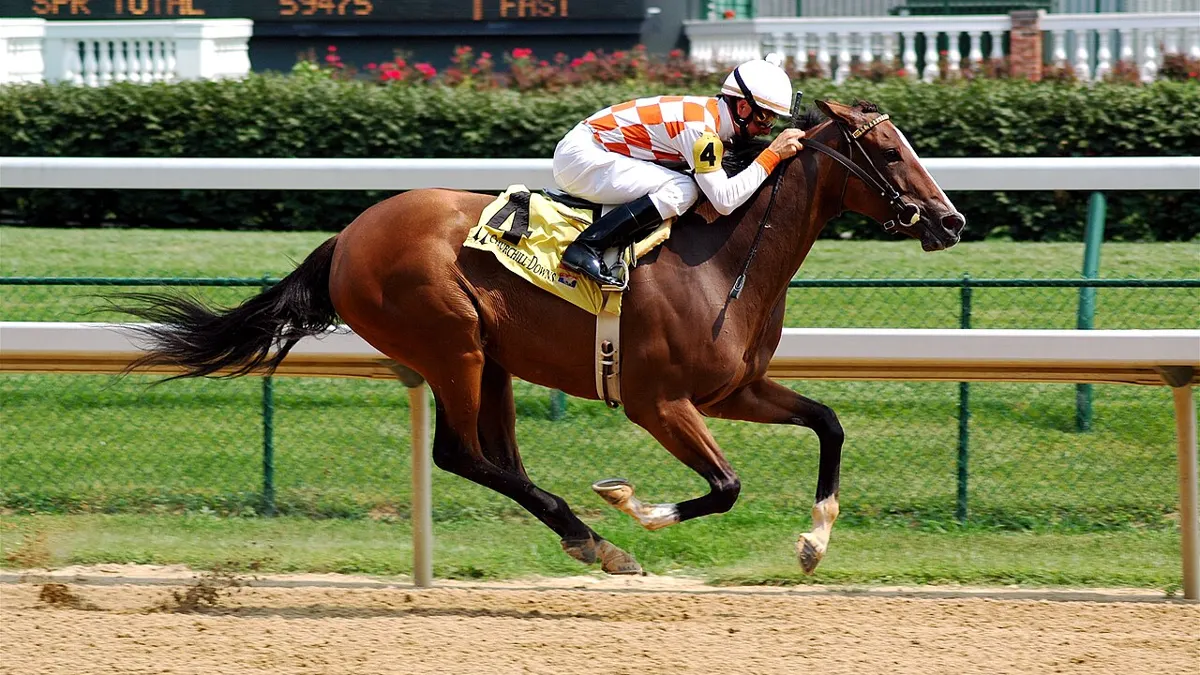
Tuesday at Cheltenham is the day the whole of Ireland seems to take a long lunch. The roar before the first race, the green-and-white scarves, the lad in work who swears he has the Supreme banker. It's brilliant craic, and it's also the day more punters blow their Festival budget than any other. So here's a straight-talking guide to betting on day one: what's usually on the card, how each market tends to behave, and how to keep enough in the tank for Friday.
18+ only. Nothing here is a tip or a guarantee, and every price below is a made-up example. Cloudbet, which we link to, is licensed in Curaçao and is not licensed by the Gambling Regulatory Authority of Ireland (GRAI).
What Cheltenham Tuesday actually is
The Cheltenham Festival runs over four days in mid-March at Prestbury Park in Gloucestershire. Tuesday is the opener, usually billed as Champion Day because its feature race is the Champion Hurdle. Ireland and Britain share the same clock in March, so there's no time-zone maths: the first race has traditionally gone off around 1:30 in the afternoon, Irish time.
Tuesday and Wednesday are run on the Old Course, while Thursday and Friday switch to the New Course. That detail matters more than people think. The Old Course is generally seen as a sharper, more galloping test for its two-mile races, and some horses simply handle one track better than the other. If a horse has won or run well over the Old Course before, that's a small but real point in its favour on day one.
The races you'll usually see on day one
The Festival committee tweaks the schedule now and then, and sponsors change the race names, so always check the official racecard for the year you're betting on. But the backbone of Tuesday has been stable for a long time:
| Race (usual name) | Type | What it tests | Betting character |
|---|---|---|---|
| Supreme Novices' Hurdle | Grade 1, novice hurdlers, about 2 miles | Speed and slick jumping from horses in their first hurdling season | Often a strong favourite, but novices can make costly mistakes |
| Arkle Novices' Chase | Grade 1, novice chasers, about 2 miles | Fast, accurate fencing at a strong gallop | Small fields are common; one jumping error can decide it |
| Ultima Handicap Chase | Premier handicap, about 3 miles | Stamina and jumping in a big field | Open market, each-way territory |
| Champion Hurdle | Grade 1, open to all ages, about 2 miles | The best two-mile hurdlers in training | The day's feature; markets are deep and often settled early |
| Mares' Hurdle | Grade 1, mares only | Top-class mares over a longer trip than the Champion | Can attract runners who might otherwise go for bigger races |
| A juvenile or novice handicap | Handicap hurdle | Lightly raced horses with uncertain ratings | Big fields, guesswork about improvement |
| A staying chase for amateur riders (in recent years) | Long-distance chase | Endurance and rider experience | Riders matter more than usual |
The order changes, and the last couple of races have been shuffled between days in recent seasons. Use the table as a map, not a timetable.
The Supreme: why the opener is a trap and an opportunity
The Supreme Novices' Hurdle is the race everyone remembers because of the roar that goes up as the tape rises. It's also the race where a lot of punters make their worst decision of the week: piling into a short-priced favourite because "you have to be on in the first".
Here's the thing about novice hurdlers. They're inexperienced. Most have run only a handful of times over obstacles, often against smaller fields at Irish or British tracks. Cheltenham throws them into a big field, a fast early pace and a stiff uphill finish. Some cope beautifully. Others jump left, get crowded or run too freely.
So before backing the market leader, ask a few questions:
- Has it faced a big field and a strong pace, or has it been winning small races in a canter?
- How has it jumped under pressure? A clear round in a four-runner race tells you less than a clean round in a twelve-runner race.
- Has it run at Cheltenham before, ideally on the Old Course?
- Is the price fair, or is it short because it has a big-name trainer and a lot of hype?
There's no shame in having no bet in the Supreme. Watching the first race with your wallet closed and your head clear is a perfectly good way to start a four-day festival.
The Arkle: small fields, big jumping questions
The Arkle is the two-mile championship for novice chasers. Fields are frequently small because only the best novices take it on, and a short-priced favourite is common. That creates a specific betting problem: the win price on the favourite may be poor value, while the outsiders don't look good enough.
The deciding factor is usually jumping. A two-mile chase at Cheltenham comes at you fast, and a single sloppy fence can cost several lengths, or the race. When you read form, weight jumping comments heavily: "jumped well", "ran out of room at the last", "mistake four out". Those small notes tell you more than the margin of victory at a quieter track.
With a small field, each-way betting gets tricky. If there are only five to seven runners, standard terms may pay just two places, which turns many each-way bets into poor value. More on that below.
The Champion Hurdle: reading a feature-race market
The Champion Hurdle is where the biggest money of the day goes, and the ante-post market (betting weeks or months ahead) is usually strong. By Tuesday morning, the price on the favourite often reflects a huge amount of information already.
That has two consequences. First, you're unlikely to find a big edge on the favourite by Tuesday. Second, the best opportunities often come from places the market ignores: a horse whose recent runs came on ground that didn't suit it, or one dropping back in trip after a run that looked flat. If you want the deeper dive on early prices, our Cheltenham ante-post guide walks through the timing.
Turn the odds into a percentage
Before any feature-race bet, convert the price into an implied chance and add up the whole market. Here's an illustrative six-runner book:
| Horse | Example odds (decimal) | Implied chance |
|---|---|---|
| A | 2.25 | 44.4% |
| B | 4.00 | 25.0% |
| C | 7.00 | 14.3% |
| D | 11.00 | 9.1% |
| E | 15.00 | 6.7% |
| F | 26.00 | 3.8% |
| Total | 103.3% |
Anything over 100% is the bookmaker's margin. In this example it's 3.3%, which is tight. Handicaps on the same day can run well above 20%. If you'd honestly rate horse C a one-in-five chance (20%), then 7.00 is value because 14.3% is lower than your 20%. If you can't say what chance you think it has, you don't have a bet, you have a hunch. Our bet calculator does the conversions for you.
The handicaps: where each-way punters live
Tuesday's handicaps are a completely different game from the Grade 1s. Big fields, horses carrying different weights based on their official ratings, and plenty of trainers who've been planning a single race all season. It's much harder to find the winner, but the prices are bigger and each-way terms are better.
A few things worth checking in a Cheltenham handicap:
- The rating story. Has the horse dropped a few pounds after some quiet runs? That can be a sign it's been "brought down" to a winnable mark.
- Course form. Plenty of handicap winners have run well at Cheltenham before.
- Weight and stamina. A long-distance handicap on soft ground punishes horses carrying big weights.
- Market moves. A steady shortening on the morning can mean informed money, though it can also just mean a popular tipster has mentioned it.
Our page on how handicap ratings work explains the weights in more depth.
18+. Crypto deposits. Cloudbet is licensed in Curaçao and is NOT licensed by the GRAI. Irish gambling law changed in 2026: only GRAI-licensed operators may lawfully take bets from Irish customers. Ad: we may earn a commission. Bet only what you can afford to lose.
Each-way terms on Tuesday, explained
An each-way bet is two bets of the same size: one to win and one to place. If your horse wins, both pay. If it only places, you get the place part, paid at a fraction of the win odds. The usual British and Irish terms, which most books follow unless they're offering extra places, look roughly like this:
| Race and field | Places paid | Fraction of win odds |
|---|---|---|
| 2 to 4 runners | Win only | n/a |
| 5 to 7 runners | 2 | 1/4 |
| 8 or more runners (non-handicap) | 3 | 1/5 |
| Handicap, 12 to 15 runners | 3 | 1/4 |
| Handicap, 16 or more runners | 4 | 1/4 |
Bookmakers set their own rules, so check the terms on your bet slip. On Tuesday, the Arkle can fall into the two-place band, while the Ultima often qualifies for four places. That's a huge difference in how useful an each-way bet is.
A worked each-way example
Say you put €5 each way (€10 total) on a 21.00 shot (20/1) in a 20-runner handicap paying four places at 1/4 odds.
- If it wins: the win part returns €5 x 21 = €105, and the place part returns €5 x (1 + 20/4) = €30. Total €135, profit €125.
- If it finishes third: the win part loses, the place part returns €30. Profit €20.
- If it finishes fifth: you lose the €10.
Now picture the same €10 on a 3.00 shot in a six-runner novice chase paying two places at 1/4. If it finishes second, the place part returns €5 x 1.5 = €7.50, and you lose €2.50 overall. Each-way on short prices in small fields rarely makes sense.
Building a Tuesday budget that lasts four days
Most people go wrong on day one not because they pick badly, but because they bet too much. The atmosphere is mad, the races are top class, and by the time the Champion Hurdle comes around, half the week's money is gone.
A simple fix: decide your total Festival budget before Tuesday, then split it. Here's an illustrative plan for a €200 week:
| Day | Share | Example amount | Why |
|---|---|---|---|
| Tuesday | 25% | €50 | Strong card, but it's the first day; keep powder dry |
| Wednesday | 20% | €40 | Champion Chase day, slightly fewer feature bets |
| Thursday | 20% | €40 | Stayers' and Ryanair day |
| Friday | 25% | €50 | Gold Cup day |
| Reserve | 10% | €20 | For a genuine late opinion, not chasing losses |
The golden rule: Tuesday's losses don't get added to Wednesday's budget. If Tuesday goes badly, Wednesday is still €40. That single rule saves more punters than any tip ever will.
Five Tuesday mistakes to avoid
- The Supreme "must bet". Feeling you have to be on in the first race is emotion, not analysis.
- Accumulating all the favourites. Four favourites at around 2.50 each look tempting as a four-fold, but the chance all four win is about (1/2.5)4, roughly 2.6% before margin. That's lottery territory dressed up as safety.
- Ignoring the going. Rain overnight can transform the picture, especially in the long handicaps. Our Cheltenham going guide covers how ground changes prices.
- Chasing in the last race. The final race on Tuesday is often a difficult handicap or amateur race. It's the worst possible place to try to win back the day.
- Betting in the pub without a plan. Decide your bets in the morning, write them down, then enjoy the racing.
Live betting on day one
Horse racing moves fast, and in-running prices on a two-mile race change in seconds. TV pictures are also slightly behind real time, so anyone trying to trade off the broadcast is at a disadvantage. If you want to bet in-running, keep stakes small and focus on longer races where things develop more slowly. Our live betting guide for Cheltenham goes into the details.
Where Cloudbet fits in
Cloudbet takes bets on major horse racing, including Cheltenham, with crypto deposits and withdrawals. It can be a useful extra price to compare against your usual bookmaker. Be honest with yourself about the trade-offs, though:
- It's licensed in Curaçao, not by the GRAI, so you don't get Irish regulatory protection or the GRAI complaints route.
- Crypto prices can move, so your balance in euro terms can change even when you're not betting.
- Racing market depth and each-way terms vary by book; always check what's on offer for each race.
Whichever bookmaker you use, compare prices and each-way terms. Half a point on a winner, or an extra place on a big handicap, adds up across four days.
A Tuesday morning checklist
- Check the official racecard: confirmed runners, race order and off times.
- Check the going report and the forecast for the afternoon.
- Note any non-runners and how that affects each-way places.
- Write down your bets and stakes for the day, within budget.
- Decide in advance whether you'll bet in-running at all.
- Set a deposit limit with your bookmaker if you haven't already.
Keep it fun
Cheltenham is meant to be one of the best weeks of the sporting year, not a money-making scheme. Set a limit, stick to it, and if betting stops being fun, take a break. The Gambling Care helpline is free and open around the clock on 1800 936 725 (Northern Ireland: 08000 886 725). Our responsible gambling page has more support options, and if you're unsure about the law, see is online betting legal in Ireland.
Questions players ask
What races are on Cheltenham Tuesday?
The card usually includes the Supreme Novices' Hurdle, the Arkle, the Ultima Handicap Chase, the Champion Hurdle and the Mares' Hurdle, plus a couple of handicaps. The exact order changes, so check the official racecard.
What time does Cheltenham start on Tuesday?
The first race has traditionally gone off around 1:30 PM. Ireland and Britain are on the same time in March, so it's the same time in Ireland.
Which course is used on Cheltenham Tuesday?
Tuesday and Wednesday are run on the Old Course. Thursday and Friday use the New Course.
Is the Supreme favourite a good bet?
Sometimes, but novice hurdlers are inexperienced and the price is often driven by hype. Judge the price against the chance you think it has.
How many places are paid each-way on Tuesday?
It depends on the field size and race type. Big handicaps often pay four places at 1/4 odds; small Grade 1 fields may pay only two. Check the terms on your bet slip.
Should I back favourites in an accumulator on day one?
Be careful. Four favourites at around 2.50 each have only about a 2.6% chance of all winning, before the bookmaker's margin.
How much should I bet on Cheltenham Tuesday?
Set a total Festival budget first. An example plan puts about a quarter of the week's money on Tuesday and never adds losses to the next day.
Is Cloudbet licensed in Ireland?
No. Cloudbet is licensed in Curaçao and is not licensed by the GRAI.
Where can I get help with gambling in Ireland?
Call the Gambling Care helpline on 1800 936 725, free and open 24/7. In Northern Ireland, call 08000 886 725.
18+. Crypto deposits. Cloudbet is licensed in Curaçao and is NOT licensed by the GRAI. Irish gambling law changed in 2026: only GRAI-licensed operators may lawfully take bets from Irish customers. Ad: we may earn a commission. Bet only what you can afford to lose.
If betting is costing you more than money, free and confidential help is there 24 hours a day, 365 days a year: the Problem Gambling Helpline run by Dunlewey Addiction Services for Gambling Care, on 1800 936 725 (from Northern Ireland: 08000 886 725). Source: grai.ie.