Decimal Odds vs Fractional Odds: How to Convert, Read Returns and Spot the Bookie's Margin (Irish Guide)
Welcome bonus for new players + fast crypto payouts. Just helping a brother out.
18+. Crypto deposits. Cloudbet is licensed in Curaçao and is NOT licensed by the GRAI. Irish gambling law changed in 2026: only GRAI-licensed operators may lawfully take bets from Irish customers. Ad: we may earn a commission. Bet only what you can afford to lose.
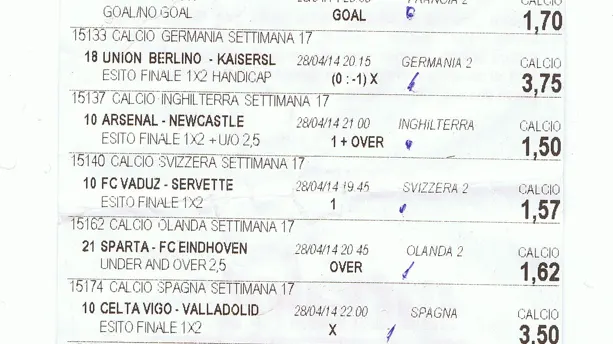
If you grew up around Irish racing, odds probably mean "5/2", "11/8" and "evens". Open almost any betting app or exchange, though, and you're looking at 3.50, 2.38 and 2.00. They're the same prices written two ways, and once you can flip between them in your head, a lot of things get easier: comparing bookies, working out what you'd win, and seeing how much the bookmaker is quietly keeping. Here's a plain guide to decimal odds vs fractional odds, with the conversions done for you.
18+ only. This is general information, not betting or financial advice, and every price below is an example, not a tip. Cloudbet, which we link to, holds a Curaçao licence and is not licensed by the Gambling Regulatory Authority of Ireland (GRAI), so Irish complaint routes don't apply to it. If gambling is causing you bother, Gambling Care is free, confidential and open 24/7 on 1800 936 725 (Northern Ireland: 08000 886 725).
The difference in one line
- Fractional odds (5/2) tell you the profit on a stake: win €5 for every €2 you bet, and you get your stake back on top.
- Decimal odds (3.50) tell you the total return for every €1 bet, stake included. €10 at 3.50 returns €35.
- To go from fractional to decimal: divide the top by the bottom and add 1. 5/2 = 2.5 + 1 = 3.50.
- To go from decimal to fractional: take 1 off and turn what's left into a fraction. 3.50 − 1 = 2.5 = 5/2.
- To get the chance the price implies: 1 divided by the decimal odds. 3.50 means about 28.6%.
How fractional odds work
Fractional odds are the traditional format in Ireland and Britain, and you'll still see them on boards at the track, in the bookies and in racing coverage. The number on the left is what you win, the number on the right is what you stake.
- 3/1 ("three to one"): bet €1, win €3 profit, get €4 back.
- 5/2 ("five to two"): bet €2, win €5 profit, get €7 back.
- 1/1 ("evens"): bet €10, win €10 profit, get €20 back.
- 4/6 ("four to six", or "six to four on"): bet €6, win €4 profit, get €10 back.
When the left number is bigger, the selection is odds-against (less likely than not). When it's smaller, it's odds-on (more likely than not), and you win less than you stake.
How decimal odds work
Decimal odds have one rule: multiply your stake by the number and that's what comes back, stake included. €10 at 2.75 returns €27.50, so the profit is €17.50. They're used by exchanges, most apps and most of Europe, and they're far easier for adding up accumulators and working out value.
The smallest decimal price is just above 1.00. A price of 1.01 means you'd risk €100 to win €1. A price of 2.00 is the same as evens.
The conversion formulas
| From | To | How | Example |
|---|---|---|---|
| Fractional | Decimal | (top ÷ bottom) + 1 | 7/4 → 1.75 + 1 = 2.75 |
| Decimal | Fractional | (decimal − 1), written as a simple fraction | 2.75 → 1.75 = 7/4 |
| Decimal | Implied chance | 1 ÷ decimal × 100 | 2.75 → 36.4% |
| Fractional | Implied chance | bottom ÷ (top + bottom) × 100 | 7/4 → 4 ÷ 11 = 36.4% |
| Implied chance | Decimal | 100 ÷ chance | 40% → 2.50 |
For American odds, which you'll see on US sports: a plus number is the profit on a €100 stake (+250 = 5/2 = 3.50), and a minus number is what you'd stake to win €100 (−150 = 4/6 = 1.67). Our odds calculator converts all three.
Full conversion table
Here are the prices you'll meet most often, with what €10 returns and the implied chance before any margin is taken out:
| Fractional | Decimal | American | Implied chance | €10 returns |
|---|---|---|---|---|
| 1/5 | 1.20 | −500 | 83.3% | €12.00 |
| 1/3 | 1.33 | −300 | 75.0% | €13.33 |
| 2/5 | 1.40 | −250 | 71.4% | €14.00 |
| 1/2 | 1.50 | −200 | 66.7% | €15.00 |
| 4/7 | 1.57 | −175 | 63.6% | €15.71 |
| 8/13 | 1.62 | −162.5 | 61.9% | €16.15 |
| 4/6 | 1.67 | −150 | 60.0% | €16.67 |
| 8/11 | 1.73 | −137.5 | 57.9% | €17.27 |
| 4/5 | 1.80 | −125 | 55.6% | €18.00 |
| 5/6 | 1.83 | −120 | 54.5% | €18.33 |
| 10/11 | 1.91 | −110 | 52.4% | €19.09 |
| Evens (1/1) | 2.00 | +100 | 50.0% | €20.00 |
| 11/10 | 2.10 | +110 | 47.6% | €21.00 |
| 6/5 | 2.20 | +120 | 45.5% | €22.00 |
| 5/4 | 2.25 | +125 | 44.4% | €22.50 |
| 11/8 | 2.38 | +137.5 | 42.1% | €23.75 |
| 6/4 | 2.50 | +150 | 40.0% | €25.00 |
| 13/8 | 2.63 | +162.5 | 38.1% | €26.25 |
| 7/4 | 2.75 | +175 | 36.4% | €27.50 |
| 15/8 | 2.88 | +187.5 | 34.8% | €28.75 |
| 2/1 | 3.00 | +200 | 33.3% | €30.00 |
| 9/4 | 3.25 | +225 | 30.8% | €32.50 |
| 5/2 | 3.50 | +250 | 28.6% | €35.00 |
| 11/4 | 3.75 | +275 | 26.7% | €37.50 |
| 3/1 | 4.00 | +300 | 25.0% | €40.00 |
| 7/2 | 4.50 | +350 | 22.2% | €45.00 |
| 4/1 | 5.00 | +400 | 20.0% | €50.00 |
| 5/1 | 6.00 | +500 | 16.7% | €60.00 |
| 6/1 | 7.00 | +600 | 14.3% | €70.00 |
| 8/1 | 9.00 | +800 | 11.1% | €90.00 |
| 10/1 | 11.00 | +1000 | 9.1% | €110.00 |
| 12/1 | 13.00 | +1200 | 7.7% | €130.00 |
| 16/1 | 17.00 | +1600 | 5.9% | €170.00 |
| 20/1 | 21.00 | +2000 | 4.8% | €210.00 |
| 33/1 | 34.00 | +3300 | 2.9% | €340.00 |
| 50/1 | 51.00 | +5000 | 2.0% | €510.00 |
| 100/1 | 101.00 | +10000 | 1.0% | €1,010.00 |
The decimal column is rounded to two places. 8/13 is really 1.615..., 11/8 is 2.375. For most bets the rounding makes no real difference, but on a big stake it can be worth a few cent.
The awkward fractions, and why they exist
Why do bookies use odd prices like 8/13, 11/8 and 15/8 instead of round numbers? Fractional odds come from a traditional "ladder" of accepted prices, built up over generations of on-course betting. Each step on the ladder is a small move in implied chance. Between evens and 2/1, for example, you get 11/10, 6/5, 5/4, 11/8, 6/4, 13/8, 7/4 and 15/8.
The catch: fractional prices can only sit on the ladder, while decimal prices can be anything. An exchange might show 2.32, which doesn't have a neat fraction. The nearest are 11/8 (2.375) and 5/4 (2.25). That's one reason serious punters prefer decimals: they show the exact price, not the nearest rung.
Mental shortcuts for quick conversions
- Odds-against, "something to 1": just add 1. 4/1 = 5.00, 9/1 = 10.00, 20/1 = 21.00.
- "Something to 2": halve the top, then add 1. 5/2 = 3.50, 7/2 = 4.50, 9/2 = 5.50.
- "Something to 4": divide the top by 4, then add 1. 7/4 = 2.75, 9/4 = 3.25, 11/4 = 3.75.
- Odds-on fractions: divide, then add 1. 4/6 = 0.667 + 1 = 1.67, 1/2 = 1.50, 2/5 = 1.40.
- Decimal back to chance: 2.00 is 50%, 3.00 is 33%, 4.00 is 25%, 5.00 is 20%, 10.00 is 10%. Everything else sits between those.
Spotting the bookmaker's margin
This is where decimals really earn their keep. Add up the implied chances for every outcome in a market. In a fair world they'd total 100%. In real life they total more, and the extra is the bookie's margin (sometimes called the overround or "vig").
Take a football match priced in fractions at 6/5, 9/4 and 9/4. In decimals that's 2.20 / 3.25 / 3.25:
| Outcome | Fractional | Decimal | Implied chance |
|---|---|---|---|
| Home | 6/5 | 2.20 | 45.5% |
| Draw | 9/4 | 3.25 | 30.8% |
| Away | 9/4 | 3.25 | 30.8% |
| Total | 107.0% |
So the margin here is about 7%. A two-way market at 10/11 and 10/11 (1.91 each) adds up to 104.8%, a margin just under 5%. Try doing that addition in fractions and you'll see why decimal odds make the comparison quicker.
To strip the margin out, divide each implied chance by the total. In the match above, the home side's fair chance is 45.5 ÷ 107.0 = 42.5%, so the fair decimal price is about 2.35, or roughly 11/8. The bookie is offering 6/5 on something that's fairly priced near 11/8.
18+. Crypto deposits. Cloudbet is licensed in Curaçao and is NOT licensed by the GRAI. Irish gambling law changed in 2026: only GRAI-licensed operators may lawfully take bets from Irish customers. Ad: we may earn a commission. Bet only what you can afford to lose.
Comparing prices between bookmakers
Line shopping, taking the best price you can find, is the single easiest thing a punter can do to lose less. Decimals make the gap obvious:
| Bookie A | Bookie B | Decimal gap | Extra profit on €20 if it wins |
|---|---|---|---|
| 5/4 (2.25) | 11/8 (2.375) | +0.125 | +€2.50 |
| 2/1 (3.00) | 9/4 (3.25) | +0.25 | +€5.00 |
| 4/6 (1.67) | 8/11 (1.73) | +0.06 | +€1.21 |
| 10/1 (11.00) | 12/1 (13.00) | +2.00 | +€40.00 |
Take a selection you think wins 45% of the time. At 5/4 (2.25), each €20 bet is worth 0.45 × €45 − €20 = +€0.25 on average. At 6/5 (2.20) it's 0.45 × €44 − €20 = −€0.20. One rung on the ladder turns a small edge into a small loss.
Accumulators: decimals win easily
Working out an acca in fractions is a pain. In decimals you just multiply. Three selections at 4/5, 5/6 and 10/11:
- Decimals: 1.80 × 1.833 × 1.909 = 6.30.
- So €10 returns about €63, or €53 profit. As a fraction that's roughly 53/10, which nobody would ever work out by hand.
The acca's implied chance is 1 ÷ 6.30 = 15.9%. If each leg carries a 5% margin, the acca's margin compounds to well over 10%. That's why trebles and bigger look exciting but quietly cost more. Our accumulator calculator does the multiplying.
Odds-on prices and "how much to win €100"
A handy way to think about short prices is how much you'd need to stake to win €100 profit:
| Price | Decimal | Stake to win €100 profit |
|---|---|---|
| 10/11 | 1.91 | €110 |
| 4/6 | 1.67 | €150 |
| 1/2 | 1.50 | €200 |
| 1/3 | 1.33 | €300 |
| 1/5 | 1.20 | €500 |
That's exactly what American minus odds show (−110, −150 and so on). A 1/5 "banker" that loses once in six costs you €500, and you'd need five winners to get it back.
Which format should you use?
| Fractional | Decimal | |
|---|---|---|
| Best for | Racing tradition, on-course boards, quick profit reading | Comparing prices, accas, exchanges, value maths |
| Shows | Profit per unit staked | Total return per unit staked |
| Precision | Limited to the traditional ladder | Any price, to two decimals or more |
| Margin check | Slow | Fast |
| Where you'll see it | Bookies shops, racing coverage, many Irish and UK apps by default | Exchanges, most European and crypto sportsbooks, most apps as an option |
Most apps let you switch format in settings. Our advice: use decimals day to day, and keep the fractional ladder in your head for the track and the shop.
Common mix-ups
- Reading 2.50 as "2/1". It's 6/4.
- Forgetting decimal returns include your stake. €10 at 3.00 is €30 back, €20 profit.
- Thinking 4/6 means "four in six chance". It means win €4 for every €6 staked, a 60% implied chance.
- Comparing a fractional price at one bookie with a decimal price at another without converting.
- Ignoring rounding on very big stakes or on exchange prices.
Is betting legal in Ireland?
Yes, for adults. The Gambling Regulatory Authority of Ireland (GRAI) licenses operators, and the first remote betting licences commenced on 1 July 2026. GRAI-licensed bookmakers come with Irish protections and complaint routes. Offshore sites like Cloudbet aren't GRAI-licensed, so those protections don't apply. Our guide to whether online betting is legal in Ireland explains more.
Keep it a bit of fun
Understanding odds helps you lose less, but the bookie's margin means most punters still lose over time. Set a budget, don't chase losses, and treat any winnings as a bonus. If gambling isn't fun anymore, Gambling Care is free and confidential on 1800 936 725, 24/7 (Northern Ireland: 08000 886 725). See our responsible gambling page for limits and self-exclusion.
Our take
Decimal and fractional odds are just two languages for the same thing. Fractions are part of the craic at the races, but decimals make the maths honest: you can see the total return, add up the margin, and compare prices at a glance. Learn the handful of shortcuts above, switch your app to decimals, and always take the best price you can find.
Questions players ask
What is 5/2 in decimal odds?
3.50. Divide 5 by 2 to get 2.5, then add 1. A €10 bet at 5/2 returns €35, which is €25 profit plus your €10 stake.
What is 2.50 in fractional odds?
6/4. Take 1 off to get 1.5, which is 3/2, usually written as 6/4 on the fractional ladder.
Are decimal odds better than fractional odds?
They show the same price, so neither pays more. Decimals are easier for comparing bookies, working out accas and spotting the margin.
What does odds-on mean?
An odds-on price is shorter than evens (below 2.00 in decimals, like 4/6 or 1.67). You win less than you stake, because the selection is expected to win more often than not.
How do I work out implied probability from odds?
Divide 1 by the decimal odds. 4.00 is 25%, 2.00 is 50%. For fractions, divide the bottom number by the top plus the bottom: 3/1 is 1 ÷ 4 = 25%.
Is Cloudbet licensed in Ireland?
No. Cloudbet holds a Curaçao licence and isn't licensed by the Gambling Regulatory Authority of Ireland, so Irish complaint routes don't apply.
Where can I get help with gambling in Ireland?
Call Gambling Care on 1800 936 725, free and confidential, 24/7. In Northern Ireland, call 08000 886 725.
18+. Crypto deposits. Cloudbet is licensed in Curaçao and is NOT licensed by the GRAI. Irish gambling law changed in 2026: only GRAI-licensed operators may lawfully take bets from Irish customers. Ad: we may earn a commission. Bet only what you can afford to lose.
If betting is costing you more than money, free and confidential help is there 24 hours a day, 365 days a year: the Problem Gambling Helpline run by Dunlewey Addiction Services for Gambling Care, on 1800 936 725 (from Northern Ireland: 08000 886 725). Source: grai.ie.