How to Bet on Horse Racing for Beginners in Ireland: Your First Bet, Step by Step
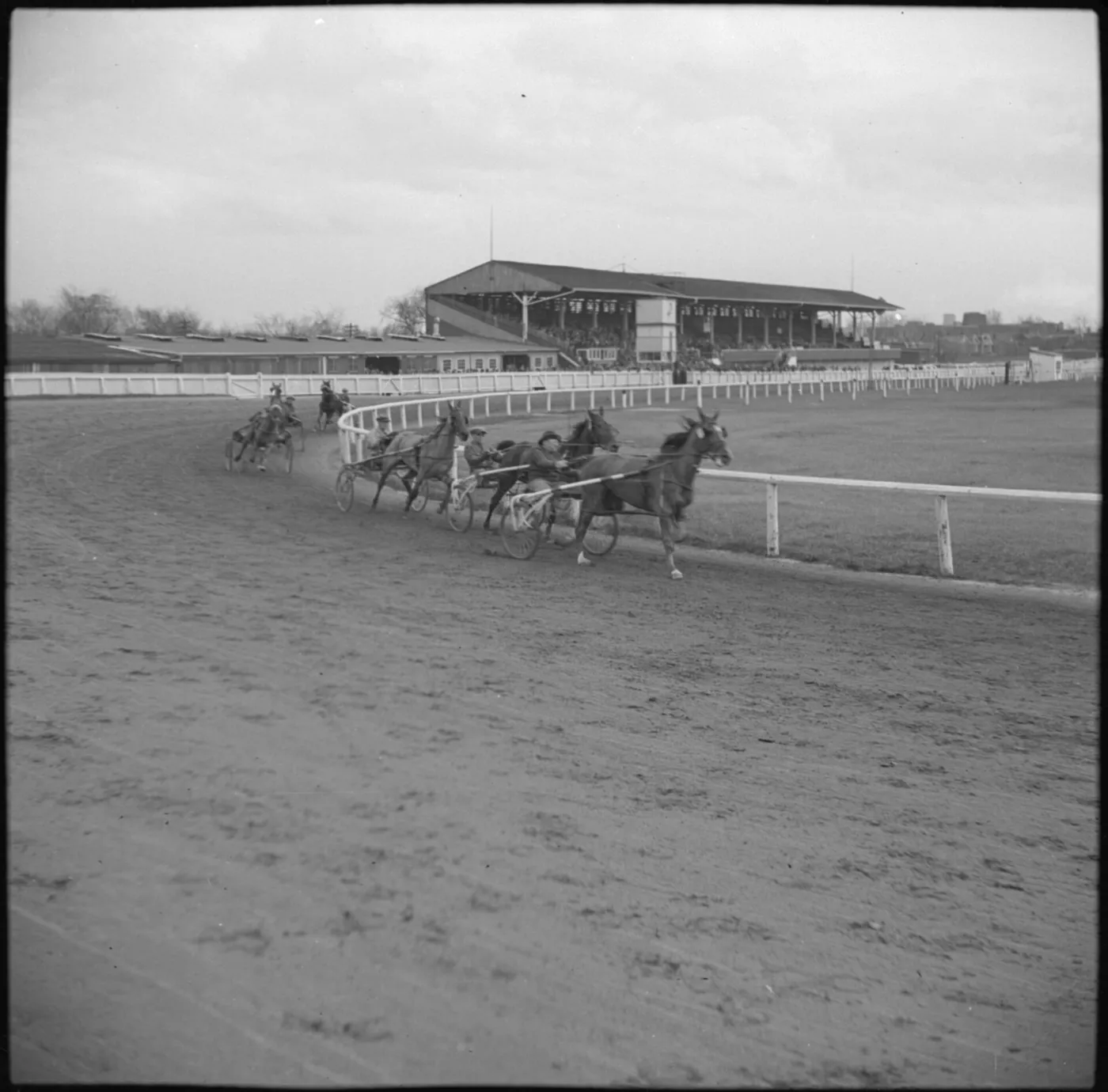
So you've a day at Punchestown or Galway coming up, or the lads have started a Saturday racing WhatsApp, and you'd like to actually know what you're doing before you hand over a tenner. Grand. This is the practical version: not just what the words mean, but exactly what to do, in order, from picking a race to settling up at the end of the day, with the sums shown so you can check them yourself.
18+ only. Every price and horse on this page is made up for teaching. Cloudbet, which we link to, holds a Curaçao licence and is not licensed by the Gambling Regulatory Authority of Ireland (GRAI), so it isn't licensed in Ireland. If betting stops being fun, the Problem Gambling Helpline is free and open 24/7 on 1800 936 725 (Northern Ireland: 08000 886 725).
18+. Crypto deposits. Cloudbet is licensed in Curaçao and is NOT licensed by the GRAI. Irish gambling law changed in 2026: only GRAI-licensed operators may lawfully take bets from Irish customers. Ad: we may earn a commission. Bet only what you can afford to lose.
Before you bet a cent: three decisions
Most beginners start in the wrong place. They open an app, see a list of horses, and pick the one with the nicest name. Nothing wrong with that as a bit of craic, but if you want to learn, make three decisions first, and write them down somewhere you'll see them again later.
- Your budget for the day. A fixed number, in euro, that you're happy to see gone by the last race. For a first day, €20 to €40 is plenty. Treat it like the price of a cinema trip, not an investment.
- How many races you'll bet on. A typical Irish card has seven or eight races. You don't have to play them all. Three or four is a great start, because it gives you time to actually read each race.
- Where you'll bet. On course with a bookmaker or the Tote, in a betting shop, or online. Each has its own quirks, and we cover them below.
That's it. If you only take one thing from this guide, take this: the budget comes first, the horses come second.
Step 1: pick the right meeting and the right race
Not every race is equally friendly to a newcomer. Some are a lottery even for the professionals; others are relatively easy to follow.
Races that suit beginners
- Small-field conditions races and Graded races. Six to ten runners, horses carrying similar weights, and usually a clear form line between them. You can actually compare every runner in a few minutes.
- Races on a big Saturday or festival day. These get the most coverage in the Irish Field, the Racing Post and on Racing TV, so there's loads of free analysis to read alongside your own.
- Chases and hurdles at a track you've watched. If you know Leopardstown or Fairyhouse from TV, the shape of the race will mean more to you.
Races to watch rather than bet on (at first)
- Big-field handicaps of 20 or more runners. They're designed by the handicapper to give every horse a chance, so they're very hard to call.
- Maiden races full of unraced horses. With no form to read, you're mostly guessing on breeding and market whispers.
- Bumpers (National Hunt flat races) for the same reason, though they can be fun to follow once you know the trainers.
None of that means you can't have a small interest in the big handicap for the fun of it. Just don't put your learning budget on it.
Step 2: read the racecard (a worked example)
Here's an invented seven-runner race laid out the way you'll see it in a paper or app. We'll use it for the rest of this guide.
| No. | Horse | Form | Age | Weight | OR | Notes | Price |
|---|---|---|---|---|---|---|---|
| 1 | Atlantic Bay | 1-12 | 7 | 11-10 | 148 | Won here last spring; soft ground fine | 6/4 |
| 2 | Burren Light | 213 | 6 | 11-10 | 145 | Consistent; first time at this trip | 3/1 |
| 3 | Corrib Mist | F41 | 8 | 11-10 | 146 | Fell two runs ago; jumping a question | 4/1 |
| 4 | Dingle Rover | 3-34 | 9 | 11-10 | 140 | Placed often, rarely wins | 8/1 |
| 5 | Errigal Star | P-21 | 7 | 11-10 | 141 | Improving; trainer in good form | 10/1 |
| 6 | Foyle Dancer | 5/6 | 10 | 11-10 | 137 | Long absence; needs the run? | 16/1 |
| 7 | Glenveagh Boy | U75 | 6 | 11-10 | 134 | Out of form; up in class | 25/1 |
How to read it, column by column:
- Form: the last few finishing positions, most recent on the right. A hyphen marks a break between seasons, a slash a longer gap. F = fell, P = pulled up, U = unseated rider. So Corrib Mist's "F41" means: fell, then fourth, then won last time out.
- Weight: everyone carries 11st 10lb here, which tells you it's not a handicap. That's good news for a beginner, because the ratings column then shows you directly who has achieved the most.
- OR (official rating): the handicapper's number for each horse. Higher is better. Atlantic Bay at 148 is top-rated; Glenveagh Boy at 134 is 14lb behind, which is a lot at this level.
- Notes: in a real card, you'd get this from the comments in the paper or a site's race preview. Look for course form, going preferences, trip changes and long layoffs.
Spend five minutes on that and you already know more than half the people at the rails. The top two in the ratings are also the top two in the market. Corrib Mist has a high rating but a jumping question mark. Dingle Rover is the "always placing" type, which matters for each-way bets. Foyle Dancer has been off for a long time.
Step 3: turn prices into chances
Every price is really an opinion about how likely something is. To convert fractional odds into a percentage, divide the right-hand number by the sum of both numbers. 3/1 becomes 1 ÷ 4 = 25%. 6/4 becomes 4 ÷ 10 = 40%.
| Horse | Price | Implied chance |
|---|---|---|
| Atlantic Bay | 6/4 | 40.0% |
| Burren Light | 3/1 | 25.0% |
| Corrib Mist | 4/1 | 20.0% |
| Dingle Rover | 8/1 | 11.1% |
| Errigal Star | 10/1 | 9.1% |
| Foyle Dancer | 16/1 | 5.9% |
| Glenveagh Boy | 25/1 | 3.8% |
| Total | 114.9% |
Seven horses, one winner, yet the chances add up to almost 115%. That extra 14.9% is the bookmaker's built-in edge. You don't need to obsess over it, but it explains a simple truth: if you just back horses at random, you'll lose money over time, because you're paying that margin on every bet. The only way to tilt things back is to find horses whose real chance is bigger than the price suggests.
A beginner-friendly way to use this: look at each horse's implied chance and ask yourself, honestly, "Would I put this horse higher or lower than that?" If you think Errigal Star, improving and with a trainer in form, wins this one closer to one time in six than one time in eleven, then 10/1 looks generous to you. You might be wrong. That's fine. The habit of thinking in chances is what you're building.
Step 4: win or each-way? Let the maths decide
Each-way is two equal bets, one on the horse to win and one on it to place. With seven runners, standard terms are usually two places at a quarter of the odds; with eight or more in a non-handicap, three places at a fifth. Your bookmaker shows the terms on the bet slip, and they can differ.
Here's the bit beginners miss: if your horse places but doesn't win, whether you make a profit depends entirely on the price. Using a €5 each-way bet (€10 total stake) and quarter-odds terms:
| Price | Return if it places only | Result on €10 staked |
|---|---|---|
| 2/1 | €7.50 | Lose €2.50 |
| 3/1 | €8.75 | Lose €1.25 |
| 4/1 | €10.00 | Break even |
| 8/1 | €15.00 | Win €5.00 |
| 16/1 | €25.00 | Win €15.00 |
At one-fifth odds the break-even point moves out to 5/1. So the rule of thumb is simple: each-way only makes sense at bigger prices, roughly 5/1 and above, and best of all in races where the place terms are generous relative to the field. On our card, an each-way bet on the 6/4 favourite is pointless; an each-way bet on Dingle Rover at 8/1, the horse that "always places", is exactly the sort of bet the each-way was invented for.
Worked example: your three bets in this race
Say you've €10 for this race. Three sensible ways to spend it, with outcomes worked out:
- €10 win on Atlantic Bay at 6/4. Returns €25 if it wins (€15 profit). Loses €10 otherwise. Simple, and you're backing the most likely winner, but you're paying a short price.
- €5 each-way on Dingle Rover at 8/1. If it wins: win part €45 back plus place part at 2/1 (a quarter of 8/1) €15 back, total €60. If it finishes second: €15 back, so €5 profit. If it's out of the frame: lose €10.
- €5 win on Errigal Star at 10/1 plus €5 win on Atlantic Bay at 6/4. If Errigal Star wins: €55 back. If Atlantic Bay wins: €12.50 back. Anything else: lose €10. This is a tiny version of "dutching", splitting a stake across two horses you like for different reasons.
None of these is "right". The point is to choose on purpose, knowing what each outcome pays, rather than ticking each-way on everything because a mate said so.
Step 5: place the bet, wherever you are
On course
Irish racecourses still have proper bookmakers' pitches along the rails, plus Tote windows inside. At a bookmaker's pitch you say the horse's name or number, the stake and the bet type ("ten euro each-way number four"), hand over cash or card where accepted, and get a docket. Keep it safe: the docket is your bet. Prices on the boards change constantly, and the one you get is the one shown when the bookie accepts your bet. Different pitches often show slightly different prices, so a quick walk along the line before you bet is worth it.
At the Tote you're betting into a pool, so you won't know the exact dividend until after the race. The screens show a running estimate. Tote place bets can sometimes pay better than a bookie's each-way on outsiders, and sometimes worse on fancied horses.
In a betting shop
You fill in a slip: race time and course, horse name, stake, and tick win or each-way. Write "SP" if you want the starting price, or write the price shown on the screen if you want to take it. The cashier will stamp it and give you a copy.
Online or on an app
Tap the price next to the horse, type the stake, tick each-way if you want it, check the slip, confirm. Online books in Ireland need a GRAI licence to take bets from Irish customers since July 2026; if you want the Irish protections, check the operator is on the GRAI register before you sign up. Before your first deposit, set a deposit limit in the account settings. It takes thirty seconds and saves a lot of grief.
Step 6: take the price, or SP?
When you bet before the off, you can usually take the price shown now, or the starting price at the off. Take the price if you think the horse will shorten; leave it to SP if you think it might drift. If your bookmaker offers Best Odds Guaranteed on the race, you get whichever turns out better, which takes the guesswork out of it for singles. On a beginner's budget, don't overthink this. Just know which one you've chosen, because it's printed on the docket and it decides what you're paid.
Step 7: watch, then settle up properly
Watch the race on the big screen or the app, and enjoy it. If you've a winner, check the result is "weighed in" before celebrating, especially after a close finish or a stewards' enquiry. Results can be amended until then. On course, go back to the same pitch with your docket to be paid. Online, winnings land in your balance automatically.
Then do the thing almost nobody does: write it down. Race, horse, bet type, stake, price, result, profit or loss, and one line on why you made the bet. After ten or twenty bets you'll start to see your own habits, good and bad.
A €20 first day at the races, planned out
Here's what a sensible first day might look like at an eight-race meeting. The numbers are illustrative.
| Race | Plan | Stake |
|---|---|---|
| 1 (maiden hurdle) | Watch only. Get a feel for the parade ring and the betting ring. | €0 |
| 2 (beginners' chase, 7 runners) | Win single on your top-rated pick after reading the card | €5 |
| 3 (big handicap) | Watch, or a €1 Tote place bet for interest | €1 |
| 4 (Graded race, 8 runners) | Each-way on a horse at 6/1 or bigger with place form | €4 (€2 e/w) |
| 5 | Break. Food, a cup of tea, check your notes. | €0 |
| 6 (conditions hurdle) | Win single | €5 |
| 7 (bumper) | Watch | €0 |
| 8 (handicap) | Whatever's left, or nothing at all | Up to €5 |
Two rules make this work. First, winnings from earlier races don't get added to the plan; they go in a different pocket. Second, if the €20 is gone by race six, you're done betting and you're now just a spectator, which, to be fair, is a great way to spend a day at the races anyway.
18+. Crypto deposits. Cloudbet is licensed in Curaçao and is NOT licensed by the GRAI. Irish gambling law changed in 2026: only GRAI-licensed operators may lawfully take bets from Irish customers. Ad: we may earn a commission. Bet only what you can afford to lose.
Getting the hang of the going, the trip and the track
Once you've the basics, these three factors explain a lot of results that look like shocks.
The going
Irish ground runs from firm to heavy, and over the winter it's often soft or worse. Some horses love it testing; others want a sound surface. Look at where each horse's best runs came. If a horse's two wins came on heavy and today is good ground, that's a question mark, however good the form figures look.
The trip
Distance matters. A horse stepping up from two miles to three for the first time might have the stamina, or might run out of petrol after the last. Breeding and running style give clues. On our sample card, Burren Light is trying the trip for the first time, which helps explain why a horse with consistent form is 3/1 rather than favourite.
The track
Irish courses vary hugely: tight, sharp tracks like Bellewstown or Kilbeggan; big galloping ones like Fairyhouse or the Curragh; Galway with its steep climb to the line; Leopardstown and Punchestown each with their own quirks. Some horses run their best on one type of track and nowhere else. A "C" or "CD" beside a horse's name on the card tells you it has won at this course, or over this course and distance.
Bet types to try after your first few weeks
Stick to singles at first. Once you're comfortable, these are worth learning, in roughly this order:
- Forecast: pick the first two in order. A reverse forecast covers either order and costs twice the stake. Good in small fields where two horses stand out.
- Double: two horses in different races; both must win and the winnings from the first roll onto the second. Two 2/1 winners in a €5 double return €45, versus €30 from two separate €5 singles.
- Placepot (Tote): pick a horse to place in each of the first six races. A cheap way to have an interest all day, with unknown but sometimes decent dividends.
- Trixie or Patent: full-cover bets on three selections. They cost several unit stakes, so a €1 Patent is €7. Fun, but count the total before you hand it over.
Leave Lucky 15s, Yankees and big accumulators until you've a record of your own singles to look back on. They're designed to be exciting, and the bookie's margin stacks up with each extra leg.
Where beginners get tips, and how to use them
You'll find tips everywhere: the papers, podcasts, racing channels, the lad at the bar, tipster accounts on social media. Some are excellent, many are noise. Three ways to use them without getting fleeced:
- Use tips as a second opinion, not a first. Read the card yourself first, write down your pick, then read the tips. Notice where you agree and where you don't.
- Track any tipster before you follow them with real money. A screenshot of three winners proves nothing. Keep a note of every selection for a month, at the price available when it was tipped.
- Never pay for "inside information". Anyone selling guaranteed winners is selling a story. Licensed bookmakers watch for genuine inside information, and markets usually move on it before you'd ever hear about it.
Your first eight weeks: a learning path
Racing rewards people who learn a bit at a time. Here's a simple schedule that fits around normal life.
| Week | Focus | Homework |
|---|---|---|
| 1 | Odds and implied chance | Convert every price in one race to a percentage and add them up |
| 2 | Reading form figures | For one race, write a one-line summary of each horse's last three runs |
| 3 | Win vs each-way | Paper-bet five races: choose win or each-way using the break-even table |
| 4 | The going | Check each horse's best form against today's ground for two races |
| 5 | Trip and track | Find two horses trying a new distance and see how they get on |
| 6 | Markets | Note morning prices vs SP for one card; which horses shortened or drifted? |
| 7 | Records | Review every bet so far: strike rate, profit or loss, best and worst habits |
| 8 | Your own approach | Write down three rules you'll follow from now on |
"Paper betting" means writing the bet down without staking anything. It feels a bit daft, but it's the cheapest education in racing, and it shows you very quickly whether your instincts are any good.
Reading your own results honestly
After a month or two, look back at your record. Two numbers matter: how often you win (strike rate) and how much you've made or lost relative to what you've staked (return on investment). A 40% strike rate backing short-priced favourites can still lose money; a 15% strike rate on bigger prices can make money. Neither tells you much over a small sample, though. Twenty bets is nowhere near enough to know whether you're good, lucky or unlucky, so judge your process, not your last Saturday.
Good questions to ask yourself:
- Do I do better in small fields or big ones?
- Am I losing money on each-way bets at short prices?
- Do my late, "one more race" bets do worse than my planned ones? (For most people, they do.)
- Am I betting more after a loss than after a win?
Common beginner mistakes in Irish racing
- Betting every race on the card because the next one is only thirty minutes away.
- Chasing losses with a bigger stake in the last race to "get it back".
- Each-way on odds-on or short-priced horses, where a place loses you money.
- Ignoring non-runners and Rule 4. If a fancied horse is withdrawn after you've taken a price, your winnings can be reduced. It's not the bookie robbing you; it's a standard rule.
- Taking the drink-fuelled bet late in the day. Decide your stakes before the first pint.
- Thinking the favourite always wins. In our sample race, the 6/4 shot's implied chance is 40%, so even by the bookmaker's own numbers it loses more often than it wins.
Licensing and where it's safe to bet from Ireland
Irish law changed in 2026. The Gambling Regulatory Authority of Ireland (GRAI) now licenses betting operators, and from 1 July 2026 remote bookmakers taking bets from people in Ireland need a GRAI licence. A licensed operator gives you an Irish complaints route, mandatory safer-gambling tools and the ban on credit-card betting. If those protections matter to you, and as a beginner they probably should, check the GRAI register before you open an account.
Cloudbet is a crypto sportsbook that lists racing among its markets, but it is licensed in Curaçao and is not GRAI-licensed. If you choose an offshore book, you give up those Irish protections. We never explain how to get around blocks or restrictions, and you shouldn't trust anyone who does.
Keep it fun: a word on gambling harm
Racing is one of the great Irish days out, and betting is part of the tradition for many people. It's also a fast form of gambling, with a race every half hour and apps that let you bet on meetings all over the world. Warning signs to watch for in yourself: betting more than you planned, hiding bets from people close to you, borrowing to bet, or feeling you need to win back losses. If any of that sounds familiar, talk to someone. The Problem Gambling Helpline is free, confidential and open 24/7 on 1800 936 725, and from Northern Ireland on 08000 886 725. Our responsible gambling page has more on limits and self-exclusion.
Next steps
Once you're comfortable with this step-by-step routine, our explainer on how horse racing betting works goes deeper on SP, the Tote, Rule 4 and ante-post rules, and our guide to Irish handicap ratings shows you how the weights in big handicaps are set. Check our Irish law guide too if you're thinking about betting online.
The short version
Set a budget before you look at a single horse. Pick small-field races where you can read every runner. Turn prices into chances and ask whether you agree. Use win bets on shorter prices and each-way only at around 5/1 and bigger. Know whether you've taken a price or SP. Write every bet down, review after a month, and keep the stakes small while you learn. Do that and you'll enjoy racing more, and probably lose less, than most people standing beside you at the rails.
Questions players ask
How much should a beginner bet on horse racing?
Only an amount you're happy to lose, set before the first race. For a first day, €20 to €40 spread over three or four races is plenty.
Is each-way a good bet for beginners?
Only at bigger prices. With quarter-odds terms, a horse that places at under 4/1 loses you money overall; at one-fifth odds the break-even point is 5/1.
What races are easiest for a beginner to bet on?
Small-field non-handicaps and Graded races, where horses carry similar weights and the form is easy to compare.
What does the form on a racecard mean?
Recent finishing positions, most recent on the right. F means fell, P pulled up, U unseated rider; a hyphen marks a break between seasons.
Should I take the price or SP?
Take the price if you think the horse will shorten, SP if you think it'll drift. Best Odds Guaranteed, where offered, gives you the better of the two.
Do online bookmakers need a licence in Ireland?
Yes. Since 1 July 2026 remote bookmakers taking bets from Irish customers need a GRAI licence. Cloudbet holds a Curaçao licence and is not GRAI-licensed.
Where can I get help with gambling in Ireland?
The Problem Gambling Helpline is free and open 24/7 on 1800 936 725, or 08000 886 725 from Northern Ireland.
18+. Crypto deposits. Cloudbet is licensed in Curaçao and is NOT licensed by the GRAI. Irish gambling law changed in 2026: only GRAI-licensed operators may lawfully take bets from Irish customers. Ad: we may earn a commission. Bet only what you can afford to lose.
If betting is costing you more than money, free and confidential help is there 24 hours a day, 365 days a year: the Problem Gambling Helpline run by Dunlewey Addiction Services for Gambling Care, on 1800 936 725 (from Northern Ireland: 08000 886 725). Source: grai.ie.