Irish Champion Hurdle Betting: A Punter's Guide to Leopardstown's Big February Race
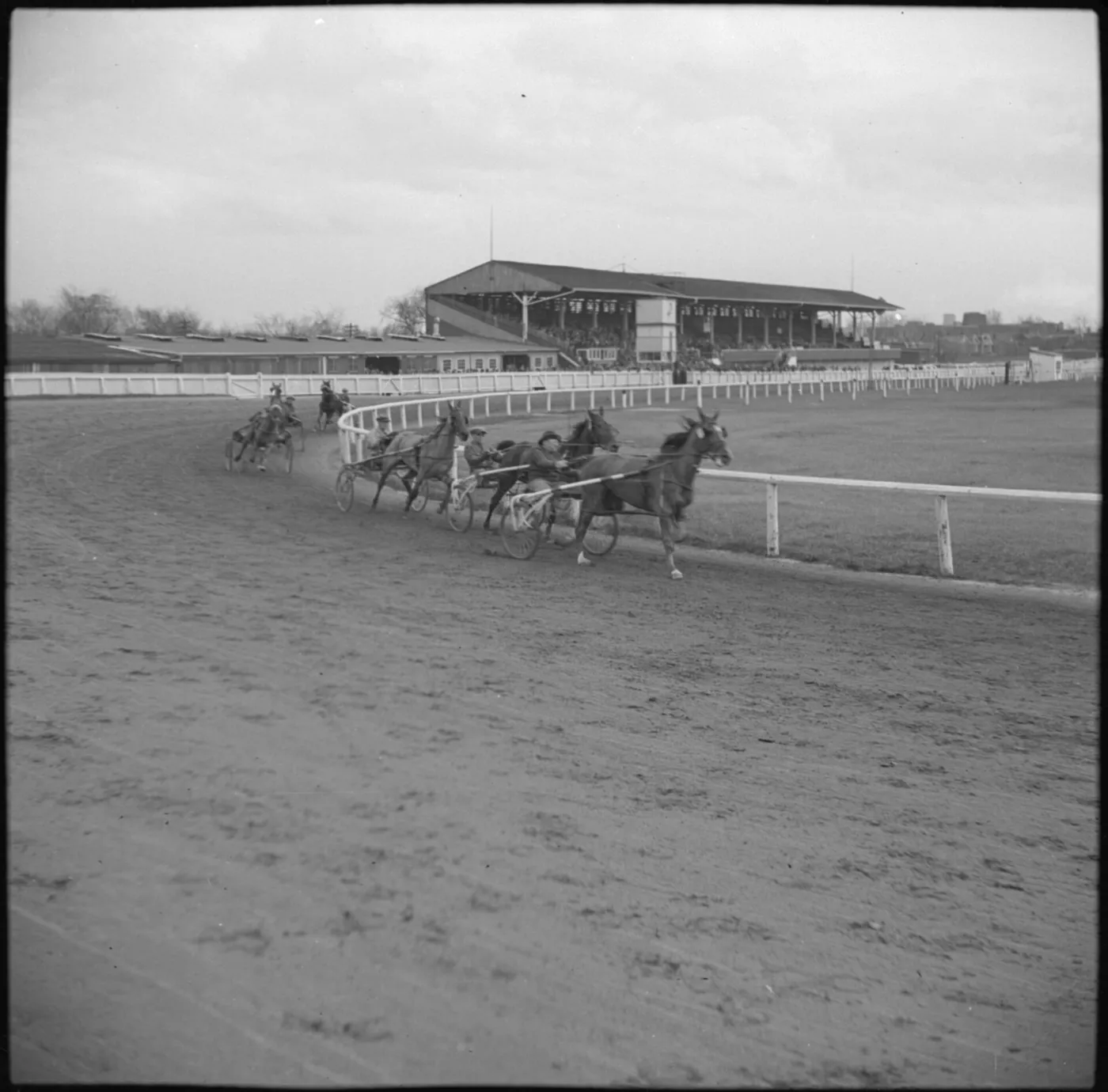
The Irish Champion Hurdle is the top two-mile hurdle race of the Irish jumps season, run at Leopardstown during the Dublin Racing Festival in early February. It often has a small field, a short-priced favourite and huge implications for the Champion Hurdle at Cheltenham. That combination makes it a race where how you bet matters as much as what you back.
Strictly for over-18s. Cloudbet is licensed in Curaçao and is not licensed in Ireland, so it is not GRAI-licensed. For free, confidential support ring Gambling Care on 1800 936 725 any time, or 08000 886 725 from Northern Ireland.
18+. Crypto deposits. Cloudbet is licensed in Curaçao and is NOT licensed by the GRAI. Irish gambling law changed in 2026: only GRAI-licensed operators may lawfully take bets from Irish customers. Ad: we may earn a commission. Bet only what you can afford to lose.

The race in a nutshell
The Irish Champion Hurdle is a Grade 1 race over about two miles at Leopardstown, the left-handed track in south Dublin. Since 2018 it has been part of the Dublin Racing Festival, the two-day meeting on the first weekend of February that packs a cluster of Grade 1 races into a single weekend. Runners are typically the best two-mile hurdlers trained in Ireland, sometimes joined by a British raider.
Because it's a conditions race rather than a handicap, horses carry level weights apart from allowances such as the one for mares. That means the best horse on ratings usually starts favourite, and often at short odds. The race's history is full of champions: Hurricane Fly famously won it five years running in the early 2010s, and the Willie Mullins stable has a long record of success in it. Always check the official race history if you want exact names and years.
Why the Irish Champion Hurdle is a betting puzzle
Three features shape how you should approach this race:
- Small fields. It's common for the race to have fewer than ten runners, and sometimes only five or six. That changes each-way terms, and it makes non-runners more costly.
- Short favourites. A dominant horse can go off at odds-on. Backing it to win gives little return; laying it, or opposing it, needs a good reason.
- Stable dominance. One or two powerful yards can have several runners. Understanding which one is the first choice can explain prices.
Each-way terms in small fields
Standard place terms in Ireland and Britain depend on the number of runners. For non-handicap races like the Irish Champion Hurdle, the common terms are:
| Runners | Places paid | Fraction of odds |
|---|---|---|
| 4 or fewer | Win only | – |
| 5 to 7 | 2 places | 1/4 |
| 8 or more | 3 places | 1/5 |
Books sometimes offer extra places or better fractions as promotions, so check the live terms. The key thing: if a race drops from eight runners to seven, the third place disappears. If you've backed something each way to finish third behind two obvious horses, a late withdrawal can wreck the place part of your bet.
Ask yourself whether each way makes sense at all. In a six-runner race with an odds-on favourite, the second-favourite at 5/2 each way is paying only 5/8 for a place, which is often poor value. Some punters prefer a "without the favourite" market or a straight place-only bet instead.
"Betting without" and place-only markets
When a hot favourite dominates, books often offer a "betting without" market that settles as if the favourite weren't running. If you think the favourite will win but have a strong view on who finishes best of the rest, this is a cleaner way to bet than each way. Place-only markets, where offered, let you bet on a horse simply to finish in the places at a set price. Both have their own margins, so compare them with the main market.
Reading the favourite's price
A favourite at 1/2 (decimal 1.50) implies a 66.7% chance; at 4/6 (1.67), about 60%; at 2/5 (1.40), about 71.4%. If you think the favourite is a 75% shot, 1/2 has some value. If you think it's closer to 60%, you should be looking elsewhere, even if you expect it to win. Being right about the winner doesn't mean you made a good bet.
Odds-on favourites in championship races do get beaten, sometimes because of an off-day, a jumping mistake or ground they don't like. But they also win often enough that blindly opposing them is a quick way to lose money. Have a specific reason: unproven on the going, a long absence, a known tendency to make errors, or a tactical setup that doesn't suit.
Stable pecking orders and jockey bookings
When a big stable runs two or three horses, the market will look at which one the stable's first-choice jockey rides. That isn't always the full story — plans change, owners have different retained riders, and a "second string" can win — but it's a strong signal. Things to note:
- Jockey bookings are confirmed at declarations, usually the day before. Prices can move sharply at that point.
- A stable's comments in the days before the race can hint at which horse is in better form.
- Multiple runners from one yard can affect tactics, with one horse setting the pace for another.
Don't assume any rider choice means the other horse has no chance. In championship races, every runner is high-class.
The Leopardstown factor
Leopardstown is a left-handed track with a stiff enough test at two miles in deep ground. Things to check:
- Going. February in Dublin can bring soft or heavy ground, but it can also dry out. The official going on the Irish scale includes descriptions like yielding, which falls between good and soft. A horse with proven form on soft ground is an asset if the rain comes.
- Course form. Many runners will have raced at the Christmas meeting at Leopardstown, so course form is often available. A horse that has won or run well over the track has a small edge in confidence.
- Pace. In a small field, a slow pace can turn the race into a sprint, which suits horses with a turn of foot. A strong pace favours stamina and jumping.
The Cheltenham connection
The Irish Champion Hurdle is a key trial for the Champion Hurdle at the Cheltenham Festival in March. That affects betting in two ways:
- Trainers' priorities. Some horses are aimed at Cheltenham, and the Leopardstown run is part of the plan rather than the ultimate target. They'll be fit, but perhaps not fully cranked up.
- Ante-post moves. A win at Leopardstown will cut a horse's Cheltenham price. If you're thinking ahead, compare the value of betting the Irish race with taking an ante-post Cheltenham price.
Our guides to Cheltenham ante-post betting and Cheltenham Festival betting tips cover the March side.
Non-runners and Rule 4
When a horse is withdrawn after the betting has formed, Rule 4 deductions apply to winning bets placed at fixed prices before the withdrawal. In a small field, a withdrawn favourite can produce a large deduction — the more fancied the withdrawn horse, the bigger the cut from your winnings. The deduction is based on the withdrawn horse's price at the time. Check your book's rules for ante-post bets, which are often "all-in, run or not" unless a non-runner no-bet concession is offered.
Forecasts and exactas
In small fields with a clear top two, forecast markets (picking the first and second in order) are popular. A straight forecast pays out at a dividend calculated from the starting prices of the two horses; a reverse forecast covers both orders at double the stake. The Tote exacta is a pool alternative. These bets can be appealing when you strongly believe the race is a match between two horses, but they need both to run to form.
18+. Crypto deposits. Cloudbet is licensed in Curaçao and is NOT licensed by the GRAI. Irish gambling law changed in 2026: only GRAI-licensed operators may lawfully take bets from Irish customers. Ad: we may earn a commission. Bet only what you can afford to lose.
Ante-post versus on the day
Ante-post markets for the Irish Champion Hurdle open well before February. Betting early can get you a bigger price, but the risks are real: your horse might be re-routed, injured, or the stable might choose a different target. Unless a book offers non-runner no-bet terms, an ante-post bet on a non-runner is a loss. On the day, you get confirmed runners, the going and jockey bookings, at the cost of shorter prices on the fancied runners.
Building a view of the race
- List the confirmed runners and their official ratings.
- Check the going and each horse's record on similar ground.
- Look at the form from the Christmas meeting and other key races.
- Note the jockey bookings and any stable comments.
- Consider the likely pace and which horses it suits.
- Estimate rough chances for the top three or four, then compare with the prices.
If our guide to Irish handicap ratings helps you understand how official ratings work, remember that in this race ratings mainly tell you who is best at level weights, not how much weight they carry.
A worked example (invented prices)
Imagine a six-runner field with the favourite at 4/7, the second favourite at 3/1 and the rest at 10/1 or bigger. Each-way terms are two places at 1/4. A €10 each-way bet on the 3/1 shot costs €20. If it finishes second, the place part pays at 3/4 (a quarter of 3/1), returning €17.50 on the €10 place stake; the win part loses. You've staked €20 and got €17.50 back. If instead you'd bet €20 in a "without the favourite" market at, say, 6/5 and the horse beat the other four, you'd collect €44. Same opinion, very different return. That's why choosing the market matters in small-field races.
Mares, second-season hurdlers and older champions
The make-up of the field changes how the race is priced. A mare receiving an allowance gets a small weight advantage over the geldings, and the market usually factors that in, but casual punters sometimes overlook it when comparing ratings. Second-season hurdlers stepping up from novice company can be hard to assess: their best form may have come against weaker opponents, yet they're often still improving. Older horses who've won big races before bring proven class, but you have to ask whether they're still at their peak. When the field mixes all three, look at the most recent form against similar opposition rather than past reputations.
On the day: what's worth watching
Late information can still help. Watch for a final going update after earlier races on the card, because jockeys' comments about the ground often appear quickly in racing media. Market moves in the last half-hour can reflect late money, but don't follow them blindly; a drifting favourite isn't always a warning sign. If you're at Leopardstown, a look at the horses in the parade ring can show whether a runner is relaxed or sweating up, though reading that well takes experience.
Dublin Racing Festival bankroll
The Irish Champion Hurdle is one race on a weekend of top-class racing. It's easy to spread your budget too thin across both days. Decide on a total for the weekend, pick the races you have a view on, and keep the Irish Champion Hurdle stake proportional to your confidence. Don't bet every race just because it's a Grade 1.
Licensing and where you bet
Since 2026, the Gambling Regulatory Authority of Ireland (GRAI) licenses betting operators taking bets from Irish customers. Cloudbet is licensed in Curaçao and is not GRAI-licensed, so you'd be outside the Irish consumer protection framework there. Read our guide on the legal position of online betting in Ireland and check each site's live terms, each-way rules and racing coverage before betting.
Common mistakes on Irish Champion Hurdle day
- Backing each way in a five-runner race without checking how few places are paid.
- Laying or opposing a dominant favourite with no real reason.
- Ignoring the going report.
- Putting the odds-on favourite in a double or treble to "boost" it, which mainly boosts the risk.
- Betting the race as if it were Cheltenham itself.
Further horse racing reading
New to racing? Start with our guide to how horse racing betting works, which covers odds, bet types and the Tote.
Enjoy the spectacle
The Irish Champion Hurdle is a race to savour, not one to chase losses on. Set limits and stick to them. If betting is causing you problems, Gambling Care's helpline is free and confidential: 1800 936 725, or 08000 886 725 from Northern Ireland. See our responsible gambling page for more support.
Questions players ask
Where and when is the Irish Champion Hurdle run?
At Leopardstown in Dublin as part of the Dublin Racing Festival, usually on the first weekend of February. Check the fixture list for exact dates.
How many places are paid each way in the Irish Champion Hurdle?
Under standard terms for non-handicaps: win only with 4 or fewer runners, 2 places at 1/4 odds with 5 to 7, and 3 places at 1/5 with 8 or more. Books sometimes offer better terms.
Is the Irish Champion Hurdle a trial for Cheltenham?
Yes. It's a key trial for the Champion Hurdle at the Cheltenham Festival in March.
Is Cloudbet licensed to take bets in Ireland?
No. Cloudbet is Curaçao-licensed and is not licensed in Ireland by the GRAI.
Where can I get help with gambling problems?
Gambling Care: 1800 936 725 (free, 24/7), or 08000 886 725 from Northern Ireland.
18+. Crypto deposits. Cloudbet is licensed in Curaçao and is NOT licensed by the GRAI. Irish gambling law changed in 2026: only GRAI-licensed operators may lawfully take bets from Irish customers. Ad: we may earn a commission. Bet only what you can afford to lose.
If betting is costing you more than money, free and confidential help is there 24 hours a day, 365 days a year: the Problem Gambling Helpline run by Dunlewey Addiction Services for Gambling Care, on 1800 936 725 (from Northern Ireland: 08000 886 725). Source: grai.ie.