Punchestown Festival Betting Tips: How to Read the Week, Each-Way Maths, Ground, Fatigue and Staking for Irish Punters
Welcome bonus for new players + fast crypto payouts. Just helping a brother out.
18+. Crypto deposits. Cloudbet is licensed in Curaçao and is NOT licensed by the GRAI. Irish gambling law changed in 2026: only GRAI-licensed operators may lawfully take bets from Irish customers. Ad: we may earn a commission. Bet only what you can afford to lose.
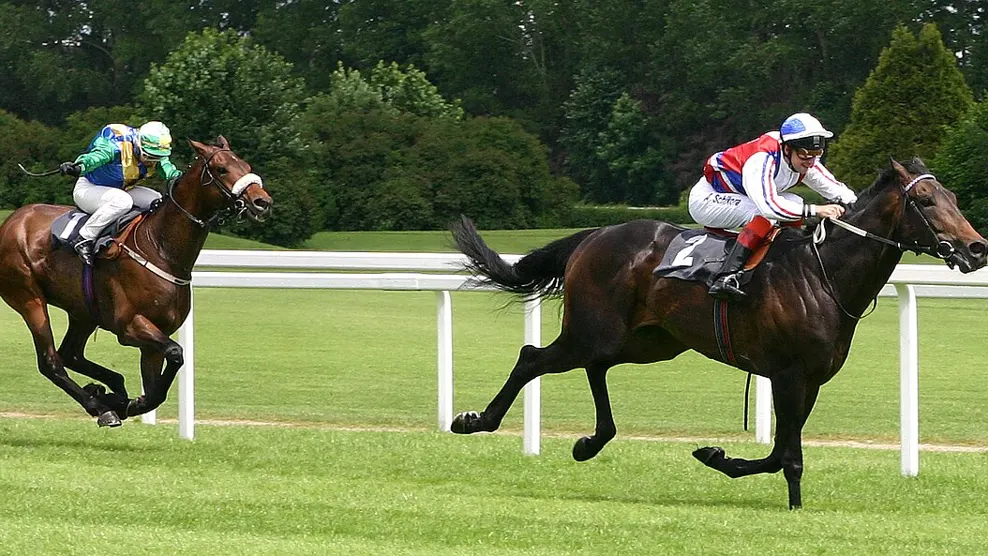
Punchestown is the last big party of the Irish jumps season, and for a lot of us it's the best week of the year. Cheltenham is done, Aintree is done, the ground is changing and the big yards are emptying the stables for one final push. That makes it a brilliant festival to watch and a tricky one to bet on, because the form book from the spring doesn't always carry over. This isn't a list of horses to back. It's the stuff we wish someone had told us before our first Punchestown: how to read the week, how the each-way maths really works, and how to keep five days of racing from eating your whole budget.
18+ only. This is general information, not betting or financial advice. Every price, field and stake below is an illustration we made up to show the method, not a tip for a real race. Cloudbet, which we link to, holds a Curaçao licence and is not licensed by the Gambling Regulatory Authority of Ireland (GRAI), so Irish complaint routes don't apply to it. If gambling is causing you bother, Gambling Care is free, confidential and open 24/7 on 1800 936 725 (Northern Ireland: 08000 886 725).
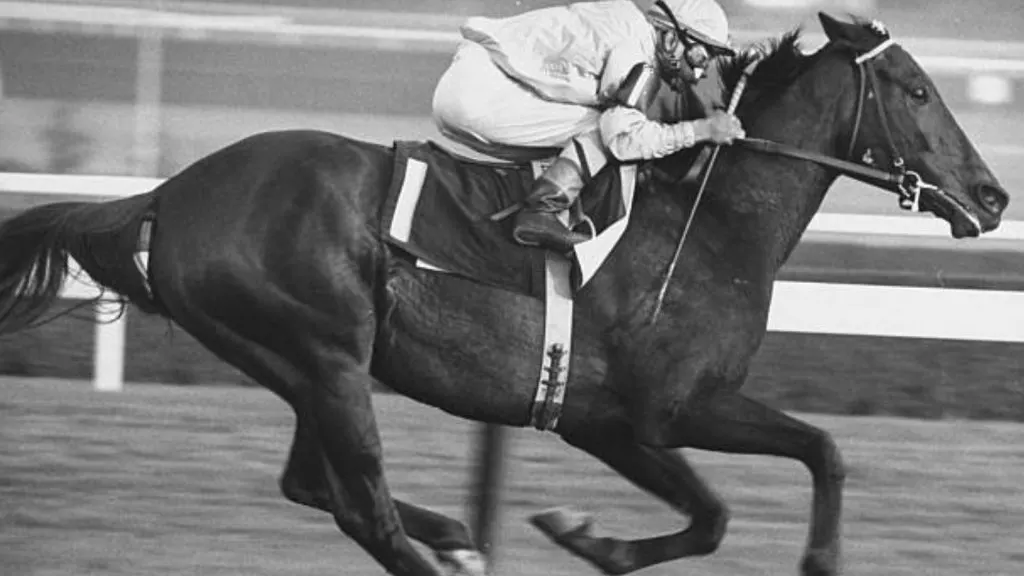
The short version
- The Punchestown Festival is a five-day National Hunt meeting at Punchestown, near Naas in County Kildare, usually run in late April or early May as the finale of the Irish jumps season.
- The cards are packed with Grade 1 races, and many of the runners already had hard races at Cheltenham or Aintree a few weeks earlier. How a horse has come out of its spring is often the whole puzzle.
- Ground can be anything from soft to good at that time of year, and it can change during the week. Check the going every morning, not just on Monday.
- Small Grade 1 fields mean big favourites and short prices. The value, when there is any, is often in the place market or in the big handicaps, not in backing the obvious one at 4/6.
- Know your each-way terms, Rule 4 and non-runner rules before you bet. They change your returns more than most people think.
- Set one budget for the whole week, split it by day, and stick to it. Five days is a long time to chase.
Why Punchestown isn't just "Cheltenham part two"
Lots of punters treat Punchestown as a rematch of Cheltenham. Sometimes it is: the same horses, the same trainers, a similar race. But a few things make it a different betting puzzle, and getting your head around them is most of the battle.
| Factor | Cheltenham in March | Punchestown in late spring | What it means for your bets |
|---|---|---|---|
| Point in the season | The main target for most top horses | The end of a long campaign | Some horses are at their peak, others are running on fumes. Freshness matters. |
| Track | Undulating, stiff uphill finish | A big, galloping right-handed track with its own quirks | A horse who struggled up the Cheltenham hill can look a different animal on a flatter, more galloping track, and vice versa. |
| Ground | Often soft or good to soft | Can dry out quickly in spring, but rain can still turn it | Horses that need cut in the ground can be beaten by drying conditions. Check the going daily. |
| Field sizes in top races | Often bigger | Grade 1s can cut up to small fields | Fewer runners, shorter favourites, and the each-way terms change with the field size. |
| Motivation | Everyone wants a Festival winner | Some yards chase championship titles, others give horses a last outing before a summer break | Running plans tell you something. A horse sent over from England for one race has usually been aimed at it. |
None of that is a magic rule. It's a list of questions to ask about every horse in every race. If you get into the habit of asking them, you'll stop backing horses purely because they won at Cheltenham six weeks earlier.
Reading horses at the end of a long season
This is the big one. By the time Punchestown comes around, a top-class chaser might have run four or five times since the autumn, including a hard race at Cheltenham and maybe another at Aintree or Fairyhouse. Some horses thrive on that. Others go over the top. A few things we look at:
The gap since the last run
Count the days since the horse last ran and look at what that race was like. A comfortable win three weeks ago is very different from a gruelling, all-out battle in heavy ground three weeks ago. The bare result doesn't tell you how much the race took out of the horse; the race replay and the comments-in-running usually do.
How hard the last race was
Signs that a horse had a tough day: it was hard ridden a long way from home, it jumped poorly and had to be driven back into it, it finished tired or eased right down, or the race was run at a punishing gallop on testing ground. Horses that won easily or were held up and never put under maximum pressure can come back fresher.
Patterns from the trainer
Trainers have habits. Some run their horses at every festival and have them primed to peak again in late spring. Others aim at Cheltenham and are happy to give a horse a light campaign afterwards. You don't need to know every yard inside out, but if you look at how a trainer's horses have done at this meeting over the past few seasons, you'll often see a pattern. The racing press and the trainers' own stable tours are useful here, as long as you remember that everyone is a bit optimistic in public.
Market moves on the day
At the end of the season, money in the market can tell you about well-being. A horse drifting out from 3/1 to 5/1 when there's no obvious reason can be a hint that connections or sharp punters aren't so keen. A horse being backed from 8/1 into 5/1 can mean the opposite. It's not gospel, and lots of moves mean nothing, but it's worth a look before you commit.
The ground: why it matters so much in spring
Irish going descriptions run from heavy through soft, yielding to soft, yielding, good to yielding, good and good to firm. "Yielding" is the Irish term that sits roughly where the British would say good to soft. In late spring, ground can dry out fast on a sunny, breezy week and come back the other way with a heavy shower. A few rules of thumb:
- Know each horse's ground preference. Look at its best runs and the going on those days. Some horses only show their best form with plenty of give; others need a sound surface to use their speed.
- Check the going report every morning, and again before the race if the weather is changing. Punchestown publishes going updates and the GoingStick readings are usually reported too.
- Watch for non-runners. If the ground changes, horses that need the opposite conditions may be taken out. That shortens everyone else's price and brings Rule 4 into play (more on that below).
- Don't overreact to one word. "Good to yielding" one day and "yielding" the next isn't a revolution. A switch from soft to good is.
We've a separate guide on how the going affects betting that goes deeper into the idea; most of it applies to Punchestown just as well.
Grade 1 favourites: why 4/6 is rarely the bet
Punchestown Grade 1s often have small fields and a strong favourite. Suppose a race has a 4/6 favourite. To break even backing it at that price, it needs to win 60% of the time (1 ÷ 1.67). The bookmaker's margin is baked into that price, so the true chance is probably a bit lower than the price suggests. You need to genuinely believe the favourite is better than 60% to make it worthwhile.
That doesn't mean never back a short-priced favourite. It means don't do it by default. If you think the favourite is a 70% shot, 4/6 is a fair bet. If you think it's a 55% shot, the race might be a place-market or no-bet race for you. And remember the end-of-season point: a favourite who had a hard race at Cheltenham might not be the same horse.
How big is the bookmaker's margin in a festival race?
Every set of prices adds up to more than 100% when you convert them to percentages. The extra is the bookmaker's margin, often called the overround. Here's a made-up ten-runner race to show how it works.
| Horse | Price | Implied chance | Fair chance (margin removed) | Fair price |
|---|---|---|---|---|
| A | 3/1 | 25.0% | 21.1% | 3.73/1 (4.73) |
| B | 4/1 | 20.0% | 16.9% | 4.92/1 (5.92) |
| C | 5/1 | 16.7% | 14.1% | 6.10/1 (7.10) |
| D | 6/1 | 14.3% | 12.1% | 7.28/1 (8.28) |
| E | 8/1 | 11.1% | 9.4% | 9.65/1 (10.65) |
| F | 10/1 | 9.1% | 7.7% | 12.02/1 (13.02) |
| G | 12/1 | 7.7% | 6.5% | 14.38/1 (15.38) |
| H | 16/1 | 5.9% | 5.0% | 19.12/1 (20.12) |
| I | 20/1 | 4.8% | 4.0% | 23.85/1 (24.85) |
| J | 25/1 | 3.8% | 3.3% | 29.77/1 (30.77) |
Those prices add up to about 118.3%, so the book carries roughly an 18% margin. If you spread money across the whole field in proportion to those prices, you'd lose about 15.5% of it on average (1 − 100 ÷ 118.3). Racing margins are much bigger than in, say, a Premier League match, and they tend to be bigger again in competitive handicaps with big fields. That's not a reason to avoid racing. It's a reason to only bet when you have a real opinion, and to shop around for the best price, because a point or two of odds makes a big difference against a margin that size.
Our odds calculator converts fractional prices to percentages in a couple of seconds, which saves a lot of head-scratching in the ring.
Each-way bets at Punchestown, properly explained
An each-way bet is two bets of the same stake: one on the horse to win, and one on the horse to be placed. A €5 each-way bet costs €10. The place part pays a fraction of the win odds, and how many places are paid depends on the field size and the race type.
Typical each-way terms
These are the standard terms many Irish and UK bookmakers use, but they're not universal, and festival week often brings "extra places" offers. Always check the terms on the race before you bet.
| Runners | Race type | Places paid | Fraction of win odds |
|---|---|---|---|
| 2–4 | Any | Win only | No each-way |
| 5–7 | Any | 2 | 1/4 |
| 8 or more | Non-handicap | 3 | 1/5 |
| 8–11 | Handicap | 3 | 1/5 |
| 12–15 | Handicap | 3 | 1/4 |
| 16 or more | Handicap | 4 | 1/4 |
Watch out for field sizes dropping on the day. An eight-runner race paying three places becomes a seven-runner race paying two if there's a non-runner, and if you placed your bet before the withdrawal, your terms may still change depending on the bookmaker's rules.
A worked each-way example
You back a horse at 10/1 for €5 each-way (€10 total) in a non-handicap with eight runners, so the terms are three places at 1/5 the odds. The place part therefore pays 10/1 ÷ 5 = 2/1.
| Result | Win part | Place part | Total return | Profit or loss |
|---|---|---|---|---|
| Wins | €5 × 11 = €55 | €5 × 3 = €15 | €70 | +€60 |
| Finishes 2nd or 3rd | €0 | €15 | €15 | +€5 |
| Unplaced | €0 | €0 | €0 | −€10 |
That's why each-way on short prices rarely makes sense: at 2/1, the place part pays only 2/5 at 1/5 odds, and a place just about gives you part of your stake back. Each-way earns its keep on bigger prices where a place covers the whole bet and then some.
When the place market can be the value
Here's a trick sharp racing punters have used for years. In an eight-runner race with a hot odds-on favourite, the place part of an each-way bet can be better value than the win part. That's because the favourite takes up most of the win chance but only one of the three places, which leaves the other two places to be shared out among the rest.
We took a made-up eight-runner race (4/6, 4/1, 7/1, 10/1, 14/1, 20/1, 33/1 and 50/1), stripped the margin out, and estimated each horse's chance of finishing in the first three using a standard simple model. The model tends to flatter shorter-priced horses a little, so treat it as a rough guide.
| Price | Fair win chance | Model chance of top 3 | Place odds at 1/5 (decimal) | Expected result on the win part | Expected result on the place part |
|---|---|---|---|---|---|
| 4/6 | 50.9% | 92.4% | 1.13 | −15.2% | +4.7% |
| 4/1 | 17.0% | 62.8% | 1.80 | −15.2% | +13.0% |
| 7/1 | 10.6% | 45.2% | 2.40 | −15.2% | +8.5% |
| 10/1 | 7.7% | 34.5% | 3.00 | −15.2% | +3.5% |
| 14/1 | 5.7% | 26.1% | 3.80 | −15.2% | −0.9% |
| 20/1 | 4.0% | 19.0% | 5.00 | −15.2% | −4.9% |
| 33/1 | 2.5% | 12.0% | 7.60 | −15.2% | −9.0% |
| 50/1 | 1.7% | 8.1% | 11.00 | −15.2% | −11.3% |
In this example, the place part on the second and third favourites looks positive while the win part loses 15% on every horse. The each-way bet as a whole still loses a little (the 4/1 shot comes out at about −1%), because you're forced to take the win part too. That's why some punters use "place only" markets or betting exchanges to back the place alone. The bigger lesson is simple: small fields with a hot favourite are where the place terms work in your favour, and big fields with no standout are where they don't.
Rule 4 and non-runners
When a horse is withdrawn after the market has formed, everyone else's chance of winning goes up, so bookmakers take a deduction from winning bets placed at the earlier prices. That deduction is called Rule 4. The size depends on how short the withdrawn horse was. On the standard table most bookmakers use, a few examples are:
| Price of the withdrawn horse | Deduction from winnings |
|---|---|
| Evens to 6/5 | 45c in the euro |
| 5/4 to 6/4 | 40c |
| 2/1 (in the 15/8 to 9/4 band) | 30c |
| 5/2 to 3/1 | 25c |
| 10/3 to 4/1 | 20c |
| 9/2 to 11/2 | 15c |
| 6/1 to 9/1 | 10c |
| 10/1 to 14/1 | 5c |
| Bigger than 14/1 | No deduction |
Example: you have €10 on a horse at 8/1. A 3/1 shot is taken out before the off. If your horse wins, your €80 of winnings is cut by 25%, so you get €60 of winnings plus your €10 stake back, €70 in total instead of €90. Your stake is never reduced, only the winnings. Bets struck at starting price (SP) aren't usually affected, because the SP is formed after the withdrawal. Check your bookmaker's own rules, as the exact table and its edge cases can vary.
During a festival week where the ground is changing, non-runners are common. If you like a horse early in the day and the ground is on the move, it can be worth waiting until the declarations settle down, or taking a "best odds guaranteed" offer if your bookmaker has one, which pays the SP if it ends up bigger than the price you took.
Handicaps at Punchestown
The festival isn't just Grade 1s. There are competitive handicaps on most days, often with big fields of horses that have been laid out for the race. These are the races where the margin is biggest and the results are hardest to call, but also where a bit of homework can pay.
- Check the handicap mark. A horse running off a mark below its best recent performance is "well handicapped" on paper. Our guide to Irish handicap ratings explains how marks work.
- Look at weight and claimers. A good conditional or amateur jockey claiming a few pounds off a well-handicapped horse is often worth noting, especially in races restricted to those riders.
- Think about the draw of the race, not the starting stalls. Jumps races have no stalls, but the shape of the race matters. Lots of front-runners can set it up for a closer; a lone leader can steal it.
- Use the extra places. Many bookmakers pay extra places on big festival handicaps. With 16 or more runners and five or six places paid, a well-chosen each-way bet at a big price can return a profit just by hitting the frame.
Dutching: backing two horses for the same profit
Sometimes you can't split two horses. Dutching means betting on both so you make the same profit whichever one wins. You split the stake in proportion to each horse's implied chance.
Example: you want to back a 4/1 shot and a 6/1 shot with €20 in total. The implied chances are 1 ÷ 5 = 20% and 1 ÷ 7 = 14.3%, which add up to 34.3%. Split the €20 in that ratio:
| Horse | Price | Stake | Return if it wins | Profit |
|---|---|---|---|---|
| Horse 1 | 4/1 | €11.67 | €58.33 | +€38.33 |
| Horse 2 | 6/1 | €8.33 | €58.33 | +€38.33 |
The combined bet is like backing one horse at about 1.92/1 (2.92 in decimal), with a 34.3% chance according to the prices. It's only a good idea if you think the pair together have a better chance than that. Dutching two horses isn't a way to "beat" the race; it's just a way to express a view that one of two will win.
18+. Crypto deposits. Cloudbet is licensed in Curaçao and is NOT licensed by the GRAI. Irish gambling law changed in 2026: only GRAI-licensed operators may lawfully take bets from Irish customers. Ad: we may earn a commission. Bet only what you can afford to lose.
A quick checklist for each race
- What's today's going, and has it changed since yesterday?
- For each horse I fancy: what's its best ground, and when and how hard did it last run?
- Is there a standout favourite? If so, is the place market more interesting than the win market?
- How many runners, and what are the each-way terms? Are any extra places on offer?
- Any non-runners likely, and is best odds guaranteed available?
- What's my price? If I think a horse has a 12% chance, its fair price is about 7.3/1. If I can get 10/1, that's a bet; at 6/1, it isn't.
- How much of today's budget is left?
Putting a price on your own opinion
The single most useful habit in racing is writing down your own chance for a horse before you look at the price. Then compare.
| Your chance | Your fair price | Price on offer | Expected result per €10 win bet |
|---|---|---|---|
| 12% | about 7.3/1 | 10/1 | +€3.20 |
| 12% | about 7.3/1 | 6/1 | −€1.60 |
| 25% | 3/1 | 7/2 | +€1.25 |
| 25% | 3/1 | 5/2 | −€1.25 |
| 55% | about 4/5 | 4/6 | −€0.83 |
The numbers are only as good as your estimate. Nobody gets these exactly right. But the habit stops you backing a horse just because you like it, and it pushes you towards bigger prices on horses you rate, which is where long-term value lives. If you want to go deeper, our guide to how horse racing betting works covers the basics of SP, early prices and bet types.
A five-day staking plan
Five days, seven or so races a day. That's a lot of temptation. The easiest way to enjoy the week without regret is to set one budget for the whole festival, split it by day, and stop when a day's money is gone. Here's an example for someone who's decided €100 is their festival money:
| Day | Budget | Typical bets |
|---|---|---|
| Tuesday | €20 | Two or three bets of €5–€8 on races you've studied |
| Wednesday | €20 | Same again |
| Thursday | €20 | Same again |
| Friday | €20 | Same again |
| Saturday | €20 | Same again |
Rules that go with it: leftover money from one day doesn't roll into the next day's "chase", winnings go into a separate pot rather than straight back on, and if you're down at the end of a day, you're done for the day. Those are example figures, not a recommendation for how much anyone should spend; the right amount is whatever you can lose without it affecting your bills, sleep or mood. If you've €50 for the week, halve every number. If you're betting every race, you're probably betting too much.
Accumulators across the week
Festival accas are fun, and lots of bookmakers run promotions on them. Just know what you're up against. A four-fold of horses at 2/1 each pays 80/1 (3 × 3 × 3 × 3 = 81 in decimal). If each one has a genuine 30% chance, they all win about 0.8% of the time, so the fair price would be about 122/1. Taking 80/1 means giving up about a third of the value. The more legs you add, the more margin you pay. Keep accas small, keep them for fun, and use the accumulator calculator to see exactly what each one pays.
Betting in the ring versus online
If you're going to Punchestown in person, the on-course bookmakers are part of the craic, and sometimes they'll offer a better price on a horse than the online firms. A few practical points:
- Bring a set amount of cash and leave your cards in your pocket, or at home.
- Check the price on the board before you hand over money, and keep your docket safe.
- On-course bookmakers set their own each-way terms; they're usually posted on the board. Ask if you're not sure.
- The Tote pool pays out a share of the pool rather than fixed odds, so you won't know the exact return until the race is off.
- Online, compare a few firms before you bet. In big festival races, prices can differ by a few points between bookmakers.
Common mistakes at Punchestown
- Backing a horse purely because it won at Cheltenham, without asking how hard that race was or how long ago.
- Ignoring the going report on the morning of racing.
- Betting each-way at short prices, where the place part barely returns anything.
- Forgetting Rule 4 when a fancied horse is withdrawn and wondering why the payout is smaller.
- Betting every race on every day because it's "festival week".
- Piling into big accas because of a promotion, without checking the real value.
- Chasing losses on Saturday after a bad Friday.
A short glossary
- Grade 1: the top level of National Hunt race.
- Going: the official description of the ground conditions.
- Each-way: two equal bets, one to win and one to place.
- Rule 4: a deduction from winnings when a horse is withdrawn late.
- SP: starting price, the official price at the off.
- Best odds guaranteed: a promotion that pays the SP if it's bigger than the price you took.
- Dutching: splitting a stake across several horses for the same profit whichever wins.
- Overround: the bookmaker's margin, how far the prices add up above 100%.
Is it legal to bet on Punchestown from Ireland?
Yes. Betting is legal for adults in Ireland, and the Gambling Regulatory Authority of Ireland (GRAI) licenses operators, with the first remote betting licences having commenced on 1 July 2026. A GRAI-licensed bookmaker gives you Irish protections and complaint routes. Offshore sites such as Cloudbet aren't GRAI-licensed, so those protections don't apply. Our guide to whether online betting is legal in Ireland lays out the rules in plain English, and our round-up of horse racing betting sites explains what to compare.
Keep it a day out
Punchestown is a great week: good racing, good company, a last blast of the season. Keep the betting as part of the fun rather than the point of it. Set your budget before the first race, don't chase, and walk away when the day's money is gone. If gambling stops being fun, Gambling Care is free and confidential on 1800 936 725, 24/7 (Northern Ireland: 08000 886 725). Our responsible gambling page has more support and self-exclusion options.
Our take
The best Punchestown betting tip isn't a horse, it's a habit: ask how each fancied runner has come out of its spring before you back it. After that, respect the ground, learn the each-way terms, use the place market in small fields with a hot favourite, and give the big handicaps proper homework or leave them alone. Put your own price on a horse before you look at the market, bet only when the gap is real, and keep the week's money in one envelope. Do that and you'll enjoy the festival whatever happens at the last.
Questions players ask
When is the Punchestown Festival?
It's usually held over five days in late April or early May at Punchestown Racecourse near Naas, County Kildare, as the finale of the Irish National Hunt season. Check the official fixture list for this year's dates.
What are the each-way terms at Punchestown?
They depend on the bookmaker and the race. Common terms are two places at 1/4 odds for 5–7 runners, three places at 1/5 for 8 or more runners in non-handicaps, and up to four places at 1/4 in big handicaps. Many firms offer extra places during festival week, so check before you bet.
Do Cheltenham winners do well at Punchestown?
Sometimes, but not always. Many top horses have had a hard spring by the time Punchestown comes round. Check how hard their last race was, how long ago it was, and whether the ground and track suit them.
What is Rule 4 in horse racing?
Rule 4 is a deduction from winnings when a horse is withdrawn after you've taken a price. The size depends on the withdrawn horse's odds. For example, a 3/1 shot withdrawn usually means a 25c-in-the-euro deduction from your winnings, not your stake.
Is each-way betting worth it at short prices?
Usually not. At 2/1 with 1/5 place terms, a place only pays 2/5, so you get back less than your total stake. Each-way works better on bigger prices.
Is Cloudbet licensed in Ireland?
No. Cloudbet holds a Curaçao licence and isn't licensed by the Gambling Regulatory Authority of Ireland, so Irish complaint routes don't apply.
Where can I get help with gambling in Ireland?
Call Gambling Care on 1800 936 725, free and confidential, 24/7. In Northern Ireland, call 08000 886 725.
18+. Crypto deposits. Cloudbet is licensed in Curaçao and is NOT licensed by the GRAI. Irish gambling law changed in 2026: only GRAI-licensed operators may lawfully take bets from Irish customers. Ad: we may earn a commission. Bet only what you can afford to lose.
If betting is costing you more than money, free and confidential help is there 24 hours a day, 365 days a year: the Problem Gambling Helpline run by Dunlewey Addiction Services for Gambling Care, on 1800 936 725 (from Northern Ireland: 08000 886 725). Source: grai.ie.