Six Nations Betting Tips from Ireland: Bonus Points, Handicaps, Fixture Luck and a Round-by-Round Plan
Welcome bonus for new players + fast crypto payouts. Just helping a brother out.
18+. Crypto deposits. Cloudbet is licensed in Curaçao and is NOT licensed by the GRAI. Irish gambling law changed in 2026: only GRAI-licensed operators may lawfully take bets from Irish customers. Ad: we may earn a commission. Bet only what you can afford to lose.
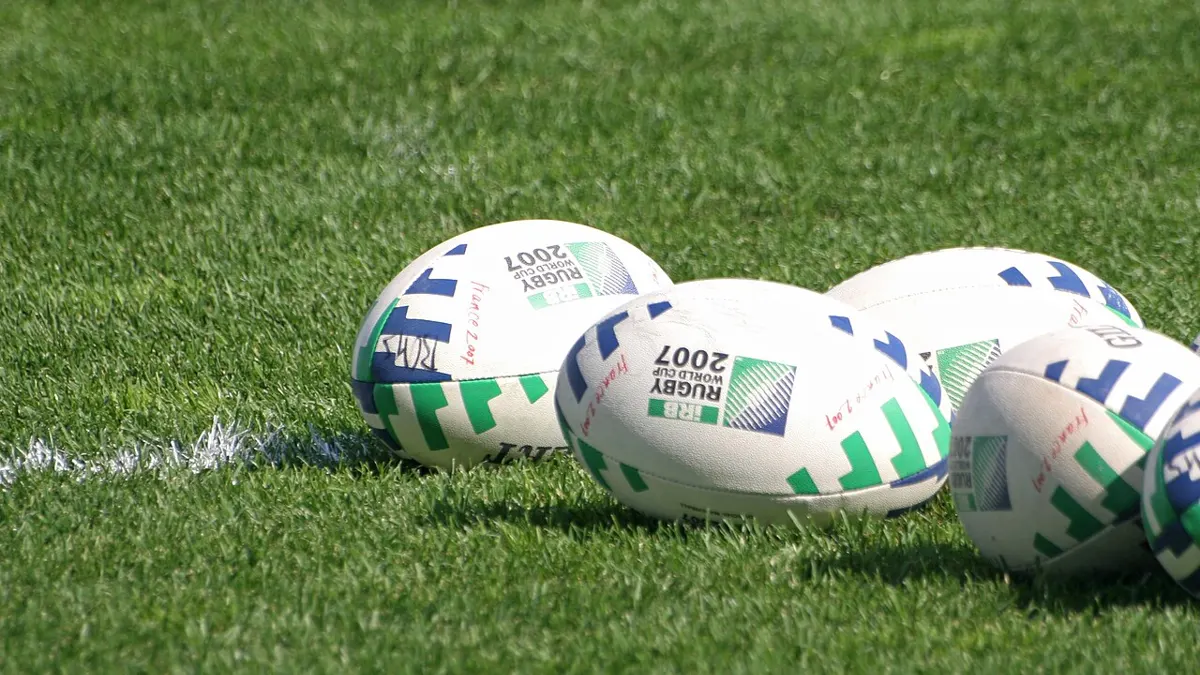
Come February, half the country turns into rugby experts, and the other half just wants to know what to back on Saturday. This page is for both of you. It isn't a list of picks for this weekend (those go out of date the minute a team sheet drops). It's the stuff that actually helps you bet the Six Nations better year after year: how the bonus-point table works, how to put your own number on a handicap, when the try bonus and losing bonus markets make sense, and why the fixture list can matter as much as form when you're looking at the outright. Think of it as a brother who's been burned a few times showing you where the holes are.
18+ only. This is general information, not betting advice, and every price on this page is a made-up example from a simple model. We don't tip specific teams or players. Cloudbet, which we link to, holds a Curaçao licence and is not licensed by the Gambling Regulatory Authority of Ireland (GRAI), so Irish complaint routes don't apply to it. If betting stops being fun, Gambling Care is free, confidential and open 24/7 on 1800 936 725 (Northern Ireland: 08000 886 725).
Tips in a nutshell
- Learn the bonus-point system. It shapes how teams play late in games and opens up side markets most punters skip.
- Build your own expected margin for each match, then compare it with the handicap line instead of just backing who you think wins.
- Check the fixture list before any outright bet. Three home games or two makes a real difference to a team's title chances.
- Watch the weather for total points. A wet, windy afternoon can knock several points off a typical total.
- Grand Slam and Triple Crown prices are just multiplied match chances, so you can check them yourself in a minute.
- Keep stakes level across all five rounds. Don't let one big weekend decide your whole championship.
The championship table: how points are won
The Six Nations is England, France, Ireland, Italy, Scotland and Wales. Everyone plays everyone once over five rounds, usually spread over about seven weeks with two rest weekends. Home and away flip each year, so if Ireland host a team one year, they travel there the next. Since 2017 the table has used bonus points:
| Result | Points |
|---|---|
| Win | 4 |
| Draw | 2 |
| Loss | 0 |
| Try bonus: score four or more tries (win, draw or lose) | +1 |
| Losing bonus: lose by seven points or fewer | +1 |
| Grand Slam: win all five matches | +3 |
The Grand Slam bonus exists so that a team that wins every game can't be pipped by a team that lost once but picked up more bonus points. If teams finish level on points, the tie-breakers (points difference first) decide it; check the current rules before betting on a close finish. For punters, the key point is that the title can swing on bonus points, so the outright isn't just "who wins the most games".
Tip 1: make your own expected margin
The best habit you can build is to write down, before you look at any prices, how many points you think one side wins by. Rugby margins are spread out, so a single number isn't the whole story, but it's enough to turn into chances. Using a typical spread for international rugby (a standard deviation of about 13 points), here's what an expected margin means:
| Expected margin for the favourite | Favourite wins | Draw | Underdog wins | Fair price for favourite |
|---|---|---|---|---|
| 0 (coin toss) | 48.5% | 3.1% | 48.5% | 2.06 |
| +3 | 57.6% | 3.0% | 39.4% | 1.74 |
| +6 | 66.4% | 2.8% | 30.9% | 1.51 |
| +9 | 74.3% | 2.4% | 23.2% | 1.35 |
| +12 | 81.2% | 2.0% | 16.8% | 1.23 |
| +15 | 86.8% | 1.6% | 11.7% | 1.15 |
| +20 | 93.3% | 0.9% | 5.7% | 1.07 |
| +25 | 97.0% | 0.5% | 2.5% | 1.03 |
Two things jump out. First, even a team you rate nine points better loses about one game in four. Second, heavy favourites are priced so short that backing them to win is rarely worth it on its own. That's why the handicap is usually the more interesting bet.
Where your margin comes from
- Home advantage. In our examples we use about 3 to 4 points, which is a common rough figure for international rugby. Swap venues and an even game becomes a 60/40 one.
- Team sheets. Starting half-backs, the front row and the goal-kicker matter most. Wait for the announced side before betting big.
- Rest and travel. A side coming off a bruising game on a short turnaround is worth less than a fresh one. The rest weekends often reset this.
- Motivation. A team already out of the title race in round five plays differently from one chasing a bonus point.
Tip 2: bet the handicap, not just the winner
Say you expect the home side to win by nine. Here's how often they cover various handicap lines, the fair price, and what you'd make or lose on average per €10 at a typical price of 1.90:
| Handicap line | Covers | Fair price | Average result per €10 at 1.90 |
|---|---|---|---|
| −3.5 | 66.4% | 1.51 | +€2.61 |
| −6.5 | 57.6% | 1.74 | +€0.95 |
| −9.5 | 48.5% | 2.06 | −€0.79 |
| −12.5 | 39.4% | 2.54 | −€2.52 |
| −15.5 | 30.9% | 3.24 | −€4.14 |
| −19.5 | 21.0% | 4.77 | −€6.02 |
The bookie will normally set its line close to its own expected margin, so you'll rarely see −3.5 at 1.90 when the market thinks +9. The table is about the size of the gap: if your number and the line differ by three points, that's worth roughly nine percentage points of probability. A one-point disagreement isn't worth a bet once margin is taken off. Only bet when you're well away from the line, and be honest that the bookie usually knows more than you.
Tip 3: use the bonus-point markets
Some bookies price "to score four or more tries" or "to get a bonus point". These markets suit punters who do their homework, because most of the casual money goes on the match result.
Try bonus
If you think a team will score a certain number of tries on average, a simple model tells you how often they reach four:
| Expected tries | Chance of 4+ | Fair price |
|---|---|---|
| 1.5 | 6.6% | 15.23 |
| 2.0 | 14.3% | 7.00 |
| 2.5 | 24.2% | 4.13 |
| 3.0 | 35.3% | 2.83 |
| 3.5 | 46.3% | 2.16 |
| 4.0 | 56.7% | 1.77 |
| 4.5 | 65.8% | 1.52 |
| 5.0 | 73.5% | 1.36 |
Notice how sensitive it is: moving from 3.0 to 3.5 expected tries adds 11 points of probability. Weather, the opposition's defence and whether a side kicks its penalties or goes for the corner all move that number. A team chasing the bonus late in a game will turn down shots at goal, which can also push the total points market around.
Losing bonus
The losing bonus (lose by seven or fewer) is a nice way to back an underdog you think will stay close but probably not win. Here's how often a side loses by one to seven points, depending on its expected margin:
| Expected margin for the side | Loses by 1-7 |
|---|---|
| −15 | 15.0% |
| −9 | 19.7% |
| −5 | 21.2% |
| −2 | 21.0% |
| 0 | 20.3% |
| +3 | 18.4% |
It peaks at roughly one in five for a modest underdog. If a bookie offers it as a standalone market, anything much shorter than 5.0 needs a good reason. More commonly you'll get at it through the winning-margin market.
Tip 4: winning margin bands
The classic rugby market splits results into "home 1-12", "home 13+", "draw", "away 1-12" and "away 13+". For a game where you expect the home side by six, our model gives:
| Band | Chance | Fair price |
|---|---|---|
| Home 13+ | 30.9% | 3.24 |
| Home 1-12 | 35.5% | 2.81 |
| Draw | 2.8% | 36.26 |
| Away 1-12 | 23.1% | 4.33 |
| Away 13+ | 7.7% | 12.93 |
The draw almost always looks generous at 25.0 or more, but at under 3% it's still a long shot. The "away 1-12" band is often where value hides when a decent underdog comes to town: it pays well if the visitors nick a close one. Just read the band carefully. "Away 1-12" means the away team wins by 1 to 12; it does not cover a narrow home win. If you want to back a close game either way, you need two bands or the handicap on the underdog. Mixing these up is one of the most common slip mistakes in rugby.
Tip 5: let the weather set your totals
Six Nations games are played in late winter, and a wet day changes everything: more kicking, more scrums, fewer tries. Using a rough model with a typical total around 44 points and a spread of 12, here's how often the game goes over various lines, and what happens if you knock the expected total down to 38 for a filthy day:
| Total points line | Over, normal day (expect 44) | Over, wet day (expect 38) |
|---|---|---|
| 36.5 | 73.4% | n/a |
| 40.5 | 61.5% | 41.7% |
| 44.5 | 48.3% | 29.4% |
| 48.5 | 35.4% | n/a |
| 52.5 | 23.9% | n/a |
Six points off the expected total turns a coin-flip line into an under you'd expect to land seven times in ten. Bookies watch the forecast too, so the edge only exists if you get in before the line moves or if you trust a forecast more than the market does. A closed roof changes things the other way, so check whether the stadium has one and whether it's being used.
Tip 6: check the fixture list before the outright
This is the one most punters ignore. With five games, some teams get three at home and others only two, and it flips every year. To show how much this matters, we ran a 200,000-run simulation of a made-up championship with six sides (A to F), using the bonus-point table above, a home advantage of three points and team ratings in points relative to an average side. Side B was rated stronger than Side C, but in this example draw Side B had two home games and Side C had three.
| Side | Rating | Home games | Wins title | Fair price | Example bookie price | Average result per €10 |
|---|---|---|---|---|---|---|
| A | +8 | 3 | 47.6% | 2.10 | 2.10 | €0.00 |
| B | +6 | 2 | 24.6% | 4.06 | 3.00 | −€2.62 |
| C | +3 | 3 | 19.4% | 5.16 | 6.00 | +€1.62 |
| D | 0 | 2 | 6.1% | 16.44 | 13.0 | −€2.09 |
| E | −4 | 3 | 2.3% | 43.12 | 34.0 | −€2.12 |
| F | −13 | 2 | under 0.1% | huge | 251.0 | −€9.44 |
The example board adds up to 108.7%, so most prices lose money, as you'd expect. But look at B and C. A bookie pricing purely off ratings makes B a clear second favourite at 3.00, yet with only two home games B wins the title less often than that price implies, and C, the weaker side on paper with the kinder draw, offers value at 6.00. Real markets are sharper than this toy example, but the lesson holds: an outright price that ignores who's at home is a price worth questioning. Check which year's venues apply before you bet.
18+. Crypto deposits. Cloudbet is licensed in Curaçao and is NOT licensed by the GRAI. Irish gambling law changed in 2026: only GRAI-licensed operators may lawfully take bets from Irish customers. Ad: we may earn a commission. Bet only what you can afford to lose.
Tip 7: Grand Slam and Triple Crown maths
A Grand Slam means winning all five. Multiply the five match chances together and you have a fair price:
| Profile | Match win chances | Grand Slam chance | Fair price |
|---|---|---|---|
| Strong favourite | 85%, 80%, 75%, 70%, 90% | 32.1% | 3.11 |
| Contender | 70%, 60%, 55%, 65%, 80% | 12.0% | 8.33 |
| Outsider | 45%, 35%, 40%, 50%, 70% | 2.2% | 45.35 |
Even a side that's favourite in every game, sometimes heavily, only has about a one-in-three chance of the clean sweep. Ireland have managed it four times (1948, 2009, 2018 and 2023), which tells you how hard it is. If you see a Grand Slam price that's shorter than the product of your match chances, the market is more confident than you are; make sure you know why before you back it.
The Triple Crown works the same way but only covers games between the four home nations (England, Ireland, Scotland and Wales), so it's three matches. A team that's 75%, 70% and 65% in those three games has about a 34% chance, a fair price of about 2.93. Remember that France and Italy games don't count for it, which sometimes makes it better value than the Grand Slam for a team with a tough trip to Paris.
Irish kick-off times and when to bet
Ireland, Britain and Portugal share the same clock, while France and Italy are one hour ahead all through the championship. So a 9pm kick-off in Paris is 8pm in Dublin, and a 3:15pm start in Rome is 2:15pm here. Clocks change across Europe on the same night in late March, so the gap stays one hour throughout.
- Team announcements usually land a couple of days before a match. That's when prices move most. If you've a strong view on a team that hasn't been named yet, you're taking a risk; if you're waiting for news, accept that the price may shorten.
- Rest weekends are a good time to review the table, check injury news and think about the outright with fresh eyes.
- Friday night games pop up some years. Don't get caught out with a weekend acca that started a day early.
A round-by-round plan
- Before round one: look at the fixture list for home and away counts. Make a rating for each side. Only bet the outright if your number is well away from the market price.
- Each week, before team news: write down your expected margin and expected total for every game. Don't look at prices yet.
- After team news: adjust your numbers, then compare with the handicap, total and margin bands. Bet only where you differ by a few points.
- Matchday: check the forecast and the roof. Rethink totals and try-bonus bets if the weather turns.
- After each round: update the table and the bonus-point picture. A team needing a bonus point in round five plays differently.
- Round five: watch the permutations. Teams chasing points difference keep running in the last ten minutes; teams with nothing to play for may not.
Women's Six Nations and the Under-20s
Ireland also play in the Women's Six Nations and the Under-20 Six Nations, usually around the same time of year. Fewer bookies offer these, the markets are thinner and the prices can move a lot on small amounts of money. The same tools (expected margin, handicaps, bands) work, but team news and form are harder to track, and margins on these markets can be bigger. Keep stakes smaller here.
Staking across the championship
Fifteen matches over seven weeks is a short season, and rugby throws up surprises. A sensible approach:
- Set a championship budget before round one, say €100, and split it into units of 1-2%.
- Keep the same stake on every match bet, whether it's Ireland or Italy v Scotland.
- Put no more than a few units on outrights combined, because the money's tied up for weeks.
- Avoid long accas across a full weekend. One upset wipes them out; our accumulator guide shows how fast the odds stack against you.
Our bankroll management guide goes deeper on staking.
Mistakes Irish punters make in the Six Nations
- Betting with the heart. Backing Ireland every week whatever the price is a donation, not a strategy.
- Ignoring the draw in two-way markets. Some markets refund on a draw, others settle it as a loss. Check the rules.
- Reading margin bands wrong. "Away 1-12" doesn't cover a narrow home win.
- Forgetting the Grand Slam bonus when working out who tops the table.
- Not checking venues. Last year's form at home doesn't help if this year's game is away.
- Betting before team news without accepting the risk.
- Chasing in round five after a bad championship.
More rugby reading
If you're new to rugby betting, start with our beginner's guide. For how Six Nations prices and markets work, see Six Nations Ireland odds explained. For the club game, our URC betting guide covers the interprovincial league. Use our odds calculator to convert prices and check margins.
Licensing and staying safe
Irish bookies are moving onto GRAI licences in stages, with the first remote betting licences commencing on 1 July 2026. Cloudbet, the crypto sportsbook we link to, is licensed in Curaçao and isn't GRAI-licensed, so you wouldn't have Irish regulatory protection there. Our page on whether online betting is legal in Ireland explains the detail. If gambling is causing you or someone close to you bother, Gambling Care is free and confidential on 1800 936 725, 24/7 (Northern Ireland: 08000 886 725). Our responsible gambling page lists more help.
Our take
The Six Nations is the best few weeks of the year for Irish sport, and betting on it can add to the craic if you go about it properly. Build your own expected margin, bet the handicap or margin bands rather than short-priced winners, use the bonus-point markets when you've done the homework, let the weather guide your totals, and always check who's at home before you touch the outright. Keep stakes level, ignore the heart, and you'll enjoy the championship whatever happens at the Aviva.
Questions players ask
How do bonus points work in the Six Nations?
A win is worth 4 points and a draw 2. Teams get 1 extra point for scoring four or more tries and 1 for losing by seven or fewer. A Grand Slam earns 3 bonus points.
What's the best bet in the Six Nations?
There's no single best bet. Handicaps and winning-margin bands are often more interesting than backing short-priced favourites to win, but only bet when your view differs clearly from the line.
Why does home advantage matter for the Six Nations outright?
Teams get either two or three home games, and it flips every year. Our simulation shows a team with the kinder draw can be worth backing over a slightly stronger team with fewer home games.
How likely is a Grand Slam?
Multiply the match win chances. Even a side that's favourite in every game, at 70-90%, only has about a one-in-three chance of winning all five.
Does the Triple Crown include France and Italy?
No. The Triple Crown is only for games between England, Ireland, Scotland and Wales, so it covers three matches.
What time are Six Nations games in Ireland?
Matches in Ireland and Britain are on Irish time. Games in France and Italy kick off an hour later locally, so a 9pm Paris start is 8pm in Ireland.
Is Cloudbet licensed in Ireland?
No. Cloudbet holds a Curaçao licence and isn't licensed by the Gambling Regulatory Authority of Ireland, so Irish complaint routes don't apply.
Where can I get help with gambling in Ireland?
Call Gambling Care on 1800 936 725, free and confidential, 24/7. In Northern Ireland, call 08000 886 725.
18+. Crypto deposits. Cloudbet is licensed in Curaçao and is NOT licensed by the GRAI. Irish gambling law changed in 2026: only GRAI-licensed operators may lawfully take bets from Irish customers. Ad: we may earn a commission. Bet only what you can afford to lose.
If betting is costing you more than money, free and confidential help is there 24 hours a day, 365 days a year: the Problem Gambling Helpline run by Dunlewey Addiction Services for Gambling Care, on 1800 936 725 (from Northern Ireland: 08000 886 725). Source: grai.ie.