Cheltenham Betting Guide for First-Timers: What the Festival Is, How to Read a Card, and How to Keep a Budget
18+. Crypto deposits. Cloudbet is licensed in Curaçao and is NOT licensed by the GRAI. Irish gambling law changed in 2026: only GRAI-licensed operators may lawfully take bets from Irish customers. Ad: we may earn a commission. Bet only what you can afford to lose.
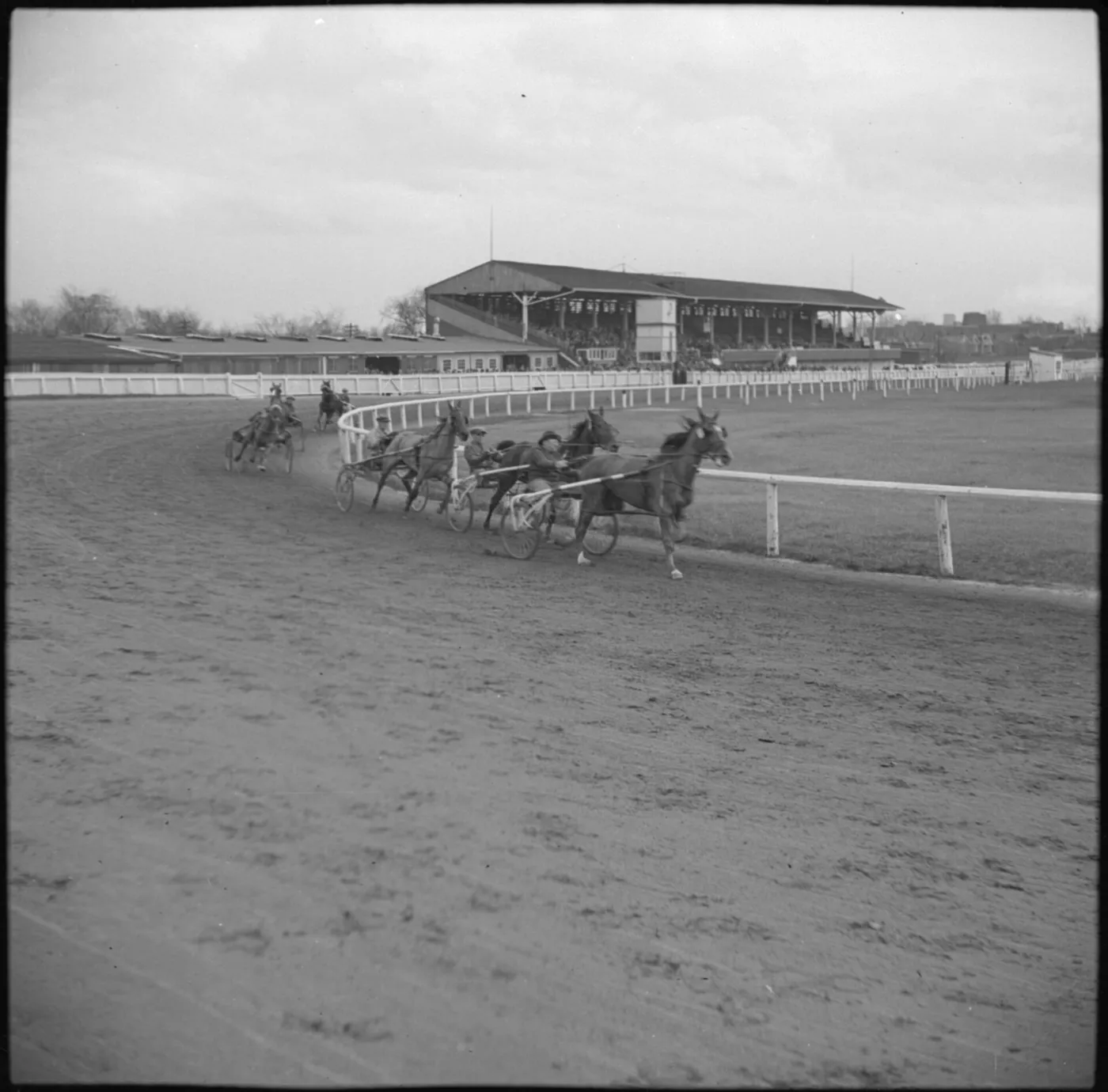
Cheltenham week can feel like a second Christmas if you've never been near a Festival card. Four days, dozens of races, Irish-trained horses everywhere, and every pub conversation somehow ends with "what are you on for Thursday?" This is a first-timer's guide: what the meeting actually is, how the days break down, how to read a card without drowning in abbreviations, how each-way bets work, and how to set a budget that survives until Friday. It is not a tip sheet and it is not a "system."
18+ only. Any prices below are invented to show the maths. Cloudbet, which we link to, is licensed in Curaçao and is not licensed by the Gambling Regulatory Authority of Ireland (GRAI). If Festival week is getting on top of you, call Gambling Care free on 1800 936 725 (NI: 08000 886 725).

What the Cheltenham Festival actually is
The Cheltenham Festival is a four-day National Hunt meeting held every March at Cheltenham Racecourse in Gloucestershire. It is the biggest week of the jump season for Irish and British racing. Irish yards travel in force; Irish punters follow on TV, in the shops and online. The feature races include the Champion Hurdle, the Queen Mother Champion Chase, the Stayers' Hurdle and the Cheltenham Gold Cup, plus a stack of championship and handicap races that fill the rest of each card.
You do not need to know every race name on day one. You do need to know that it is a festival: volume is the trap. A normal Saturday might give you three or four races you care about. Cheltenham can give you six or seven an afternoon, four days running. That is why first-timers who "just have a few euro on each" often spend more than they meant to before the Gold Cup even starts.
If you want race-by-race angles for a specific year, that is a different job from this guide — see our Festival tips overview and the separate pages on ante-post, going, bet builders and the Gold Cup. Here we stay on the basics.
The four days in plain English
| Day | Usual nickname | Feature race (roughly) | First-timer focus |
|---|---|---|---|
| Tuesday | Champion Day | Champion Hurdle | Settle in; learn the card layout; skip half the races |
| Wednesday | Style Wednesday | Champion Chase | Shorter, sharper races; easier to overbet speed |
| Thursday | Stayers' Day | Stayers' Hurdle | Longer trips; stamina and going matter more |
| Friday | Gold Cup Day | Cheltenham Gold Cup | Biggest race of the week; protect whatever bank is left |
Exact race orders and names shift slightly year to year. Always check the official card. The point for a beginner is pacing: treat Tuesday as a warm-up, not as a day you must "get your money back."
How to read a Festival racecard without panic
A racecard looks busy because it packs a lot into a small space. For a first bet you only need a handful of columns:
- Number and silk: the cloth the jockey wears, and the saddlecloth number.
- Horse name and age: Festival races often favour horses in a sweet spot of age and experience; ancient heroes and babies both need a second look.
- Weight: in handicap races, higher-rated horses carry more. In Grade 1 weight-for-age or level-weights races, the weights are set by the conditions, not by a handicapper trying to equalise everyone.
- Form figures: recent finishing positions. Letters like F (fell), U (unseated), P (pulled up) matter more at Cheltenham than on a quiet Sunday card because the fences and the pace are fiercer.
- Official rating / RPR / Timeform-style figures: useful later; ignore them on day one if they stress you.
- Trainer and jockey: Irish trainers with a Festival record are not magic, but they are not noise either. Treat them as one factor, not the whole bet.
- Odds: the price. Short does not mean safe; long does not mean clever.
Going (how soft or firm the ground is) can rearrange a Festival card overnight. If you want that topic in depth, use the going guide. For a first-timer: if the ground changes and your only reason for the bet was "I liked them on quicker ground last month," rethink or skip.
Win, each-way and why Festival fields change the maths
A win bet needs your horse to finish first. An each-way bet is two bets: half the stake on the win, half on the place. Place terms at Cheltenham often mean first three (sometimes four or five in big handicaps), paid at a fraction of the win odds — commonly a quarter or a fifth, depending on the bookmaker and the race.
Worked example with invented prices. Horse A is 8/1 (decimal 9.0). Each-way terms: one-quarter the odds, three places. A €5 each-way bet costs €10.
- If A wins: win part returns €5 × 9.0 = €45; place part returns €5 × (1 + 8/4) = €5 × 3.0 = €15; total €60 (profit €50 on the €10 outlay).
- If A finishes second or third: win part loses; place part returns €15; you get €15 back on €10 spent (profit €5).
- If A finishes fourth or worse: both parts lose.
Place fractions and place counts are not universal. Always read the market terms before you click. Extra places look generous; they are priced in.
| Win odds | Place decimal at 1/4 odds | Place decimal at 1/5 odds |
|---|---|---|
| 4/1 | 2.00 | 1.80 |
| 6/1 | 2.50 | 2.20 |
| 8/1 | 3.00 | 2.60 |
| 10/1 | 3.50 | 3.00 |
| 12/1 | 4.00 | 3.40 |
| 16/1 | 5.00 | 4.20 |
| 20/1 | 6.00 | 5.00 |
Rule of thumb for beginners: each-way makes more sense when the horse is a price and the field is big. On a short-priced favourite in a small Grade 1 field, the place half often pays so little that you are mostly paying double to feel safer.
Handicaps vs Grade 1s: two different games
Grade 1 championship races are usually the "best horse" contests: Champion Hurdle, Champion Chase, Gold Cup and so on. The market is often dominated by a few well-touted names. Handicaps try to give more horses a chance by loading weight onto higher-rated runners. Big Festival handicaps can have twenty-plus runners, chaotic early positions and more places for each-way terms.
First-timer advice:
- Pick one or two Grade 1s you actually watch, not every handicap on the card.
- If you bet a big handicap, decide your stake before the market "talks you up" into a larger each-way.
- Do not build a day around finding "the" handicap winner. That is how bankrolls die on Wednesday.
A simple four-day budget (invented numbers)
Suppose you are willing to risk €80 for the whole Festival and you want money left for Friday. One plain split:
| Day | Budget | Max bets | Notes |
|---|---|---|---|
| Tuesday | €15 | 2–3 | Learning day; skip races you cannot explain |
| Wednesday | €20 | 2–3 | Easy to chase after Tuesday |
| Thursday | €20 | 2–3 | Protect Friday's pot |
| Friday | €25 | 2 (incl. Gold Cup) | If earlier days went badly, still cap here |
If you lose Tuesday's €15, Wednesday's budget is still €20 — not €35. Chasing is the Festival tax. Write the daily caps on your phone before the first race and treat them like a bar tab you will not reopen.
Unit staking helps. If €80 is the week, a 1-unit bet might be €4. Then a "strong" opinion is 2 units, not "whatever is left in the account."
18+. Crypto deposits. Cloudbet is licensed in Curaçao and is NOT licensed by the GRAI. Irish gambling law changed in 2026: only GRAI-licensed operators may lawfully take bets from Irish customers. Ad: we may earn a commission. Bet only what you can afford to lose.
Where Irish punters actually place Festival bets
You have the usual choices: a licensed Irish retail shop or app, the Tote at a track if you attend, or an offshore/crypto sportsbook. Retail and GRAI-licensed remote bookies sit inside the Irish regulatory system. Offshore brands do not. Cloudbet is a crypto sportsbook with a Curaçao licence; it is not on the GRAI register, so Irish complaint routes and Irish consumer protections do not apply if something goes wrong. That is a trade-off some people accept for crypto settlement and market range; it is not a free upgrade.
For the broader horse-racing basics — win/place, SP, reading form beyond Festival week — see how to bet on horse racing for beginners and how horse-racing betting works.
Ante-post vs day-of-race for beginners
Ante-post means betting weeks or months before the race, often with "all-in, run or not" rules unless the bookie offers non-runner money back. Prices can be bigger; you can also lose the stake if the horse never lines up. Day-of-race (or evening-before) markets usually void if your horse is a non-runner, and the price reflects late information: going, declarations, jockey bookings.
First-timer default: bet closer to the race until you understand non-runner rules cold. Ante-post is a separate skill — covered in our ante-post page.
Live betting at the Festival
In-play prices move with every jump. That can be entertainment; it can also turn a planned €5 interest bet into five separate "just another euro" clicks. If you try live markets, pre-commit a live budget separate from your win/each-way budget, and do not use live betting to chase a beaten ante-post ticket. More on that in the live betting notes.
Common first-timer mistakes
- Betting every race. Skip is a valid selection.
- Treating short prices as safe. Favourites get beaten every day of the Festival.
- Doubling stakes after a loser. The card does not owe you a refund.
- Copying a social-media napkin tip cold. If you cannot explain the bet in one sentence, pass.
- Ignoring settlement rules. Dead heats, Rule 4 deductions after a withdrawal, and place terms all change returns.
- Drinking and betting the same afternoon. Pick one sport for that hour.
A calm pre-race checklist
- Is this race one of my two or three for the day?
- Win or each-way — and have I read the place terms?
- What is my stake in units, not in "vibes"?
- What would make me cancel the bet (going change, late jockey switch, non-runner reshaping the pace)?
- If it loses, am I still inside today's cap?
Watching the race like a punter, not a tourist
Once the stalls or tapes go, beginners often stare at the favourite's colours and miss the race shape. Try a simple watch routine: note who leads at the first obstacle, who travels easily mid-race, and who is scrubbed along early. At Cheltenham, horses that are hard at work a long way out often empty on the hill, while travellers who still have a gear left can look slow until the last two furlongs. You do not need a professional eye — you need one honest sentence after the race: "I backed X because of Y, and Y did or did not show." That sentence is how you get better next March instead of repeating the same expensive habits.
Replay the finish once if you can. Was your horse hampered, outpaced, or simply not good enough on the day? Those three answers suggest three different lessons. Only the last one should make you rip up the whole approach.
Responsible Festival week
Cheltenham is built to feel bigger than it is. TV coverage, group chats and "sure it's only a fiver" add up. Set deposit limits before Tuesday. Do not borrow for bets. If you notice yourself hiding stakes, betting to escape a bad mood, or chasing across Thursday night into Friday morning, stop and use the help lines. Gambling Care / Dunlewey is free and confidential on 1800 936 725 in the Republic; from Northern Ireland call 08000 886 725. Our responsible gambling page has more practical limits tools.
Questions players ask
What is the Cheltenham Festival in one sentence?
A four-day March jump meeting in Gloucestershire that hosts the biggest championship races of the National Hunt season, heavily contested by Irish trainers and followed closely by Irish punters.
Should a beginner bet each-way on every Festival race?
No. Each-way helps more on bigger-priced horses in large fields; on short-priced favourites in small Grade 1s the place half often pays little for double the stake.
How much should I budget for Cheltenham week?
Only money you can afford to lose in full. Many first-timers do better with a fixed four-day cap split in advance than with an open-ended 'few euro a race' approach.
Is Cloudbet licensed in Ireland?
No. Cloudbet holds a Curaçao licence and is not licensed by the Gambling Regulatory Authority of Ireland (GRAI), so Irish player protections do not apply.
Where can I get help with gambling problems during Festival week?
Gambling Care / Dunlewey on 1800 936 725 (ROI) or 08000 886 725 (NI), free and confidential 24/7.
18+. Crypto deposits. Cloudbet is licensed in Curaçao and is NOT licensed by the GRAI. Irish gambling law changed in 2026: only GRAI-licensed operators may lawfully take bets from Irish customers. Ad: we may earn a commission. Bet only what you can afford to lose.
If betting is costing you more than money, free and confidential help is there 24 hours a day, 365 days a year: the Problem Gambling Helpline run by Dunlewey Addiction Services for Gambling Care, on 1800 936 725 (from Northern Ireland: 08000 886 725). Source: grai.ie.