Cheltenham Long Odds Tips: How to Back Big-Priced Outsiders at the Festival Without Burning Your Pot
Welcome bonus for new players + fast crypto payouts. Just helping a brother out.
18+. Crypto deposits. Cloudbet is licensed in Curaçao and is NOT licensed by the GRAI. Irish gambling law changed in 2026: only GRAI-licensed operators may lawfully take bets from Irish customers. Ad: we may earn a commission. Bet only what you can afford to lose.
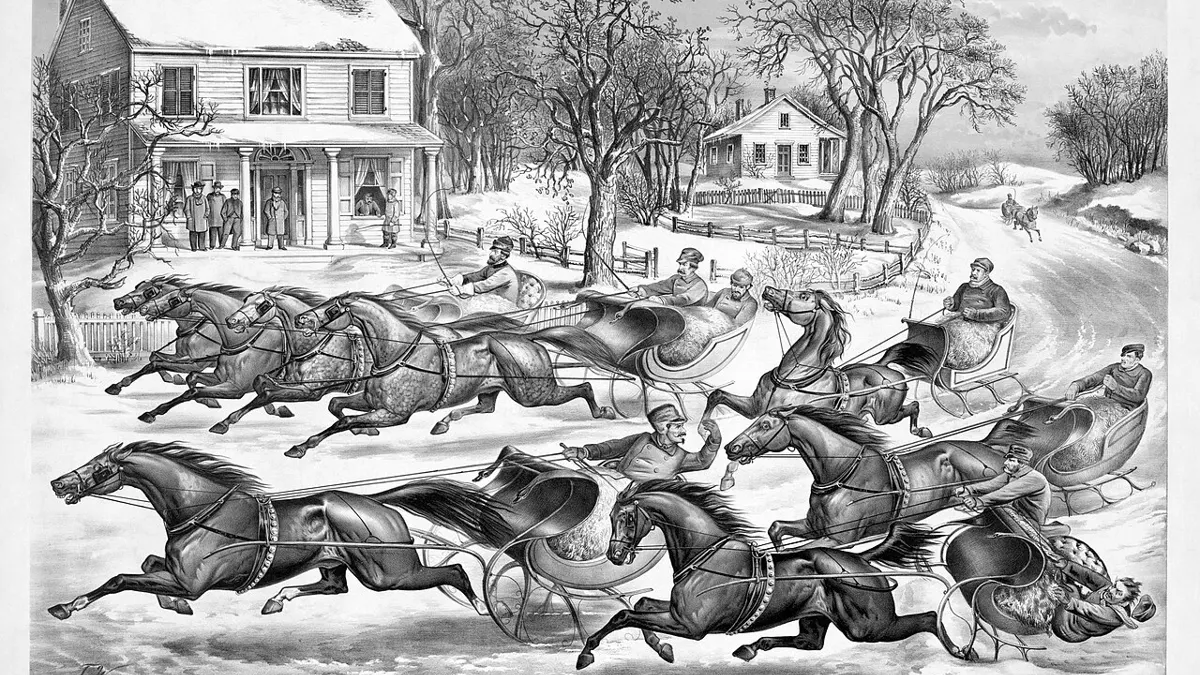
Every March somebody in the pub has a story about the 50/1 shot they had a fiver on. Nobody tells you about the twenty other outsiders that finished down the field. Backing big prices at Cheltenham can be great fun and, done with a bit of thought, it can even be sensible. But it needs a different head to backing favourites: smaller stakes, more patience and an honest view of how often these horses actually win. Here's how to go about it.
18+ only. There are no selections here, and every price, stake and percentage on this page is invented to show the maths. Cloudbet, which we link to, is licensed in Curaçao and is not licensed by the Gambling Regulatory Authority of Ireland (GRAI).
What counts as "long odds" anyway?
There's no official line, but most punters would call anything from about 10/1 upwards a decent price and anything over 25/1 a proper outsider. The useful thing is to stop thinking in fractions and start thinking in chances. A price is just the bookmaker's opinion of how likely the horse is to win, with a margin built in. This table turns the common prices into the chance they imply:
| Fractional | Decimal | Implied chance | Roughly one win in… |
|---|---|---|---|
| 10/1 | 11.0 | 9.1% | 11 tries |
| 16/1 | 17.0 | 5.9% | 17 tries |
| 20/1 | 21.0 | 4.8% | 21 tries |
| 25/1 | 26.0 | 3.8% | 26 tries |
| 33/1 | 34.0 | 2.9% | 34 tries |
| 50/1 | 51.0 | 2.0% | 51 tries |
| 66/1 | 67.0 | 1.5% | 67 tries |
| 100/1 | 101.0 | 1.0% | 101 tries |
Look at the last column and let it sink in. A 33/1 shot that's priced exactly right still loses about 33 times out of 34. That's not a reason to avoid them. It's a reason to size your bets so that a long string of losers doesn't hurt.
The awkward truth: outsiders are often overbet
Researchers have been looking at racing markets for decades, and one finding keeps turning up. On average, money placed on big outsiders loses a bigger share of its stake than money placed on favourites. It's often called the favourite-longshot bias. The reasons are fairly human. People like the dream of a big payout, bookmakers know it, and the margin on the long end of the market tends to be fatter.
So the starting point for any long-odds punter is that blindly backing big prices is a losing game, even more than blindly backing favourites. The only way it works is if you're picking out the outsiders whose real chance is bigger than the price says. That means having a reason, not just a hunch and a nice-looking number.
Where big prices tend to go in at Cheltenham
Outsiders don't win evenly across the card. Some races are built for upsets and some almost never throw them up. Without naming horses or quoting old results, here's the general shape:
| Race type | Typical field | Upset potential | Why |
|---|---|---|---|
| Big handicap hurdles and chases | Large, often 20 or more | High | Horses weighted to be close together; luck in running matters |
| Novice hurdles and chases | Medium to large | Medium to high | Unexposed horses, jumping errors, stamina untested |
| Juvenile and bumper races | Medium to large | Medium | Thin form; reputations do a lot of the pricing |
| Amateur-ridden races | Medium to large | Medium | Rider ability varies a lot |
| Grade 1 championship races | Often small | Lower | Best horses, best form; the market is usually sharp |
A handicap is designed so that, on paper, every horse has a similar chance. In practice the market still splits them into a few fancied runners and a long tail. That long tail is where most Cheltenham shocks come from. In the championship races, a 33/1 shot is usually 33/1 because it's simply not as good as the top few, and the gap is hard to make up.
Signs an outsider might be bigger than it should be
You're hunting for horses the market has missed or underrated. None of these is a guarantee, but each gives you an actual reason to have a bet rather than just liking the price:
- Unexposed in handicaps. A horse that's only had a few runs off its current mark may be better than the handicapper has had time to find out.
- Dropped in the weights. A horse that's fallen several pounds after a poor spell can become competitive again if the poor runs had an excuse, like wrong ground or a trip that didn't suit.
- Ground and trip switch. Plenty of horses look moderate on the wrong surface. If the forecast going suits this one far better than its recent races, that's a real angle.
- Course form. Cheltenham's hills and the uphill finish suit some horses and find others out. Previous good runs at the track count for something.
- Headgear or equipment changes. First-time blinkers, cheekpieces or a tongue tie are declared, and sometimes they spark improvement.
- Race shape. If an outsider looks like being the only natural front-runner in a race with no other pace, it might get an easy lead the market hasn't priced in.
- Stable in form. Yards go through hot and cold patches. A trainer whose horses are running well in the weeks before the Festival is worth noting.
Look for two or three of these lining up together. One reason on its own is usually already in the price.
Doing the maths on one outsider
Say a handicapper is 25/1 (26.0 decimal, 3.8% implied). After your homework you reckon its true chance is about 5%. Here's what a €2 win bet looks like over the long run:
- Expected return = 5% × €2 × 26 = €2.60.
- Take away the €2 stake and you get +€0.60 per bet on average.
Now say you were too hopeful and its real chance is 3%:
- 3% × €2 × 26 = €1.56, so −€0.44 per bet.
The difference between 5% and 3% feels tiny, yet it flips the bet from good to bad. That's the honest challenge with long odds. Your estimates have to be in the right area, and you'll never know for sure from a handful of results whether they were. Our bet calculator does the sums for you if you'd rather not do them on the back of a beer mat.
Losing runs: expect them, plan for them
Here's the part most people skip. Even if every outsider you back is fairly priced, long gaps between winners are normal. This table shows the chance of backing a set number of horses and getting no winner at all:
| Bets placed | Each at a 5% chance (about 20/1) | Each at a 3% chance (about 33/1) |
|---|---|---|
| 10 | 60% | 74% |
| 20 | 36% | 54% |
| 30 | 21% | 40% |
| 50 | 8% | 22% |
If you back thirty 33/1 shots, there's roughly a 40% chance none of them win. Thirty bets is more than a horse a race across the whole Festival. So a blank week is entirely possible even when your judgement is decent. The only defence is stake size. If losing every bet for four days would upset you, the stakes are too big.
Each-way: the long-odds punter's best friend
Each-way bets were practically invented for outsiders. You're placing two bets of equal size: one to win and one to place. In big handicaps, bookmakers commonly pay a quarter of the odds for the first four or five places, though terms vary, so always check.
Take a €5 each-way bet (€10 total) at 33/1, with a quarter of the odds and five places paid:
| Result | Win part | Place part | Total back | Profit |
|---|---|---|---|---|
| Wins | €5 × 34 = €170 | €5 × 9.25 = €46.25 | €216.25 | +€206.25 |
| Places 2nd to 5th | €0 | €46.25 | €46.25 | +€36.25 |
| Unplaced | €0 | €0 | €0 | −€10 |
The place part pays at 33/4, which is 8.25/1 (9.25 decimal). To break even on that half you need the horse to place a bit more than 10.8% of the time. For a horse that looks like hitting the frame often but rarely winning, that place part can be the real value. With favourites, each-way terms are often poor value. With outsiders in big fields, they're frequently the better way in.
Extra places: worth more on outsiders
Around Festival time bookmakers often offer extra places, say six or seven instead of five. For a short-priced horse the extra place rarely matters, because it should be placing anyway if it runs to form. For a 25/1 or 33/1 shot that might run on for sixth, the extra place can be the whole difference between a losing and a winning bet.
The catch: extra places sometimes come with a smaller fraction, say a fifth of the odds instead of a quarter, or with a slightly shorter win price. Do the sum. At 33/1, a fifth of the odds pays the place part at 6.6/1, so €5 returns €38 instead of €46.25. Six places at a fifth is not automatically better than five places at a quarter. It depends on how likely you think that sixth place is.
Best price, best odds guaranteed and the exchange
With long odds, the difference between prices is huge in money terms. One bookmaker might have a horse at 20/1 while another has 28/1. On a €2 win bet that's €42 back versus €58. Shopping around matters far more here than it does on a 2/1 favourite.
- Best odds guaranteed. If you take a price and the starting price ends up bigger, some bookmakers pay you the bigger one. Take 20/1, see it go off at 28/1, and you're paid at 28/1. Outsiders drift often, so this can be worth a lot over a week.
- Betting exchanges. Exchange prices on outsiders are often bigger, but you pay commission on net winnings. At 40.0 on an exchange with 5% commission, a €2 winner makes €78 before commission and €74.10 after, which is like getting 38.05 decimal. That still beats a bookmaker's 33/1 (34.0) by a distance. Check your own commission rate. Our betting exchanges guide covers how they work for Irish punters.
- Early versus late. If you think an outsider is badly priced, others may spot it too and the price can shorten. Equally, plenty of outsiders drift on the day. There's no rule. Taking an early price with best odds guaranteed on the day is a decent compromise when it's offered. For betting weeks or months ahead, see our ante-post tips, because non-runner risk changes everything.
18+. Crypto deposits. Cloudbet is licensed in Curaçao and is NOT licensed by the GRAI. Irish gambling law changed in 2026: only GRAI-licensed operators may lawfully take bets from Irish customers. Ad: we may earn a commission. Bet only what you can afford to lose.
Dutching two outsiders in the same race
Sometimes you like two big prices in the same handicap and can't split them. Dutching means splitting your stake so you get the same return whichever one wins. Take €10 across a 20/1 (21.0) and a 25/1 (26.0) shot:
- Work out each horse's share: 1 ÷ 21 = 0.0476 and 1 ÷ 26 = 0.0385. Together that's 0.0861.
- Stake on the 20/1: €10 × 0.0476 ÷ 0.0861 ≈ €5.53.
- Stake on the 25/1: €10 × 0.0385 ÷ 0.0861 ≈ €4.47.
- Either winner returns about €116: €5.53 × 21 ≈ €116.13, or €4.47 × 26 ≈ €116.22.
The two horses combined are priced at about an 8.6% chance, which works out at roughly 10.6/1 for the pair. Dutching doesn't create value on its own. It only makes sense if you think both horses are underrated. If one is a genuine fancy and the other is a "just in case", you're better off backing the one you really like.
Long-odds accumulators: handle with care
Stringing outsiders together is where the dream gets big and the maths gets brutal. Three 20/1 winners in a treble pay 21 × 21 × 21 = 9,261 times your stake. Lovely. But look at how fragile it is:
| Your estimate per horse | Chance all three win |
|---|---|
| 5% each | About 1 in 8,000 |
| 4% each | About 1 in 15,600 |
| 3% each | About 1 in 37,000 |
A small error in each estimate can halve your chances, or worse, once it's multiplied three times. If you love multiples, keep the stakes tiny, think about each-way doubles rather than win trebles, and see our Cheltenham betting slip guide for how full-cover bets like a Lucky 15 are costed and settled.
A simple Festival plan for long-odds punters
Here's one way to run the week with an invented €100 pot. Change the numbers to suit your own budget, ideally smaller rather than bigger:
| Pot part | Amount | Used for |
|---|---|---|
| Each-way outsiders in handicaps | €60 | About twelve €2.50 each-way bets (€5 each) |
| Win-only outsiders in novice races | €25 | About twelve €2 win bets |
| Fun pot | €15 | Small doubles or a Dutch when you like two |
Two rules make this work. First, the stakes stay level no matter what happens. No doubling up after a bad Tuesday. Second, if a big one does go in, take the original pot plus some of the profit out of play straight away. It's tempting to treat a 33/1 winner as "the bookie's money". It isn't. It's yours.
Keep a record of every outsider you back
Because winners are rare, you need lots of bets before your results mean anything. A notebook or spreadsheet with these columns does the job:
- Date, race and horse.
- Price taken and starting price. If you're regularly beating the SP, that's a good sign even during a losing run.
- Your reason for the bet, in one line.
- Win, place, or unplaced, plus profit or loss.
After a few festivals you'll start to see which of your reasons actually work. Maybe your ground-switch horses run well but your headgear picks don't. That's worth knowing, and it's the kind of thing you'll never learn from memory. Our Festival betting system guide goes deeper into testing an approach properly.
Mistakes long-odds punters make
- Backing big prices because they're big. A 66/1 shot can be terrible value. The price alone tells you nothing about whether it's a good bet.
- Remembering only the winners. Tipster screenshots and pub stories show the 50/1 that won, not the dozens that didn't. Judge any source on all of its bets.
- Stakes creeping up. After a few losers it's tempting to bet more "to get it back in one go". That's chasing, and it's how a fun week turns sour.
- Ignoring each-way terms. Paying for an each-way bet without checking places and fraction can leave money on the table.
- Too many outsiders in one race. Backing five horses at big prices in a single handicap often just means paying the bookmaker's margin five times.
- Taking the first price you see. On outsiders, a couple of points of price difference adds up to real money.
Quick checklist before each long-odds bet
- What's my actual reason, and is it more than one thing?
- What chance do I think it has, and does the price give me more than that?
- Win only or each-way? What are the place terms here?
- Have I checked a few prices, and is best odds guaranteed available?
- Would I be fine if this and the next ten outsiders all lose?
New to the Festival? Start with our Cheltenham betting guide and the explainer on how horse racing betting works.
Licensing and where you bet
In Ireland, gambling is now regulated by the GRAI. Cloudbet, which we link to, is licensed in Curaçao and is not licensed by the GRAI, so you won't get the same protections you'd have with an Irish-licensed operator. Make your own choice with that in mind. Our page on whether online betting is legal in Ireland covers the legal side in more detail.
Keep it fun
Backing outsiders is mostly about patience and small stakes. If you notice you're betting more than you planned, chasing losses or hiding bets, stop and talk to someone. Gambling Care is free, confidential and open 24/7 on 1800 936 725 (Northern Ireland: 08000 886 725). Our responsible gambling page has more support options.
Questions players ask
What counts as long odds at Cheltenham?
Most punters call 10/1 and above a decent price and anything over 25/1 a proper outsider. Think of it as a chance: 25/1 implies about 3.8%.
Which Cheltenham races are best for outsiders?
Big-field handicaps produce the most upsets, followed by novice, juvenile, bumper and amateur-ridden races. Grade 1 championship races throw up fewer shocks.
Should I back outsiders each-way?
Often, yes. In big fields with four or more places paid, the place part can carry most of the value. Always check the places and the fraction.
Are extra places always better?
No. They sometimes come with a smaller fraction, like a fifth instead of a quarter, or a shorter win price. Work out both versions before you bet.
How long can a losing run last on outsiders?
Longer than you'd think. Back thirty fairly priced 33/1 shots and there's about a 40% chance none of them win.
What is Dutching?
Splitting a stake across two or more horses so you get the same return whichever wins. It only helps if all of them are underrated.
Is backing outsiders a good long-term strategy?
Only if you're good at spotting horses whose real chance is bigger than the price. On average, money on big outsiders loses more than money on favourites.
Is Cloudbet licensed in Ireland?
No. Cloudbet is licensed in Curaçao and is not licensed by the GRAI.
Where can I get help with gambling in Ireland?
Call Gambling Care on 1800 936 725, free and open 24/7. In Northern Ireland, call 08000 886 725.
18+. Crypto deposits. Cloudbet is licensed in Curaçao and is NOT licensed by the GRAI. Irish gambling law changed in 2026: only GRAI-licensed operators may lawfully take bets from Irish customers. Ad: we may earn a commission. Bet only what you can afford to lose.
If betting is costing you more than money, free and confidential help is there 24 hours a day, 365 days a year: the Problem Gambling Helpline run by Dunlewey Addiction Services for Gambling Care, on 1800 936 725 (from Northern Ireland: 08000 886 725). Source: grai.ie.