Each Way Betting Explained (Ireland): Place Terms, Returns, Non-Runners, Dead Heats and When E/W Is Worth It
Welcome bonus for new players + fast crypto payouts. Just helping a brother out.
18+. Crypto deposits. Cloudbet is licensed in Curaçao and is NOT licensed by the GRAI. Irish gambling law changed in 2026: only GRAI-licensed operators may lawfully take bets from Irish customers. Ad: we may earn a commission. Bet only what you can afford to lose.
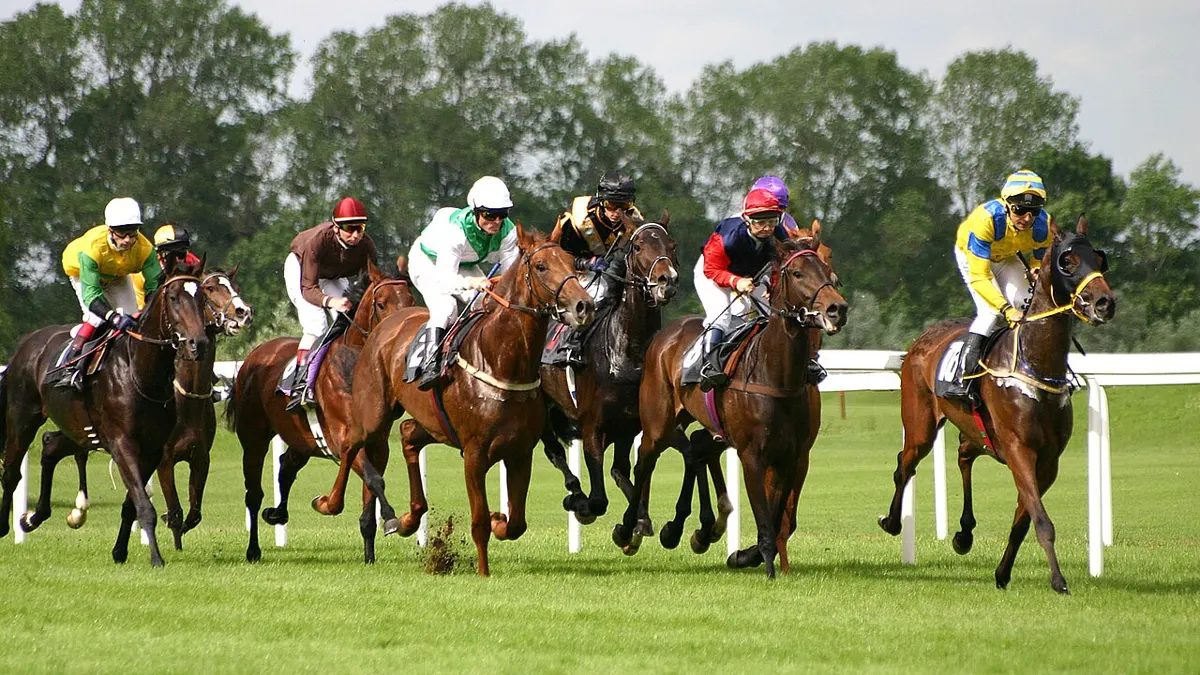
Walk into any bookies in Ireland on a big racing day and you'll hear "fiver each way" more than any other bet. It's the classic way to back a horse you fancy at a decent price without needing it to win outright. But a lot of people place e/w bets for years without knowing exactly how they're paid, why the same horse can be a good e/w bet in one race and a poor one in the next, or what happens when a horse is pulled out. This guide clears all that up in plain English, with euro examples you can check on the back of a beer mat.
18+ only. This is general information, not betting or financial advice, and every price below is a made-up illustration, not a tip for a real race. Cloudbet, which we link to, holds a Curaçao licence and is not licensed by the Gambling Regulatory Authority of Ireland (GRAI), so Irish complaint routes don't apply to it. If gambling is causing you bother, Gambling Care is free, confidential and open 24/7 on 1800 936 725 (Northern Ireland: 08000 886 725).

The short answer
- An each way bet is really two bets of the same size: one on the horse to win, and one on it to finish in the places.
- So "€5 each way" costs €10, not €5. People get caught out by that on the first go.
- The place part is paid at a fraction of the win odds, usually 1/4 or 1/5, and only for a set number of places, usually 2, 3 or 4 depending on the race.
- If the horse wins, both parts pay. If it's placed but doesn't win, only the place part pays. If it's unplaced, you lose both.
- The terms (how many places, what fraction) matter more than most people think. The same horse at the same price can be a good e/w bet or a poor one depending on them.
- E/W is mostly a horse racing and greyhound bet, but you'll also see it on golf, outright football markets and a few other sports.
How an each way bet is split
Say you back a horse at 12/1 for €4 each way. Your bookie takes €8 and splits it like this:
| Part | Stake | Wins if | Paid at |
|---|---|---|---|
| Win part | €4 | The horse wins | Full odds: 12/1 |
| Place part | €4 | The horse finishes in the paid places (including first) | A fraction of the odds, for example 1/4 of 12/1 = 3/1 |
A key detail: the place part also wins when the horse wins, because first is a place. That's why a winning e/w bet pays out on both halves.
Worked returns in euro
Same bet: €4 each way at 12/1, with place terms of 1/4 the odds for the first three.
| Result | Win part | Place part | Total back | Profit on €8 staked |
|---|---|---|---|---|
| Wins | €4 × 12 + €4 = €52 | €4 × 3 + €4 = €16 | €68 | +€60 |
| 2nd or 3rd | €0 | €16 | €16 | +€8 |
| 4th or worse | €0 | €0 | €0 | −€8 |
Now the same bet with tighter terms, 1/5 the odds for three places, which you'll see in lots of non-handicap races with eight or more runners. The place part pays 12/5, or 2.4 to 1:
| Result | Total back | Profit on €8 |
|---|---|---|
| Wins | €52 + (€4 × 2.4 + €4) = €65.60 | +€57.60 |
| 2nd or 3rd | €13.60 | +€5.60 |
| Unplaced | €0 | −€8 |
One fifth versus one quarter doesn't look like much, but on a placed horse it's the difference between €8 and €5.60 profit. Over a season of e/w bets that gap adds up.
Each way at short odds: when the place part loses money even if you're placed
Here's the one that surprises people. Back a 2/1 shot €10 each way at 1/5 odds for three places. The place part pays 2/5, so a placed finish returns €10 × 0.4 + €10 = €14. Your total stake was €20. If the horse runs second, you get €14 back and you're down €6 even though "your horse placed".
A quick rule: if the win odds multiplied by the place fraction come out below evens, a placed-but-beaten horse loses you money overall. At 1/4 terms that's anything shorter than 4/1. At 1/5 terms it's anything shorter than 5/1. Short-priced e/w bets are mostly a way of paying for the win bet twice.
| Win odds | Place odds at 1/4 | Placed, €5 e/w (€10 staked) | Place odds at 1/5 | Placed, €5 e/w |
|---|---|---|---|---|
| 2/1 | 1/2 | −€2.50 | 2/5 | −€3.00 |
| 4/1 | 1/1 | €0.00 | 4/5 | −€1.00 |
| 5/1 | 5/4 | +€1.25 | 1/1 | €0.00 |
| 8/1 | 2/1 | +€5.00 | 8/5 | +€3.00 |
| 16/1 | 4/1 | +€15.00 | 16/5 | +€11.00 |
| 33/1 | 33/4 | +€36.25 | 33/5 | +€28.00 |
Typical place terms by field size
Bookmakers in Ireland and Britain mostly follow a standard pattern, but they can and do offer their own terms, and many pay extra places on big races as a promotion. Treat this table as a guide and always check the terms shown next to the race before you bet:
| Race and runners | Places paid | Fraction |
|---|---|---|
| 2 to 4 runners | Win only (no e/w) | n/a |
| 5 to 7 runners | 2 | 1/4 |
| 8 or more runners (non-handicap) | 3 | 1/5 |
| Handicap, 8 to 11 runners | 3 | 1/5 |
| Handicap, 12 to 15 runners | 3 | 1/4 |
| Handicap, 16 or more runners | 4 | 1/4 |
Golf, outright football and other sports have their own terms set race by race (or event by event), often 1/4 or 1/5 for anything from 2 to 10 places. There's no standard there at all, so look closely.
Is each way good value? A worked model
To get a feel for this, we built an imaginary 12-runner handicap with prices from 4/1 down to 33/1. The book adds up to about 115.4%, which is normal for a competitive handicap. We took the bookmaker margin out evenly to get each horse's win chance, then used a standard racing formula (it estimates the chance of finishing 2nd and 3rd from the win chances) to get each horse's place chance. It's a rough model, and it tends to flatter favourites' place chances a bit, but it shows the pattern clearly.
Expected return per €100 staked, at 1/4 odds for three places:
| Price | Win chance | Place chance (top 3) | Win part | Place part | E/W overall |
|---|---|---|---|---|---|
| 4/1 | 17.3% | 47.4% | −€13.40 | −€5.20 | −€9.30 |
| 7/1 | 10.8% | 32.5% | −€13.40 | −€10.70 | −€12.00 |
| 10/1 | 7.9% | 24.5% | −€13.40 | −€14.20 | −€13.80 |
| 16/1 | 5.1% | 16.4% | −€13.40 | −€18.00 | −€15.70 |
| 33/1 | 2.5% | 8.4% | −€13.40 | −€22.00 | −€17.70 |
Now the same race and same prices, but with only 1/5 odds for three places:
| Price | Place part | E/W overall |
|---|---|---|
| 4/1 | −€14.70 | −€14.00 |
| 10/1 | −€26.40 | −€19.90 |
| 33/1 | −€35.90 | −€24.60 |
Two lessons jump out. First, in an ordinary race with ordinary terms, the place part of a big outsider is usually worse value than the win part. The "it'll surely sneak a place at 33s" logic is mostly paying for hope. Second, moving from 1/4 to 1/5 terms costs you a lot on the place half.
Where each way gets interesting: big fields and extra places
Now take a 16-runner handicap with four places at 1/4 the odds, with prices from 5/1 to 66/1 and a book of about 116.6%. Same model:
| Price | Win chance | Place chance (top 4) | Win part per €100 | Place part per €100 |
|---|---|---|---|---|
| 5/1 | 14.3% | 50.9% | −€14.20 | +€14.60 |
| 8/1 | 9.5% | 37.4% | −€14.20 | +€12.30 |
| 12/1 | 6.6% | 27.4% | −€14.20 | +€9.60 |
| 20/1 | 4.1% | 17.8% | −€14.20 | +€6.50 |
| 40/1 | 2.1% | 9.4% | −€14.20 | +€3.50 |
On paper the place part turns positive here, because four places at a quarter the odds is generous when the field is just big enough to trigger it. That's the logic behind people hunting for 16-runner handicaps and "extra places" promotions. Two big caveats: the model is rough, and real bookies shade the prices of the horses most likely to place in exactly these races. Still, the direction is right. The terms are part of the price. A generous place term on a race that's hard to win can make e/w the better bet, while tight terms in a small field make it worse.
The small-field trap and the odds-on favourite
There's a second classic spot. Take an eight-runner non-handicap with a strong odds-on favourite at 4/6 and the rest at 4/1, 6/1, 10/1, 14/1, 20/1, 33/1 and 50/1. Three places are paid at 1/5. With the favourite very likely to fill one place, the other seven are fighting for two spots, and the second favourite places often:
| Horse | Win chance | Place chance | Place part per €100 |
|---|---|---|---|
| 4/6 favourite | 50.1% | 92.0% | +€4.30 |
| 4/1 second favourite | 16.7% | 61.8% | +€11.30 |
| 6/1 | 11.9% | 49.1% | +€8.00 |
| 10/1 | 7.6% | 33.6% | +€0.90 |
| 20/1 | 4.0% | 18.5% | −€7.40 |
Bookmakers know about this, and if a field shrinks so a race becomes eight runners with a hot favourite, many will cut the place terms or offer win-only betting. It's worth knowing why, though, because it explains a lot about when e/w is generous.
18+. Crypto deposits. Cloudbet is licensed in Curaçao and is NOT licensed by the GRAI. Irish gambling law changed in 2026: only GRAI-licensed operators may lawfully take bets from Irish customers. Ad: we may earn a commission. Bet only what you can afford to lose.
Non-runners and changing place terms
Horses get withdrawn all the time: the going changes, a vet spots something, the trainer changes plans. Two things can then happen to an e/w bet.
- The place terms change. If an eight-runner race drops to seven, it falls into the 5 to 7 bracket and pays two places instead of three. Most bookmakers settle on the number of runners that actually come under starter's orders, not the number when you bet, but some guarantee the terms at the time of your bet. Check the rules.
- Rule 4 deductions. If a fancied horse is withdrawn late, bookies take a deduction from winnings on bets placed at early prices, because the race became easier to win. The deduction applies to both the win and place parts of an e/w bet. A 20p-in-the-euro deduction on a €4 e/w bet at 12/1 cuts the win-part profit from €48 to €38.40.
If your own horse is the non-runner, both parts are refunded (unless you bet ante post, where you usually lose your stake).
Dead heats
When two horses tie for a paid place, your stake on that part is split. Say your horse dead heats for third with another horse in a race paying three places. Half your place stake is paid at full place odds and the other half is lost. On a €4 place part at 3/1, you get €2 × 3 + €2 = €8 back instead of €16. Same rule for a dead heat for first on the win part.
Each way doubles, trebles and accas
You can put e/w selections into multiples. An e/w double is really two doubles: a win double and a place double. Take two horses at 10/1 and 8/1, both at 1/5 odds for three places, with €2 e/w (€4 total):
- Both win: win double pays 11 × 9 = 99 times your €2 = €198, and the place double pays 3.0 × 2.6 = 7.8 times €2 = €15.60. Total €213.60.
- Both placed, neither wins: only the place double pays, €15.60, for a €11.60 profit.
- One unplaced: both doubles lose. That's the catch, and it's why e/w accas of four or five horses almost never cash.
Our accumulator calculator works out the decimal multiples for you.
Each way outside racing
| Market | How e/w usually works | Watch out for |
|---|---|---|
| Golf outright | Places paid vary hugely, from 5 to 10 or more, often at 1/5 | Ties for the last place: dead heat rules can cut your place return hard |
| Greyhounds | Usually 2 places at 1/4 in six-dog races | Small fields, tight margins |
| Football outrights (league winner, top scorer) | Often 2 or 3 places at 1/2 or 1/3 | Long time to settlement; your money is tied up all season |
| Darts, snooker outrights | Finalist paid as the place part | Check whether "place" means runner-up only |
A simple e/w checklist
- Check the place terms and number of places next to the race. Don't assume.
- Work out the place odds: win odds times the fraction. Below evens? Think hard before going e/w.
- Ask yourself which half you actually like. If you think the horse will win, a win bet is often better. If you think it'll run well without winning, a place-only bet (some bookies offer it) or an e/w at good terms makes more sense.
- Look for big-field handicaps and genuine extra-place offers, where terms are kind.
- Keep the e/w multiples small. Two horses, fine. Five, and you're mostly funding the bookie's Christmas party.
- Take the best price you can get, and know whether Best Odds Guaranteed applies. Our guide to how horse racing betting works explains SP and early prices.
Mistakes we see all the time
- Thinking "€5 each way" costs €5.
- Going e/w on a 2/1 shot and being surprised a second place loses money.
- Not noticing the race dropped to seven runners and now pays only two places.
- Backing big outsiders e/w in small fields because "it only has to beat a few".
- Piling e/w selections into a Yankee or Lucky 15 without understanding how many bets that is and how much it costs.
Is it legal to bet each way in Ireland?
Yes. Betting is legal for adults in Ireland, and the Gambling Regulatory Authority of Ireland (GRAI) licenses operators, with the first remote betting licences having commenced on 1 July 2026. A GRAI-licensed bookmaker gives you Irish protections and complaint routes. Offshore sites such as Cloudbet aren't GRAI-licensed, so those protections don't apply. Read our guide to whether online betting is legal in Ireland for the full picture, and compare options in our horse racing betting sites guide.
Keep it a bit of fun
E/W betting feels safer because you "get something back" more often, and that can make it easy to bet more than you meant to. Set a budget for the day before the first race, stick to it, and don't chase. If betting stops being fun, Gambling Care is free and confidential on 1800 936 725, any time (Northern Ireland: 08000 886 725). Our responsible gambling page covers limits and self-exclusion.
Our take
Each way is a great bet when the terms are on your side and a poor one when they aren't. Remember it's two bets, check the place fraction and number of places every time, skip e/w on short-priced horses, and save your e/w money for bigger fields and properly generous place terms. Do that and the old "fiver each way" goes from a habit to a decision.
Questions players ask
How much does a €5 each way bet cost?
€10. An each way bet is two equal bets, €5 on the horse to win and €5 on it to place.
What does 1/4 odds 3 places mean?
The place part of your bet pays a quarter of the win odds if your horse finishes first, second or third. At 12/1, the place part pays 3/1.
Can I lose money on an each way bet if my horse places?
Yes. If the place odds are shorter than evens, a placed-but-beaten horse returns less than your total stake. At 1/5 terms, that happens with any horse shorter than 5/1.
What happens to my each way bet if there's a non-runner?
If your horse is withdrawn, both parts are usually refunded (except many ante post bets). If another horse is withdrawn, the place terms may change with the field size, and a Rule 4 deduction may apply to both parts.
Is each way better than a win bet?
Not automatically. In small fields with tight terms, e/w usually costs you more. In big handicaps with four places at 1/4, or with genuine extra-place offers, the place part can be good value.
Is Cloudbet licensed in Ireland?
No. Cloudbet holds a Curaçao licence and isn't licensed by the Gambling Regulatory Authority of Ireland, so Irish complaint routes don't apply.
Where can I get help with gambling in Ireland?
Call Gambling Care on 1800 936 725, free and confidential, 24/7. In Northern Ireland, call 08000 886 725.
18+. Crypto deposits. Cloudbet is licensed in Curaçao and is NOT licensed by the GRAI. Irish gambling law changed in 2026: only GRAI-licensed operators may lawfully take bets from Irish customers. Ad: we may earn a commission. Bet only what you can afford to lose.
If betting is costing you more than money, free and confidential help is there 24 hours a day, 365 days a year: the Problem Gambling Helpline run by Dunlewey Addiction Services for Gambling Care, on 1800 936 725 (from Northern Ireland: 08000 886 725). Source: grai.ie.