GAA Betting Tips This Weekend: A Simple Friday-to-Sunday Routine for Football and Hurling Bets
Welcome bonus for new players + fast crypto payouts. Just helping a brother out.
18+. Crypto deposits. Cloudbet is licensed in Curaçao and is NOT licensed by the GRAI. Irish gambling law changed in 2026: only GRAI-licensed operators may lawfully take bets from Irish customers. Ad: we may earn a commission. Bet only what you can afford to lose.
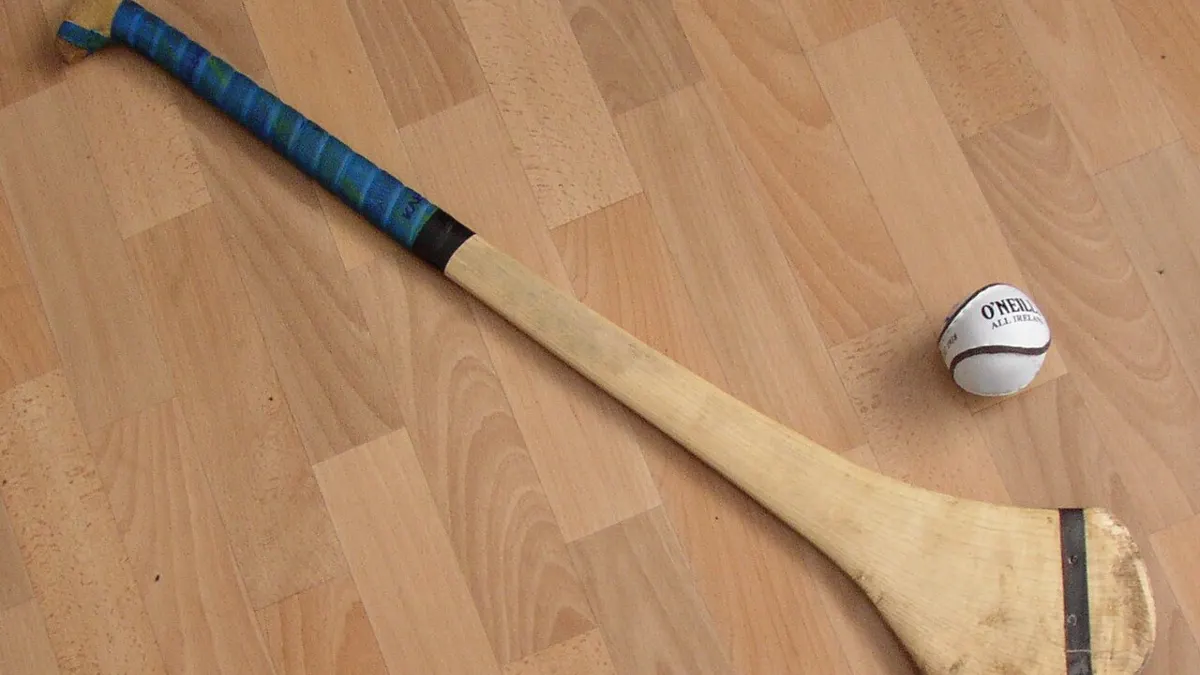
You'll find no shortage of lads telling you who's a cert this Sunday. The trouble is that most weekend GAA tips are a name and a price with no reasoning behind them, so you can't tell a good one from a guess. This page does it differently. Instead of handing you picks that go stale by Monday, it walks you through the routine we'd use ourselves every weekend, from the first team news on Thursday night to the throw-in. Learn it once and you can make your own tips for any round of league or championship.
18+ only. There are no selections here, and every price, stake and percentage on this page is made up to show the maths. Cloudbet, which we link to, is licensed in Curaçao and is not licensed by the Gambling Regulatory Authority of Ireland (GRAI).
Why most weekend GAA tips aren't worth much
Here's the honest bit first. A tip is only useful if the price you're getting is bigger than the real chance of it happening. "Kerry to win" isn't a tip if Kerry are 1/6 and their real chance is about the same as the price says. It's just a fact dressed up as advice. A good tip tells you three things: what the bet is, what price it's worth taking down to, and why the market might have it wrong.
So when you read a tip on social media or in a group chat this weekend, ask those three questions. If the person can't answer them, treat it as an opinion, not a bet. And when you build your own tips using the routine below, write all three down before you place anything.
The weekend routine at a glance
This is the shape of it. Each step gets its own section further down.
| When | What you do | Why it matters |
|---|---|---|
| Early in the week | Look at the fixture list and pick two or three games you actually follow | You can't know every county; focus beats coverage |
| Midweek | Note early prices and write your own rough price for each game | Gives you something to compare against later |
| Thursday to Friday evening | Read the named teams, injury news and county board updates | Team news moves GAA markets more than anything else |
| Saturday | Check the weather forecast and venue, and compare prices across a few books | Wind and rain matter a lot for scoring totals |
| Match day | Watch for late changes in the warm-up and lineup | Dummy teams are common, so the real fifteen can differ |
| Monday | Record what you bet, the price, the closing price and the result | The only honest way to know if your tips are any good |
Step one: pick fewer games
A big championship weekend can have a dozen games across football and hurling, and the league can have even more. Nobody has a real edge on all of them. The punters who do well tend to know a handful of counties very well: their club scene, their underage teams coming through, their manager's habits, which players are carrying knocks. That kind of knowledge doesn't come from a betting app.
So choose the games where you know something. It might be your own county, a neighbouring one, or a division you follow closely. Leave the rest alone, or have a small fun bet with no expectations. One well-researched bet beats six guesses.
Step two: make your own price before you look
This sounds like hard work but it's the single most useful habit in betting. Before you look at the odds, ask yourself: if these two played ten times, how many would each side win, and how many would be a draw? Then turn that into a price.
| Your view (out of 10) | Chance | Fair decimal price | Fair fractional |
|---|---|---|---|
| 8 wins | 80% | 1.25 | 1/4 |
| 7 wins | 70% | 1.43 | about 4/9 |
| 6 wins | 60% | 1.67 | 4/6 |
| 5 wins | 50% | 2.00 | evens |
| 4 wins | 40% | 2.50 | 6/4 |
| 3 wins | 30% | 3.33 | about 9/4 |
The fair price is just 1 divided by the chance. If you think a side wins 60% of the time and you can get 1.85, that's a bet worth considering. If the best you can find is 1.55, it isn't, no matter how confident you feel. Draws are less common in GAA than in soccer but they do happen, especially in tight league games, so leave a little room for them when you split your ten games.
Step three: team news is everything
In GAA, the fifteen who start matter more than in most sports because squads are amateur and depth varies hugely between counties. One top forward missing can knock several points off a team's expected score. That's why the most important part of your weekend is reading the team news when it comes out, usually a day or two before the game.
There's a catch everyone in Ireland knows about: the dummy team. Managers often name a side that isn't quite the one that starts, whether to keep the opposition guessing or to hide an injury. A few habits help:
- Check whether a manager has a history of late changes. Some do it nearly every week; others rarely do.
- Look at who's named on the bench. A key player listed as a sub can mean a knock, or a plan to bring him on later.
- Follow local reporters and county club pages. They often know before the national press.
- Watch the warm-up if you're at the game or the stream starts early. The real lineup sometimes only becomes clear then.
If a big name is genuinely missing and the price hasn't moved, that's when an edge can appear. If the price has already moved a lot, you're probably too late and the value has gone.
Step four: weather and venue
A strong wind blowing down the pitch can change a game completely. Teams play with the wind in one half and against it in the other, kickouts and long-range points become harder, and scoring often drops. Heavy rain makes the ball slippy and handling harder. These things matter most for totals and points handicaps.
| Conditions | Likely effect | Markets to think about |
|---|---|---|
| Calm and dry | Normal or higher scoring | Over on totals, longer-range scorers |
| Strong steady wind | Lopsided halves, fewer long points against the wind | Half-time/full-time, lower totals |
| Heavy rain | More handling errors, lower scoring | Under on totals, a tighter handicap |
| Small or tight pitch | More physical game, harder to break through | Lower totals, fewer goals |
Venue matters too. Home advantage in the league is real in GAA, especially for counties with a tight home pitch and a loud local crowd. In the championship, a neutral venue or a big stadium can take some of that away. Travel matters as well: a long Saturday journey for an early throw-in isn't nothing for amateur players.
Step five: motivation, league vs championship
The same two counties can be a different proposition in February and June. In the league, a team already safe or already relegated might rest players or try out new lads. A team fighting to stay up or chasing promotion will usually go full tilt. In the championship there's rarely a question about effort, but there can be about fitness and squad rotation in round-robin stages.
Ask yourself before each bet: does each team need this result? Is there a bigger game a week later that a manager might be keeping players fresh for? These questions don't always have clear answers, but they're often the reason a "certain" favourite slips up on a wet Sunday.
Handicaps: where most of the value is
Lots of GAA games have a clear favourite, so the match odds can be short and not much use. The handicap market is usually the better place to look. The bookmaker gives the weaker side a head start in points so the game becomes roughly even.
Say the handicap is Team A −5 points at 1.90 and Team B +5 at 1.90. For a €10 bet on Team A −5:
| Final margin | Bet on A −5 | Bet on B +5 |
|---|---|---|
| A wins by 7 | Wins, return €19.00 | Loses |
| A wins by 5 | Usually a push, stake back (check the rules) | Push |
| A wins by 3 | Loses | Wins, return €19.00 |
| Draw or B wins | Loses | Wins |
At 1.90 you need to win just over 52.6% of these bets to break even (1 divided by 1.90). Some books use half-point lines like −4.5 to avoid pushes, and some offer three-way handicaps with a separate price for the tie. Read which one you're on before you click.
To use your own price here, think about the expected margin rather than the winner. If you think Team A wins by about eight on average, a −5 line looks generous. If you think it's closer to four, Team B +5 is the side to look at.
Totals and the two-point arc in football
Total points markets ask whether the combined score goes over or under a line. Remember how GAA scores convert: a goal is worth three points and a point is worth one. In football, the rules brought in for 2025 added a two-point score for kicks from outside the arc. That's made scoring patterns in football different from what older form suggests, so be careful using results from before the change.
A rough method for totals:
- Look at each team's recent scoring in similar games, using matches after any rule change.
- Adjust for the opposition: a strong defence should bring scoring down.
- Adjust for weather and venue using the table above.
- Add the two expected scores together and compare with the line.
Say you expect 26 and 21, so 47 in total, and the line is 44.5 at 1.90 each way. That's a three-point gap, which is meaningful but not huge. If you'd only expected 45, there's nothing worth betting. Small gaps between your number and the line are usually noise, not value.
Hurling and football need different heads
Hurling is usually much higher scoring than football, and goals can swing games quickly. That means handicaps in hurling tend to be bigger, totals higher and the game more volatile in the last ten minutes. In football, especially with the newer rules, there's a different rhythm, and two-pointers can make late comebacks more possible than they used to be.
| Question | Football | Hurling |
|---|---|---|
| How big are typical handicaps? | Often a few points | Often bigger |
| How swingy is the end of a game? | Two-pointers add late drama | Goals can turn it quickly |
| What matters most in team news? | Key forwards and the goalkeeper's kickouts | Free-takers and goal threats |
| Weather sensitivity | High for long-range kicks | High for long-range points and handling |
The free-taker point in hurling is worth stressing. A reliable free-taker can account for a big chunk of a team's score, so if he's out, both the handicap and the total should move. Check whether the bookmaker has adjusted.
18+. Crypto deposits. Cloudbet is licensed in Curaçao and is NOT licensed by the GRAI. Irish gambling law changed in 2026: only GRAI-licensed operators may lawfully take bets from Irish customers. Ad: we may earn a commission. Bet only what you can afford to lose.
Shop around for the price
Different books will often have different prices on the same GAA game, and the gap can be bigger than in soccer because fewer people bet on it. Taking 2.10 instead of 1.95 on the same bet doesn't feel like much, but over a season it adds up. Here's what it looks like across 50 bets of €10 where you win exactly half:
| Average price | Returns from 25 winners | Total staked | Profit or loss |
|---|---|---|---|
| 1.85 | €462.50 | €500 | −€37.50 |
| 1.95 | €487.50 | €500 | −€12.50 |
| 2.05 | €512.50 | €500 | +€12.50 |
| 2.15 | €537.50 | €500 | +€37.50 |
Same picks, same results, very different outcome. That's why getting the best price is part of the tip, not an extra. Our bet calculator page helps you check returns quickly, and betting exchanges are useful as a guide to a fair price even if you don't bet on them.
Weekend accumulators: fun, but know the maths
Everyone loves a Sunday acca across four or five GAA games. It's grand as a small fun bet, but understand what you're up against. Each leg carries the bookmaker's margin, and those margins multiply.
Say you pick four handicap bets at 1.90, and you've a genuine 55% chance on each, which would be a good tipster's hit rate. The acca pays 1.90 × 1.90 × 1.90 × 1.90 ≈ 13.0. The chance all four win is 0.55 × 0.55 × 0.55 × 0.55 ≈ 9.2%. A €5 acca has an average result of about 0.092 × €65 − €5 ≈ +€0.96. Drop your real chance to 50% per leg and the chance of all four becomes 6.25%, and the same acca averages about −€0.93. A small change in your skill makes a big difference once you multiply legs together.
So keep accas small, use legs you've actually researched, and don't confuse an exciting slip with a good bet.
In-play GAA betting on the weekend
Live betting can be useful when you're watching the game and something changes that the market hasn't caught up with, such as a black card or sin bin, an injury to a key player, or a team clearly struggling against the wind. But be careful: TV and streams can run behind the live action, and bookmakers often suspend markets after big moments. If you're seeing it after the book does, you're not getting an edge.
A good rule is to decide before throw-in what would make you bet live. For example, "if Team A are only level at half-time after playing with the wind, I'd look at Team B on the handicap." That stops you clicking on impulse when the game gets exciting.
Settlement rules worth checking
GAA has a few quirks that can affect how your bet is settled. Always check your book's rules, but these are the usual questions:
- Extra time: many books settle match and handicap bets on the result after normal time, including injury time, and not extra time or penalties. Some knockout markets like "to qualify" do include them.
- Draws: in a two-way market, a draw might void the bet or be handled differently. In a three-way market the draw is its own outcome.
- Postponed or moved games: weather can postpone GAA games. Books usually void bets if a game isn't played within a set time, but the rules vary.
- Scorer markets: check whether points from frees count and how a two-pointer is counted in a player points market.
A simple staking plan for the season
Pick a pot you're happy to lose for the whole season and bet a small fixed slice of it each time. That way a bad weekend doesn't wipe you out and a good one doesn't make you reckless.
| Season pot | 1% per bet | 2% per bet | Bad run of 8 losers at 2% |
|---|---|---|---|
| €100 | €1 | €2 | Down €16 |
| €250 | €2.50 | €5 | Down €40 |
| €500 | €5 | €10 | Down €80 |
Losing runs of eight happen to everyone, even when you're picking well. With a 50% hit rate, the chance of losing eight in a row at some point over a long season is much higher than most people expect. Small stakes are what let you ride it out.
Keep a record, even a rough one
Tips are only as good as their track record. A note on your phone or a simple spreadsheet is enough. Record the game, the bet, the price you took, the price just before throw-in, your stake and the result. After 30 or 40 bets you'll start to see a pattern.
The closing price column is the clever one. If the price usually shortens after you bet, so you took 2.10 and it closed at 1.90, you're probably reading team news and conditions well, even if results haven't caught up yet. If it usually drifts out after you bet, the market thinks you were wrong more often than not, and it's worth asking why.
Mistakes that cost Irish punters every weekend
- Betting with the heart: backing your own county every week no matter the price. Bet on them for fun if you want, but keep it separate.
- Old form after rule changes: using results from before the newer football rules to judge scoring.
- Ignoring the named team: placing bets on Wednesday and never checking the lineup.
- Chasing a bad Saturday: doubling stakes on Sunday to win it back.
- Too many accas: spreading a small pot over big multiples that rarely land.
- One price only: never checking if a better price is available elsewhere.
Your reusable weekend checklist
- Choose two or three games you know well.
- Write your own price or expected margin before looking at odds.
- Read the named teams and local news, and allow for dummy teams.
- Check the weather and venue on Saturday.
- Ask whether each side needs the result.
- Compare prices across a few books and take the best one.
- Write down the bet, the price you'd take it down to, and why.
- Stake a fixed small share of your season pot.
- Record the closing price and the result on Monday.
For more depth on the markets themselves, see our guide to All-Ireland GAA betting, our page on football championship odds and the Allianz Hurling League odds guide. For the hurling championship, look at our Munster and Leinster pages.
Licensing and where you bet
In Ireland, gambling is regulated by the GRAI. Cloudbet, which we link to, is licensed in Curaçao and is not licensed by the GRAI, so you won't get the same protections as with an Irish-licensed operator. Make your own choice with that in mind. Our page on whether online betting is legal in Ireland covers the legal side.
GAA, community and keeping it fun
The GAA is built on clubs and parishes, and betting can feel like part of the weekend craic. But players and members are banned from betting on games they're involved in, and gambling harm is a real issue in Irish sport. Our page on gambling addiction among GAA players looks at that side. If you notice you're betting more than you planned, chasing losses or hiding bets, stop and talk to someone. Gambling Care is free, confidential and open 24/7 on 1800 936 725 (Northern Ireland: 08000 886 725). Our responsible gambling page has more support options.
Questions players ask
Where can I find GAA betting tips for this weekend?
Plenty of places post tips, but the best ones explain the bet, the price worth taking and the reason. Using a simple routine, you can make your own tips each weekend.
When is GAA team news announced?
Counties usually name teams a day or two before a game. Watch for dummy teams, as the starting fifteen can change on the day.
Are handicaps better than match odds in GAA?
Often, yes. Many games have a clear favourite at a short price, and the handicap turns them into a closer contest with fairer odds.
How does the two-point score affect betting?
Since the 2025 football rules, kicks from outside the arc can be worth two points. That changes totals and scorer markets, so use form from after the change.
Does extra time count in GAA bets?
Many books settle match and handicap bets on normal time only. Some knockout markets include extra time. Check your book's rules.
Does weather affect GAA betting?
Yes. Strong wind and heavy rain usually reduce scoring and make long-range kicks harder, which matters most for totals.
How much should I stake on a weekend GAA bet?
A fixed 1–2% of a season pot you can afford to lose is a sensible approach. It keeps bad runs manageable.
Is Cloudbet licensed in Ireland?
No. Cloudbet is licensed in Curaçao and is not licensed by the GRAI.
Where can I get help with gambling in Ireland?
Call Gambling Care on 1800 936 725, free and open 24/7. In Northern Ireland, call 08000 886 725.
18+. Crypto deposits. Cloudbet is licensed in Curaçao and is NOT licensed by the GRAI. Irish gambling law changed in 2026: only GRAI-licensed operators may lawfully take bets from Irish customers. Ad: we may earn a commission. Bet only what you can afford to lose.
If betting is costing you more than money, free and confidential help is there 24 hours a day, 365 days a year: the Problem Gambling Helpline run by Dunlewey Addiction Services for Gambling Care, on 1800 936 725 (from Northern Ireland: 08000 886 725). Source: grai.ie.