Crypto Blackjack in Ireland: The Real House Edge, Basic Strategy Charts, Rule Traps and Session Maths
Welcome bonus for new players + fast crypto payouts. Just helping a brother out.
18+. Crypto deposits. Cloudbet is licensed in Curaçao and is NOT licensed by the GRAI. Irish gambling law changed in 2026: only GRAI-licensed operators may lawfully take bets from Irish customers. Ad: we may earn a commission. Bet only what you can afford to lose.
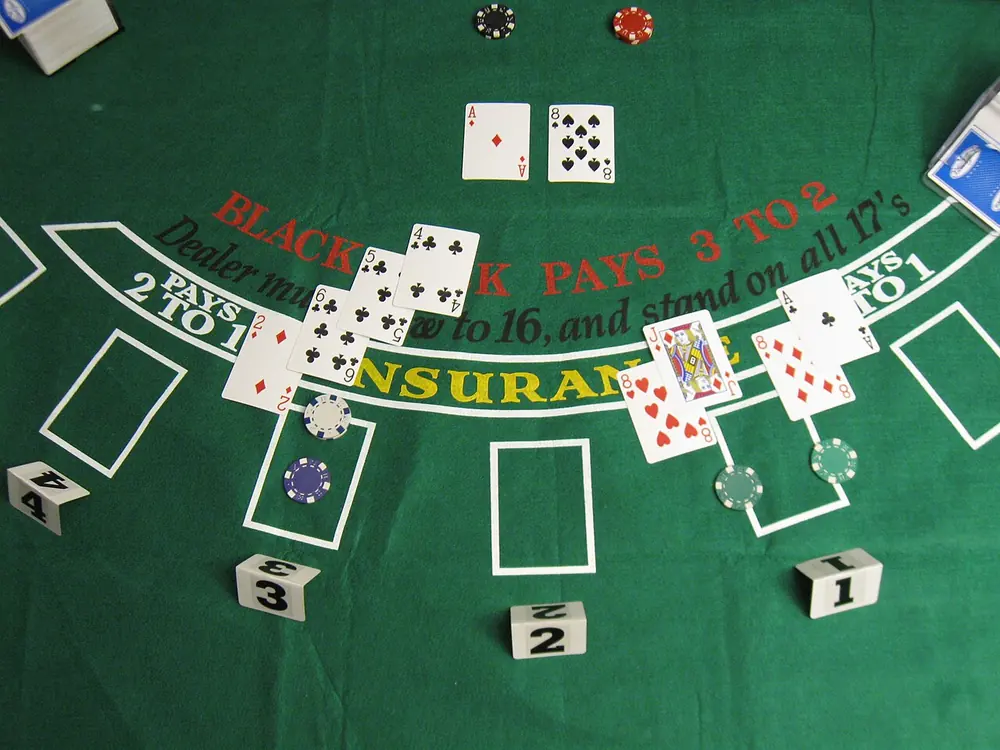
Blackjack is the one casino game where how you play actually changes the odds. Play it well and the house edge is about half a percent, lower than almost anything else on the casino floor. Play it on gut feel and that edge can be ten times bigger. Add crypto into the mix and you've a few more things to think about: coin prices that move while you play, network fees, and who's actually dealing the cards. This guide is what a mate who's done the maths would tell you before you sit down at a crypto blackjack table, with the charts, the numbers and the traps laid out plainly.
18+ only. This is general information, not a recommendation to gamble. The house-edge figures below come from our own computer simulations of standard rules, and every stake and result is a made-up example. Ireland's regulator, the Gambling Regulatory Authority of Ireland (GRAI), has not issued any online casino licences yet. Cloudbet, which we link to, holds a Curaçao licence and is not licensed by the GRAI, so no Irish regulator can step in if something goes wrong. If gambling is getting on top of you, Gambling Care is free, confidential and open 24/7 on 1800 936 725 (Northern Ireland: 08000 886 725).
The short version
- Crypto blackjack is the same game as normal blackjack. Only the money changes. The cards, rules and odds are identical.
- With good rules and perfect basic strategy, the house edge is roughly 0.5%. In our simulation of a standard game, it came out at about 0.56%.
- Bad rules cost you more than anything. A table paying 6:5 on blackjack instead of 3:2 roughly triples or quadruples the house edge, to about 1.9% in our simulation.
- Playing on gut feel is expensive. Copying the dealer (hit to 17, never double or split) gave the house an edge of about 5.7% in our simulation, ten times worse than basic strategy.
- Insurance is a bad bet for anyone not counting cards, costing about 7.7% of what you put on it.
- No betting system beats the edge. Martingale turns lots of small wins into the occasional wipe-out.
- Coin price swings can matter more than the house edge. A stablecoin like USDT keeps that out of the picture.
What "crypto blackjack" actually means
There are three main flavours of blackjack you'll find at a crypto casino:
- RNG blackjack. A computer deals the cards using a random number generator. It's fast, you play at your own pace, and stakes can be very small. Most RNG tables effectively shuffle after every hand.
- Live dealer blackjack. A real dealer deals real cards on a video stream, usually from a studio. It's slower and more social, with fixed seats or "bet behind" options. Our guide to live dealer crypto casinos covers how those streams work.
- Provably fair blackjack. Some crypto-native casinos run "in-house" blackjack where each deal can be checked afterwards using cryptographic hashes. You can verify the cards weren't changed after you bet. Our provably fair explainer walks through how to check.
In all three, crypto only changes how you deposit and withdraw. You might bet in Bitcoin, Ethereum, USDT or another coin, and some tables show stakes in the coin while others show a currency equivalent. The game itself doesn't care.
The rules in sixty seconds
You and the dealer each get two cards. You can see one of the dealer's cards (the "upcard"). Number cards count at face value, picture cards count 10, and an ace counts 1 or 11, whichever is better. You want to get closer to 21 than the dealer without going over.
- Hit: take another card.
- Stand: keep what you have.
- Double down: double your bet, take exactly one more card.
- Split: if your first two cards are a pair, split them into two hands with a bet on each.
- Surrender (not always offered): give up the hand and get half your bet back.
A "blackjack" is an ace plus a ten-value card on your first two cards. It usually pays 3:2 (bet €10, win €15). If you go over 21 you "bust" and lose straight away, even if the dealer busts later. That's where the house gets its edge: you act first, so your busts count before the dealer's do.
The dealer has no choices. They hit until they reach 17 or more. The main rule difference between tables is whether the dealer stands on a "soft 17" (a 17 that includes an ace counted as 11, like ace-six) or hits it.
The house edge: what our simulations found
Lots of sites quote house-edge figures without saying where they came from. We wrote a blackjack simulator and played millions of hands under different rules and strategies so you can see the effect directly. Our simulator used an "infinite deck" model, which behaves very close to a six- or eight-deck shoe. The dealer peeks for blackjack, you can double on any two cards and after splitting, split aces get one card each, and there's no surrender or resplitting. Each figure comes from two million hands, so treat them as accurate to within about 0.1 to 0.2 of a percentage point.
| Rules and strategy | House edge in our simulation | Average cost per €100 bet |
|---|---|---|
| Dealer stands soft 17, blackjack pays 3:2, perfect basic strategy | about 0.56% | about €0.56 |
| Dealer hits soft 17, blackjack pays 3:2, basic strategy | about 0.80% | about €0.80 |
| Dealer stands soft 17, blackjack pays 6:5, basic strategy | about 1.91% | about €1.91 |
| Copy the dealer: hit to 17, never double or split | about 5.68% | about €5.68 |
| "Never bust": stand on any hard 12 or more, never double or split | about 6.24% | about €6.24 |
That table is the whole argument for learning basic strategy. The same game, at the same table, can cost you half a euro per hundred or six euro per hundred depending on the decisions you make. No VIP scheme or bonus comes close to the difference between those two lines.
Real tables vary. Fewer decks, surrender, and resplitting aces help you a little. Restrictions like "double on 10 or 11 only" or "no doubling after split" cost you a little. The game's info panel usually shows its RTP (return to player), and the house edge is simply 100% minus that. If the RTP shown is below about 99.4%, something in the rules is costing you, and it's worth finding out what.
The 6:5 trap
This is the single most expensive rule in blackjack, and it's sneaky because the game looks exactly the same. At a 3:2 table, a €10 blackjack pays €15. At a 6:5 table, it pays €12.
How much does that cost? You get a blackjack on about 4.73% of hands. When you do, and the dealer doesn't also have one, a 6:5 table pays you 0.3 of your bet less than a 3:2 table. Multiply it out and the cost is about 1.35% of every bet you make, on every hand. Our simulation agreed: the house edge jumped from about 0.56% to about 1.91%.
Put it in money. At €5 a hand for 200 hands (about an hour of RNG blackjack), you'd expect to lose about €5.60 at a 3:2 table and about €19.10 at a 6:5 table. Same game, same cards, same strategy, more than three times the cost. If a table pays 6:5, find another table.
Where the dealer ends up, by upcard
Basic strategy makes sense once you see how often the dealer busts from each upcard. These figures come from an exact calculation using the same infinite-deck model, for a dealer who stands on soft 17 and has already checked for blackjack.
| Dealer upcard | Ends on 17 | 18 | 19 | 20 | 21 | Busts |
|---|---|---|---|---|---|---|
| 2 | 14.0% | 13.5% | 13.0% | 12.4% | 11.8% | 35.4% |
| 3 | 13.5% | 13.0% | 12.6% | 12.0% | 11.5% | 37.4% |
| 4 | 13.0% | 12.6% | 12.1% | 11.6% | 11.1% | 39.4% |
| 5 | 12.2% | 12.2% | 11.8% | 11.3% | 10.8% | 41.6% |
| 6 | 16.5% | 10.6% | 10.6% | 10.2% | 9.7% | 42.3% |
| 7 | 36.9% | 13.8% | 7.9% | 7.9% | 7.4% | 26.2% |
| 8 | 12.9% | 35.9% | 12.9% | 6.9% | 6.9% | 24.5% |
| 9 | 12.0% | 12.0% | 35.1% | 12.0% | 6.1% | 22.8% |
| 10 | 12.1% | 12.1% | 12.1% | 37.1% | 3.7% | 23.0% |
| Ace | 18.9% | 18.9% | 18.9% | 18.9% | 7.8% | 16.7% |
(Rows may not add to exactly 100% because of rounding.) The pattern is the heart of basic strategy. When the dealer shows 2 to 6, they bust 35% to 42% of the time, so you can often stand on a weak total and let them take the risk. When the dealer shows 7 or higher, they bust only 17% to 26% of the time and usually finish on 17 or better, so standing on 12 to 16 usually just loses. You have to take the risk of hitting.
If the dealer hits soft 17, the numbers shift a little. With a 6 showing, for example, the dealer's bust chance rises from about 42.3% to about 43.9%, and they finish on 17 less often. That's one reason hit-soft-17 tables cost you about a quarter of a percentage point more.
Your bust chance when you hit
The other half of the picture is how likely you are to bust if you take a card. With a hard total (no ace counted as 11), it's simple counting:
| Your hard total | Chance of busting if you hit |
|---|---|
| 12 | 30.8% |
| 13 | 38.5% |
| 14 | 46.2% |
| 15 | 53.8% |
| 16 | 61.5% |
| 17 | 69.2% |
| 18 | 76.9% |
So why does basic strategy say hit 16 against a dealer 10, when you'll bust 61.5% of the time? Because standing is even worse. A dealer with a 10 showing finishes on 17 or more about 77% of the time, and every one of those beats your 16. Hitting gives you a small chance to improve; standing almost always loses. Neither option is good. Basic strategy just picks the less bad one. That's worth remembering when a hand feels wrong: blackjack is full of situations where every choice is a loser on average, and the skill is losing less.
Basic strategy charts
These are the decisions our simulator used for the 0.56% result: multi-deck, dealer stands on soft 17, double after split allowed, no surrender. Find your hand down the left and the dealer's upcard across the top. H = hit, S = stand, D = double (if not allowed, hit), Ds = double (if not allowed, stand), P = split.
Hard totals
| You | 2 | 3 | 4 | 5 | 6 | 7 | 8 | 9 | 10 | A |
|---|---|---|---|---|---|---|---|---|---|---|
| 8 or less | H | H | H | H | H | H | H | H | H | H |
| 9 | H | D | D | D | D | H | H | H | H | H |
| 10 | D | D | D | D | D | D | D | D | H | H |
| 11 | D | D | D | D | D | D | D | D | D | H |
| 12 | H | H | S | S | S | H | H | H | H | H |
| 13 to 16 | S | S | S | S | S | H | H | H | H | H |
| 17 or more | S | S | S | S | S | S | S | S | S | S |
Soft totals (an ace counted as 11)
| You | 2 | 3 | 4 | 5 | 6 | 7 | 8 | 9 | 10 | A |
|---|---|---|---|---|---|---|---|---|---|---|
| A,2 or A,3 | H | H | H | D | D | H | H | H | H | H |
| A,4 or A,5 | H | H | D | D | D | H | H | H | H | H |
| A,6 | H | D | D | D | D | H | H | H | H | H |
| A,7 | S | Ds | Ds | Ds | Ds | S | S | H | H | H |
| A,8 or more | S | S | S | S | S | S | S | S | S | S |
Pairs
| You | 2 | 3 | 4 | 5 | 6 | 7 | 8 | 9 | 10 | A |
|---|---|---|---|---|---|---|---|---|---|---|
| A,A | P | P | P | P | P | P | P | P | P | P |
| 10,10 | S | S | S | S | S | S | S | S | S | S |
| 9,9 | P | P | P | P | P | S | P | P | S | S |
| 8,8 | P | P | P | P | P | P | P | P | P | P |
| 7,7 | P | P | P | P | P | P | H | H | H | H |
| 6,6 | P | P | P | P | P | H | H | H | H | H |
| 5,5 | Never split. Play as a hard 10. | |||||||||
| 4,4 | H | H | H | P | P | H | H | H | H | H |
| 2,2 or 3,3 | P | P | P | P | P | P | H | H | H | H |
If the dealer hits soft 17, a few cells change: double 11 against an ace, double A,8 against a 6, and double A,7 against a 2. If surrender is offered, the standard extras are to surrender hard 16 against 9, 10 or ace, and hard 15 against 10. Those small tweaks are worth having, but the charts above already get you most of the way.
Online, you're allowed to keep the chart open next to the game. Do it. There's no shame in it, and no dealer to roll their eyes. After a few sessions, most of it sticks.
The decisions people get wrong most
- Standing on 12 against a 2 or 3. It feels safe, but the dealer only busts about 35% to 37% of the time from those cards. Hit.
- Not hitting 16 against a 10. As above: hitting loses, but standing loses more.
- Not splitting 8s against a 9, 10 or ace. A 16 is the worst hand in the game. Two hands starting with 8 are bad too, but less bad.
- Splitting 10s. A 20 wins most of the time. Breaking it up to chase two better hands gives away value.
- Not doubling 11 against a 10. In a multi-deck game where the dealer stands on soft 17, doubling 11 against a 10 is right. It's one of the best spots you get.
- Standing on soft 18 against a 9, 10 or ace. 18 sounds good, but against those cards it's often not enough, and you can't bust by taking one card on a soft 18.
- Taking insurance with a blackjack ("even money"). It's the same bet as insurance, and it costs you on average. More on that next.
Worked hands: why the chart says what it says
Charts are easier to trust once you see the reasoning. Here are a handful of common hands, worked through with the dealer numbers from the tables above.
You have 12, the dealer shows a 4
The chart says stand. A dealer with a 4 showing busts about 39.4% of the time. If you hit, you bust 30.8% of the time straight away, and even when you don't, you're often left with a weak total like 14 or 15 that still loses to most dealer finishes. Standing lets the dealer carry the risk. It's close, but standing wins out.
You have 12, the dealer shows a 2
Now the chart says hit. The dealer only busts about 35.4% of the time from a 2, a few points less than from a 4, and that small gap is enough to tip the decision. This is one of the spots people get wrong most, because standing on 12 "feels" safe. It's the kind of thin call where the chart beats instinct.
You have 11, the dealer shows a 10
Double. Around 30.8% of the time you'll draw a ten-value card for 21, and plenty of other cards leave you with 18 to 20. Against a dealer 10 that's already checked for blackjack, you're a slight favourite to win the hand, so putting more money in when you're a favourite is exactly what you want. In a multi-deck game where the dealer stands on soft 17, the chart stops short of doubling 11 against an ace; if the dealer hits soft 17, it doubles there too.
You have 16, the dealer shows a 7
Hit. A dealer with a 7 finishes on 17 about 36.9% of the time and on 18 or more about 37% more, busting only about 26.2% of the time. Standing on 16 wins only when the dealer busts. Hitting busts you 61.5% of the time, but the rest of the time it leaves you with 17 to 21, which wins or pushes often enough to make hitting the less bad option.
You have A,7 (soft 18), the dealer shows a 9
Hit. This one surprises people because 18 sounds strong. But a dealer with a 9 ends on 19 about 35.1% of the time and on 20 or 21 another 18% or so. Your 18 loses to all of those. Taking a card can't bust you, because the ace can drop back to 1, and it gives you a real chance to improve to 19, 20 or 21.
You have 8,8, the dealer shows a 10
Split. Two hands starting with 8 against a 10 are both underdogs, so you're putting more money in on a bad situation. But keeping them together as a 16 is worse still. Splitting turns one terrible hand into two bad ones, and on average you lose less. This is the purest example of basic strategy being about losing less rather than winning more.
Doubling and splitting: where your profit comes from
If basic strategy is mostly about avoiding mistakes, doubling and splitting are where it claws value back. Every time you double, you're putting extra money on the table in a spot where you're the favourite: hard 10 or 11 against a weak or middling dealer card, or soft hands against a dealer 3 to 6 who's likely to bust. Every good split takes a weak or average starting hand and turns it into two better ones, or two hands against a dealer who's likely to bust.
Those moves matter more than they look. The "copy the dealer" strategy in our simulation never doubles or splits, and it cost about 5.68% compared with about 0.56% for full basic strategy. Part of that gap comes from busting first, but a big slice of it comes from never pressing your advantage when you have one.
So when a table restricts doubling to 10 or 11 only, or bans doubling after a split, it's quietly taking some of your best spots away. That's why the rules section of the game info panel is worth thirty seconds of your time before you sit down.
A practical tip: only double or split when you can afford the extra stake. If your bankroll is down to the point where a double would wipe you out, that's a sign your base stake is too big for the session budget, not a reason to skip the double.
Insurance and "even money"
When the dealer shows an ace, you'll be offered insurance: a side bet of up to half your stake that pays 2:1 if the dealer has blackjack. It sounds like protection. It's not. It's a separate bet on whether the dealer's hidden card is a ten.
In a normal shoe, about 4 in every 13 cards are ten-value, or about 30.8%. Insurance pays 2:1, so it needs a chance of at least one in three (33.3%) to break even. At 30.8%, you lose on average about 7.7% of whatever you put on insurance. That's far worse than the main game.
"Even money" is the same thing in disguise. When you have a blackjack and the dealer shows an ace, taking even money guarantees a 1:1 win. Declining it means you win 3:2 most of the time and push when the dealer also has blackjack. On average, declining pays more. The guaranteed win feels nice, but you're paying for that feeling.
The only players who should ever take insurance are skilled card counters who know the remaining shoe is rich in tens, which doesn't apply to RNG games at all.
Side bets: fun, but pricey
Most online blackjack tables offer side bets like Perfect Pairs, 21+3 or "Bust It". They pay big multipliers for specific combinations, and they're designed to be fun. They also usually carry a much higher house edge than the main game.
Take Perfect Pairs, which pays if your first two cards are a pair. With one common paytable (25:1 for a perfect pair of the same suit, 12:1 for a coloured pair, 6:1 for a mixed pair) and a six-deck shoe, we worked out the exact odds: you hit some kind of pair about 7.4% of the time, and the house edge comes to about 6.1%. That's more than ten times the main game's edge with basic strategy.
Paytables vary between games, so the edge on the side bets you see could be higher or lower. The game's help screen usually lists the RTP for each side bet. If it doesn't, assume it's expensive. If you enjoy a side bet now and then, keep it small and think of it as the price of a bit of excitement.
RNG vs live: speed is a hidden cost
Here's something people rarely think about. The house edge is a percentage of each bet, so the more hands you play, the more you expect to lose. RNG blackjack can easily run at 200 hands an hour or more. Live tables usually manage around 60. Those are our rough assumptions; your pace will vary.
| Game and rules | Hands per hour | Expected loss per hour at €1 | At €5 | At €25 |
|---|---|---|---|---|
| RNG, 3:2, stands soft 17, basic strategy (0.56%) | 200 | €1.12 | €5.60 | €28.00 |
| Live, 3:2, stands soft 17, basic strategy (0.56%) | 60 | €0.34 | €1.68 | €8.40 |
| RNG, 3:2, hits soft 17 (0.80%) | 200 | €1.60 | €8.00 | €40.00 |
| RNG, 6:5 (1.91%) | 200 | €3.82 | €19.10 | €95.50 |
| RNG, copying the dealer (5.68%) | 200 | €11.36 | €56.80 | €284.00 |
A slower live table at the same stake costs you less per hour simply because fewer hands are dealt. If you want your budget to last, live tables with a sensible stake are a gentle way to play. If you play RNG, consider slowing down on purpose. There's no prize for speed.
What a session really looks like
The house edge is an average. Any one session swings well above or below it. We simulated thousands of sessions using basic strategy at a 3:2, stands-on-soft-17 table at €5 a hand:
| Session | Expected loss | Average result | Median result | Worst 10% lost at least | Best 10% won at least | Sessions ahead |
|---|---|---|---|---|---|---|
| 200 hands (about an hour RNG) | €5.60 | −€4.80 | −€5.00 | €110 | €97.50 | 47% |
| 1,000 hands | €28 | −€29 | −€35 | €260 | €205 | 42% |
A few things stand out. Even with near-perfect play, you'll finish ahead in a short session almost half the time, which is part of why blackjack feels beatable. The swings are big compared with the expected loss: in 200 hands, a typical spread runs from losing about €110 to winning about €97, around an average loss of only about €5. And the longer you play, the more the edge grinds through: over 1,000 hands, you're ahead less often.
A rough rule of thumb for budgeting: one hand of blackjack has a standard deviation of about 1.15 times your stake, because doubles and splits add to the swings. Over 200 hands, that works out to about 16 betting units of typical swing either way. At €5 a hand, that's about €81. So a session bankroll of 30 to 40 units (€150 to €200 at €5) gives you room to ride normal swings without busting out after a bad patch. Less than that, and an ordinary run of bad cards can end your night early.
Betting systems: we tested martingale
Martingale is the classic system: double your bet after every loss, go back to your base stake after a win. The idea is that one win recovers all your losses plus one unit. It feels bulletproof. Here's why it isn't.
We simulated a simplified version of blackjack as an even-money game with a small house edge (a 49.75% chance of winning each decided hand), a €300 bankroll, a €5 base bet, a €500 table maximum, and a goal of winning €50 and then stopping. Over 20,000 simulated sessions:
- About 85.2% of sessions hit the €50 goal.
- About 14.8% lost the whole €300.
- The average result was about −€1.71 per session.
That's martingale in a nutshell. Most of the time you win a little. Occasionally you lose everything. On average you still lose, because the occasional wipe-out costs more than all the small wins put together. Changing the stakes doesn't change the odds of any hand, so no staking pattern can turn a negative edge positive.
And losing streaks are more common than people think. In 200 decided hands at roughly a 50% chance of losing each one, we worked out the chance of seeing at least one run of losses in a row:
| Losses in a row | Chance of at least one such streak in 200 hands | Martingale bet needed on the next hand (from €5) |
|---|---|---|
| 5 | 96.8% | €160 |
| 6 | 80.9% | €320 |
| 7 | 55.5% | €640 |
| 8 | 32.9% | €1,280 |
A seven-loss streak happens in more than half of 200-hand sessions, and by then martingale wants you to bet €640, past both a €300 bankroll and a €500 table limit. Other systems (Paroli, d'Alembert, Labouchère, 1-3-2-6) rearrange when you win and lose, but none of them change the edge. Pick your stake, keep it steady, and play the hands well. That's the only "system" that works in your favour, and only in the sense of losing less.
Card counting online
Card counting is real. In a hand-dealt shoe, tracking the ratio of high to low cards can tip the odds slightly towards a skilled player at the right moments. But online, it's mostly a non-starter.
- RNG blackjack typically deals from a freshly shuffled virtual shoe every hand, so there's nothing to count.
- Live dealer blackjack often uses continuous shuffling machines or shuffles well before the shoe runs low, which removes most of the advantage. Even where counting could work in theory, casinos can limit bet sizes or close accounts they suspect of counting.
- Software helpers that track cards or suggest plays are usually against the terms of service, and using them can get your account closed and winnings withheld.
So for nearly every online player, the realistic target is perfect basic strategy at a game with good rules. That gets you close to break-even, which is as good as it gets.
18+. Crypto deposits. Cloudbet is licensed in Curaçao and is NOT licensed by the GRAI. Irish gambling law changed in 2026: only GRAI-licensed operators may lawfully take bets from Irish customers. Ad: we may earn a commission. Bet only what you can afford to lose.
Crypto-specific things to know
Coin price swings
If you play with Bitcoin or Ethereum, the value of your balance moves with the coin's price while you play. Say you have the equivalent of €500 on the table and the coin drops 5% during your session. That's a €25 hit before you've played a card. Compare that with the expected loss of about €5.60 for 200 hands at €5 with basic strategy. The coin's price move matters four times more than the game.
That can go in your favour too, of course, but it's a separate gamble on top of the blackjack. If you want to play blackjack and only blackjack, a stablecoin like USDT keeps your balance pegged to the dollar. Our USDT guide for Irish players explains how that works, and our guide to buying crypto in Ireland covers getting started.
Fees and minimums
Every deposit and withdrawal costs a network fee, and minimums vary by coin. Taking out small amounts often means fees eat into them. Batch withdrawals rather than cashing out every small win. Cloudbet's help centre, when we checked, said withdrawal minimums vary by coin, the network fee is shown before you confirm, and withdrawals are typically processed within 24 hours. Our crypto casino deposit guide walks through the steps, and our crypto withdrawals guide covers the other direction.
Identity checks
Crypto doesn't mean anonymous. Cloudbet's terms, when we checked, said identity checks apply once cumulative deposits reach about US$2,200. Other casinos have their own thresholds or ask at withdrawal. Have your documents ready rather than finding out when you want to cash out. Our page on whether Cloudbet has KYC has more.
Stakes shown in coins
Some tables show your bet in BTC or ETH units, like 0.0001 BTC. That makes it harder to feel what you're betting. Before you sit down, work out what your stake is worth in euro, and set it to a round figure. If the casino lets you display a fiat equivalent, switch it on.
Live dealer practicalities
Live dealer blackjack has a few quirks worth knowing before you play.
- Decision timers. You get a set number of seconds to act. If you time out, the table usually applies a default action, often standing. Check what the default is, because standing on 11 by accident is painful.
- Bet behind. If the seats are full, many tables let you bet on another player's hand. You don't make the decisions, so you're relying on their strategy. If they play badly, so does your bet behind.
- Disconnections. If your connection drops mid-hand, the casino's rules decide what happens, usually a default action. Read the rules and play on a stable connection.
- Infinite-seat tables. Some live games let unlimited players share the same dealer's hand, with everyone making their own decisions on a common starting hand. The rules can differ from a standard table, so check payouts and RTP.
- Chat. Be decent to the dealer. They're working a shift, and they don't control the cards.
The slower pace is the big plus. At around 60 hands an hour, the same budget lasts roughly three times as long as RNG play at the same stake.
Checking a provably fair hand
Provably fair blackjack, offered by some crypto-native casinos, works by locking in the shuffle before you bet. Here's the general idea, though each casino's version differs a little:
- Before the hand, the casino shows you a "hashed" server seed: a scrambled fingerprint of the random value it will use. It can't change the seed later without the fingerprint changing.
- You provide, or are given, a client seed. Some casinos let you change it whenever you like.
- The casino combines the two seeds (plus a counter called a nonce) to shuffle the deck.
- After the hand, or when you rotate seeds, the casino reveals the real server seed.
- You can then hash it yourself, check it matches the fingerprint, and recreate the shuffle with the published method to confirm the cards you were dealt.
What provably fair proves is that the cards weren't changed after you bet. It doesn't prove the game's rules or payouts are fair, so you still need to check that blackjack pays 3:2 and what the dealer does on soft 17. Our provably fair explainer goes through verifying in more detail.
Questions to ask before playing at a new crypto casino
- Who runs the casino, and where is it licensed?
- What are the blackjack rules on each table: 3:2 or 6:5, stands or hits soft 17, doubling and splitting rules?
- What's the RTP of each blackjack game, and is it shown in the game info?
- Which coins can I deposit and withdraw, and what are the minimums and fees?
- When will I be asked for identity documents?
- How long do withdrawals usually take?
- How does blackjack count towards any bonus wagering?
- Can I set deposit limits, time-outs and self-exclusion on my account?
A trustworthy casino will answer all of those clearly, often in its help centre before you even ask. If you're getting vague replies, especially on licensing, withdrawals and limits, that tells you plenty.
A four-week learning plan
You don't need to memorise every chart cell before you play, but a little practice goes a long way. Here's a gentle plan:
- Week 1: learn the hard totals chart. Play free or demo blackjack if the casino offers it, with the chart open, and check every decision.
- Week 2: add soft totals. These are the ones people get wrong most, especially soft 17 and soft 18.
- Week 3: add pairs. Focus on the always-split (aces, 8s) and never-split (5s, 10s) rules first, then the rest.
- Week 4: play at small real stakes if you want, still with the chart open, and note any hand where you hesitated. Look those up afterwards.
After a month of this, most players get basic strategy right almost all the time. That alone can save you far more than any bonus or loyalty scheme will ever pay.
Bonuses and blackjack
Blackjack and casino bonuses don't mix as well as people hope. Because blackjack has a low house edge, casinos usually discount it heavily when you're working through bonus wagering. It's common for table games to count only 10% or 20% towards wagering, or to be excluded entirely.
Cloudbet's terms, when we checked, said live and virtual table games contribute 10% towards bonus wagering. That means a euro bet on blackjack counts as ten cent. If an offer needs €3,500 of wagering, you'd need about €35,000 of blackjack turnover, with an expected loss of about €196 at a 0.56% edge. Always read how blackjack contributes before you take a bonus with wagering.
Rakeback works differently. Cloudbet's welcome package, per its terms when we checked, pays casino rakeback at 10% of the house edge for 30 days, and its standard Rewards programme pays 5% of the house edge at most tiers. On blackjack, that's small: on €1,000 of turnover at a 0.56% edge, the expected loss is about €5.60, so 5% rakeback is about 28 cent and 10% is about 56 cent. Nice, but it shouldn't change how you play. Our guide to crypto casino VIP programmes breaks that down further.
Blackjack variants you'll see online
Crypto casinos often list several versions of blackjack side by side. They look alike, but the rules change the maths, and the strategy charts above are only right for standard blackjack.
- Spanish 21 removes the ten-value number cards from the deck, which is bad for you, then adds player-friendly bonus rules to make up for it. Basic strategy is different, so don't use the standard chart.
- Free Bet Blackjack gives you free doubles on some hands and free splits on some pairs, but a dealer finishing on 22 usually pushes instead of losing. It needs its own strategy.
- Blackjack Switch deals you two hands and lets you swap the second cards between them, but blackjack typically pays even money and a dealer 22 pushes.
- Double Exposure shows you both dealer cards, but you usually lose ties and blackjack pays even money.
- Single-deck or "classic" tables can be good or bad depending on the payout. A single-deck game paying 6:5 is worse than a six-deck game paying 3:2.
The pattern is always the same: every rule that helps you is paired with one that helps the house. The only way to know which version is cheaper is to check the RTP in the game info and use the right strategy for that variant. If you've only learned the standard chart, stick to standard blackjack. Mixing variants without the right strategy is a fast way to turn a half-percent game into a much more expensive one.
Picking a good table: a checklist
- Blackjack pays 3:2. If it says 6:5, walk away.
- Dealer stands on soft 17 if you can find it. Hits-soft-17 costs you roughly a quarter of a percentage point.
- Double on any two cards, and double after split allowed.
- Surrender offered is a small bonus.
- RTP listed in the game info. Around 99.4% or higher is good for basic strategy players.
- Stake range that suits your budget. Don't sit at a table where the minimum is too much for your bankroll.
- Clear side-bet RTPs, so you know what you're paying if you dabble.
- For provably fair games, an easy way to check each hand after it's dealt.
Bankroll and stake sizing
A sensible approach for a recreational player is to decide the session budget first, then pick a stake that fits. Something like this:
| Session budget | Stake at about 1/30 of budget | Expected loss for 200 hands (0.56%) | Typical swing over 200 hands |
|---|---|---|---|
| €60 | €2 | €2.24 | about €32 |
| €150 | €5 | €5.60 | about €81 |
| €300 | €10 | €11.20 | about €162 |
The "typical swing" is one standard deviation, worked out from the roughly 1.15 per hand figure above. Results beyond that happen regularly, which is why we suggest a session budget of at least 30 stakes. Set a stop-loss (the budget) and, if you like, a stop-win: a point where you cash out and walk away happy. And never top up mid-session because you're "due a run". Cards don't remember.
Myths worth binning
- "The dealer is due to bust." Each hand is independent, especially in RNG games. Past results don't change the next card.
- "Bad players at the table ruin it for everyone." Other players' decisions change which cards you get in a given hand, but they're as likely to help as hurt. Over time, it makes no difference to your edge.
- "Always assume the hidden card is a ten." It's a ten about 31% of the time, not most of the time. Basic strategy already accounts for the real odds.
- "Never hit a stiff hand." As the "never bust" line in our simulation showed, refusing to hit 12 to 16 is one of the costliest habits in the game.
- "Crypto blackjack is rigged." Licensed games use audited random number generators, and provably fair games let you check each hand. Unlicensed or unknown sites are a different matter, so stick to operators you've researched. Our guide to online casino safety covers how.
- "A betting system can beat the house." See the martingale section above.
Common mistakes in crypto blackjack
- Sitting at a 6:5 table without noticing.
- Playing on gut feel instead of keeping the chart open.
- Taking insurance or even money.
- Playing side bets on every hand.
- Playing RNG at top speed and burning through the budget.
- Leaving a balance in a volatile coin and losing more to price moves than to the game.
- Taking a bonus without checking how blackjack contributes to wagering.
- Raising stakes after losses to "get back to even".
- Not knowing the operator's licence or withdrawal rules before depositing.
- Not keeping a record of deposits and withdrawals.
A sensible session plan
- Pick your budget for the session, an amount you're genuinely fine losing.
- Choose a 3:2 table with good rules and a stake around 1/30 of your budget.
- Use a stablecoin, or at least know what your balance is worth in euro.
- Open the strategy chart in another window.
- Skip insurance and keep side bets tiny, if any.
- Set a time limit. An hour is plenty for most people.
- Stop at your budget or your stop-win, whichever comes first.
- Withdraw any winnings rather than leaving them to be played back.
- Jot down the result. Over months, the record tells you the truth.
Keeping a record
A tiny spreadsheet, or even a note on your phone, is enough. One line per session:
| Date | Table rules | Stake | Hands (rough) | Result | Notes |
|---|---|---|---|---|---|
| Example session 1 | 3:2, S17, RNG | €5 | 180 | −€35 | Two splits lost against a 10 |
| Example session 2 | 3:2, H17, live | €5 | 55 | +€40 | Stopped at stop-win |
(Made-up sessions to show the layout.) After a few months, the total tells you what blackjack is really costing you, which is the number every VIP dashboard, bonus banner and lucky streak tries to distract you from.
Tax, briefly
For Irish players, the general position is that gambling winnings aren't taxed. Crypto adds a wrinkle: if you sell or swap crypto that has risen in value, Capital Gains Tax can apply to the gain. Winning crypto at blackjack and then holding it as it rises or falls can blur the line between gambling and investing. We're not tax advisers, so talk to Revenue or an accountant if the sums are meaningful. Our page on crypto betting winnings and tax in Ireland covers this in more detail.
Is crypto blackjack legal in Ireland?
Ireland's Gambling Regulation Act set up the GRAI, which is bringing in licences in stages. It began with betting: applications opened in February 2026, and the first remote betting licences took effect from 1 July 2026. Licences for gaming, which covers online casino games like blackjack, come later, with the GRAI expecting to open applications in 2027 or 2028. So right now, no online casino, crypto or otherwise, holds a GRAI casino licence.
Offshore crypto casinos like Cloudbet, which holds a Curaçao licence and is not licensed by the GRAI, operate outside the Irish system. If something goes wrong, such as a withdrawal being held or an account being closed, there's no Irish regulator or complaint process to turn to. Go in knowing that. Our page on whether online casinos are legal in Ireland, our crypto gambling legality guide and our legal overview explain the detail.
Keeping it fun
Blackjack's low edge is a double-edged sword. Because you lose slowly and win often, it's easy to play for hours and lose track of time and money. Set a budget and a time limit before you start. Use the casino's deposit limits and time-outs. Don't chase losses, and don't play when you're tired, stressed or have had a few drinks.
If you notice you're playing longer than you meant to, depositing more than you planned, or feeling low or anxious about it, take a break. Gambling Care is free, confidential and open 24/7 on 1800 936 725 (Northern Ireland: 08000 886 725). There's more support on our responsible gambling page.
Quick glossary
- Basic strategy: the mathematically best play for every hand against every dealer upcard.
- Hard total: a hand with no ace, or with an ace that has to count as 1.
- Soft total: a hand with an ace counted as 11, like ace-six (soft 17).
- Stiff hand: a hard 12 to 16, which can bust with one card.
- S17 / H17: dealer stands on, or hits, soft 17.
- 3:2 / 6:5: what a blackjack pays. 3:2 is the good one.
- DAS: double after split allowed.
- RTP: return to player; 100% minus the house edge.
- RNG: random number generator, the software that deals in non-live games.
- Provably fair: a method that lets you check each deal using cryptographic hashes.
- Insurance: a side bet that the dealer has blackjack when showing an ace.
My take
Crypto blackjack is one of the fairest games you'll find at any casino, as long as you hold up your end. Find a 3:2 table, ideally with the dealer standing on soft 17, keep the strategy chart open, skip insurance, keep side bets small, and play at a pace that lets your budget last. Use a stablecoin so the price of Bitcoin isn't a second gamble on top. Do all that and you're paying about half a euro per hundred bet, which is about as cheap as casino entertainment gets. Just remember that half a euro per hundred still adds up, and that no system, bonus or VIP level turns the game in your favour.
Questions players ask
Is crypto blackjack different from normal blackjack?
No. The cards, rules and odds are the same. Only the payment method changes, which adds coin price risk and network fees. A stablecoin like USDT removes the price risk.
What is the house edge on crypto blackjack?
With good rules (3:2 blackjack, dealer stands on soft 17, double after split) and perfect basic strategy, about 0.5%. Our simulation of that game came out at about 0.56%. A 6:5 table raised it to about 1.91%, and copying the dealer raised it to about 5.68%.
Should I take insurance in blackjack?
No, unless you're a skilled card counter at a hand-dealt game. Insurance pays 2:1 but the dealer has a ten underneath only about 30.8% of the time, so you lose about 7.7% of the insurance stake on average.
Can you count cards in online blackjack?
Not in any practical way. RNG games usually reshuffle every hand, and live tables often use continuous shuffling or shuffle early. Card-tracking software is usually against the terms.
Does blackjack count towards casino bonus wagering?
Often only partly. Cloudbet's terms, when we checked, said live and virtual table games contribute 10% towards bonus wagering. Other casinos may count 0% to 20%. Always check before taking a bonus.
Is crypto blackjack legal in Ireland?
The GRAI hasn't issued any online casino licences yet. Offshore crypto casinos like Cloudbet, licensed in Curaçao, aren't licensed by the GRAI, so Irish complaint routes don't apply. Read our legality guide for detail.
18+. Crypto deposits. Cloudbet is licensed in Curaçao and is NOT licensed by the GRAI. Irish gambling law changed in 2026: only GRAI-licensed operators may lawfully take bets from Irish customers. Ad: we may earn a commission. Bet only what you can afford to lose.
If betting is costing you more than money, free and confidential help is there 24 hours a day, 365 days a year: the Problem Gambling Helpline run by Dunlewey Addiction Services for Gambling Care, on 1800 936 725 (from Northern Ireland: 08000 886 725). Source: grai.ie.