How to Bet on Golf from Ireland: Tournament Winner, Each-Way, Head-to-Head, Make the Cut and Round Markets
Welcome bonus for new players + fast crypto payouts. Just helping a brother out.
18+. Crypto deposits. Cloudbet is licensed in Curaçao and is NOT licensed by the GRAI. Irish gambling law changed in 2026: only GRAI-licensed operators may lawfully take bets from Irish customers. Ad: we may earn a commission. Bet only what you can afford to lose.
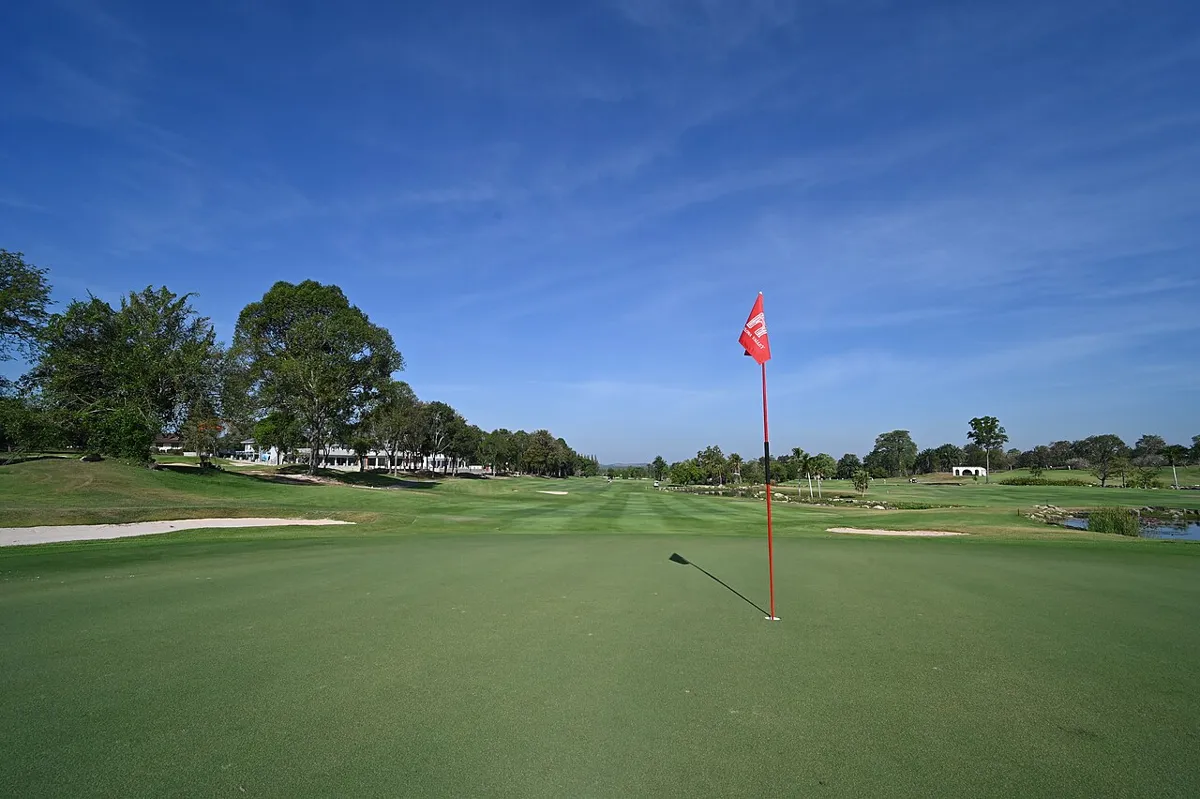
Golf is a brilliant betting sport if you like long cards and patience. A tournament runs for four days, the field is huge, and the winner is often someone who was 40/1 on Thursday morning. That is the fun and the trap at the same time. This page is a plain guide to how golf betting works from Ireland: what the markets mean, how each-way terms actually pay, how to read a make-the-cut price, and how to keep stakes sensible when your money is tied up until Sunday evening. It is not a tip sheet for this week's event.
18+ only. Every price, cut line and finish band below is an invented example from a simple model, not a live quote and not advice to back anyone. Cloudbet, which we link to, is licensed in Curaçao and is not licensed by the Gambling Regulatory Authority of Ireland (GRAI), so Irish complaint routes do not apply to it. If betting stops being fun, Gambling Care is free, confidential and open 24/7 on 1800 936 725 (Northern Ireland: 08000 886 725). Related: Ryder Cup betting odds and Irish Open betting.
Tips in a nutshell
- Learn the difference between stroke play (most tour events) and match play (occasional formats and the Ryder Cup). The markets change with the format.
- Tournament winner prices look big because the field is deep. Always check each-way terms (places and fraction) before you celebrate a "place".
- Use head-to-head and make/miss the cut when you have a view but do not want to pick the one winner from 150 names.
- Build a small expected finish band for a player (win / top 5 / top 20 / miss cut) instead of staring only at the outright.
- Irish TV times for US and Middle East events often mean late nights. Decide your stake before the live markets get noisy.
- Keep stakes small relative to your bankroll. Golf results swing hard on one bad hole.
Stroke play vs match play
Most regular tour events are 72-hole stroke play: lowest total wins. After 36 holes a cut removes a large chunk of the field (often around the top 65 and ties, though the exact rule depends on the event). The remaining players play the weekend. That structure creates the main golf markets: who wins, who finishes top 5/10/20, who makes the cut, and various round and hole props.
Match play is different. Two players (or two teams) compete hole by hole. You can win a match without having the lower stroke total for the round. Team events such as the Ryder Cup mix foursomes, fourballs and singles. If you are used to stroke-play outrights, do not assume the same habits transfer. For Ryder Cup specifics, use the dedicated page linked above; this guide stays on everyday stroke-play betting and the shared maths underneath.
The main golf markets
Tournament winner (outright)
Who lifts the trophy. In a 150-player field, even a short favourite might sit around 6.00 to 12.00 in decimal odds. That is not "value" by itself; it is the market saying the favourite still loses most weeks. Here is a worked example board for five named Favourites A–E (made-up prices) plus what a simple demargin does to them:
| Selection | Book price | Implied | Fair after demargin |
|---|---|---|---|
| Favourite A | 8.00 | 12.5% | 3.19 (31.3% of this five-way slice) |
| Favourite B | 11.00 | 9.1% | 4.39 |
| Favourite C | 13.00 | 7.7% | 5.19 |
| Favourite D | 17.00 | 5.9% | 6.79 |
| Favourite E | 21.00 | 4.8% | 8.38 |
That five-way slice alone already carries about a 40% overround in the raw prices, which is why you should never add implied percentages across a full golf board and treat the total as meaningful without demargining. The rest of the field still has a large share of the real probability. An 8.00 favourite is closer to a one-in-eight shot than a one-in-three shot once the whole field is in view.
Each-way betting
An each-way bet is two bets: one on the win, one on a place. Terms matter more than the headline price. Common patterns (always check the coupon for the event):
- 1/4 odds, first 3 places
- 1/5 odds, first 5 or 6 places
- Enhanced places during big majors (sometimes more places at a tighter fraction)
Example: Favourite A at 8.00, each-way 1/5 odds, first five places. The place part pays 1 + (8 − 1) / 5 = 2.40. If you stake €10 each-way (€20 total) and A finishes third:
- Win part: loses (€10 gone)
- Place part: returns €10 × 2.40 = €24
- Net on the €20 stake: +€4
If A wins, both parts pay. If A finishes sixth with five places paid, both parts lose. Punters often remember the place fraction and forget the place count. Read both.
A rough model for a shortish favourite in a deep field might give a true place chance near 40% when the win chance is about 12.5%. Fair place odds around 2.50 sit close to that 2.40 book place price in the example — not a gift, not a robbery. The edge, if any, comes from disagreeing with the place probability, not from the fraction looking "nice".
Top 5 / top 10 / top 20
These are place-only markets without a separate win bet. They suit you when you like a player to contend but not necessarily to win. Illustrative finish bands for the same 8.00-style favourite:
| Band | Example chance | Fair price |
|---|---|---|
| Win | 12.5% | 8.00 |
| Top 5 | 35.0% | 2.86 |
| Top 10 | 48.0% | 2.08 |
| Top 20 | 65.0% | 1.54 |
| Miss cut | 12.0% | 8.33 |
Notice how fast the price shortens as you move from win to top 20. If the book offers top 20 at 1.40 when your number is 1.54, you are paying for insurance you already priced as likely. Shop the band that matches your actual view.
Head-to-head (72-hole matchup)
Two named players; lowest score over the tournament (or the rounds both complete, depending on rules) wins the matchup. Ties are often void or a third price. This is the cleanest way to bet a view like "Player F is in better form than Player G" without needing F to beat 148 other people.
| Side | Book | Implied | Fair after 104.3% demargin |
|---|---|---|---|
| Player F | 1.80 | 55.6% | 1.88 (53.2%) |
| Player G | 2.05 | 48.8% | 2.14 (46.8%) |
If your honest number on F is 58%, a €10 bet at 1.80 returns an average +€0.44 per bet in the long run. If your number is only 53%, the same bet is roughly fair to slightly soft after margin. Be brutal with yourself: most golf "form" stories are weaker than they feel on Thursday morning.
Make / miss the cut
A two-way market on whether a player plays the weekend. Settlement rules matter when a player withdraws. A mid-pack player whose 36-hole expected score sits about 1.5 strokes over a typical cut line, with a 4.5-stroke spread, makes the cut about 37% of the time in a simple normal model (fair price near 2.71). The same player in sharper form at 1.0 stroke under the line makes it about 60% of the time (fair near 1.67).
| Book make / miss | Overround | Fair make / miss |
|---|---|---|
| 1.70 / 2.20 | 104.3% | 1.77 / 2.29 |
| 1.90 / 1.90 | 105.3% | 2.00 / 2.00 |
| 2.40 / 1.55 | 106.2% | 2.55 / 1.65 |
Compare your make-cut chance with the fair column, not the raw book price. Cut markets are popular with Irish punters who follow a player through the week on TV but do not want a full outright.
Round leader / end-of-round positions
Who leads after 18, 36 or 54 holes. Fields are still large after day one, so prices are long. A flat sketch with 70 players still realistic for the lead is a 70.00-style shot apiece before form and course fit. These markets move fast in-play as birdie trains start.
Tournament totals and player stroke totals
Over/under on a player's 72-hole score, or on winning scores. Using a normal model with a six-stroke spread:
| Line | Your expected total | Chance under | Fair under price |
|---|---|---|---|
| 279.5 | 280 | 46.7% | 2.14 |
| 279.5 | 277 | 66.2% | 1.51 |
| 283.5 | 280 | 72.0% | 1.39 |
Three strokes of disagreement with the line is a real opinion. Half a stroke is noise. Weather, pin positions and weekend pairings all move the number; treat early-week lines as drafts.
Birdies, eagles and hole props
Player birdies in a round can be modelled roughly with a Poisson count. If you expect 3.5 birdies, the chance of four or more is about 46% (fair 2.16). At 2.5 expected birdies it drops to about 24% (fair 4.13); at 4.5 it climbs to about 66% (fair 1.52). Hole-in-one and eagle markets are entertainment prices more often than serious edges. Check whether the prop needs the player to complete the round.
How golf odds move through the week
- Monday–Wednesday: outrights and each-way terms settle. Weather forecasts start to matter for links venues.
- Thursday–Friday: cut maths dominates. A player at −4 when the projected cut is −1 is a different proposition from the same player at +2.
- Weekend: leaderboards compress. Live outright prices on the leaders get short; back-to-win from off the pace still needs a collapse up front.
In-play golf is easy to overbet because every birdie looks huge on the screen. Decide in advance whether you are a pre-tournament punter or a weekend chiseller, and do not mix the two with the same bankroll pot.
Irish angles without chasing names
Irish interest usually clusters around a few annual touchpoints: home events on the DP World Tour calendar (including the Irish Open in years it is staged), Irish players in major championships, and the Ryder Cup when Europe line up. You do not need live world rankings on this page to bet sensibly. What you do need:
- Course fit: links vs parkland vs target golf changes who rises. Read the course type, not just last week's winner.
- Form windows: recent strokes-gained style stats (when you have them) beat hot takes from one round.
- Tee times: morning and afternoon waves can play different golf in wind. Same player, different day-one number.
- Broadcast times: US East Coast afternoon rounds are late evening in Ireland; West Coast and some Middle East finishes spill past midnight Irish time. Tired punters chase.
City-specific crypto golf pages and one-event guides elsewhere on the site cover narrower angles. This page stays on the shared toolkit you can reuse every week.
Worked staking examples
Bankroll €500. Flat 1% stake = €5. That feels small next to a 21.00 outsider, but golf variance will humble you either way.
| Bet | Stake | Price | Result if it lands | Notes |
|---|---|---|---|---|
| Outright each-way (1/5, five places) | €5 + €5 | 17.00 | Win: big; place only: place leg at 4.20 | €10 tied up until Sunday |
| Head-to-head | €5 | 1.80 | Returns €9 | Settles when both players done |
| Make cut | €5 | 1.70 | Returns €8.50 | Often settles Friday |
| Three H2H acca @ 1.70 each, true 55% per leg | €5 | 4.91 combined | Average result about −€1.83 per €10 scaled | Combined chance ~16.6%; soft accas leak |
The three-leg head-to-head accumulator at 1.70 with a honest 55% chance per leg only wins about one time in six and shows a negative expectation in the table above. Accas are fine as entertainment; they are a poor way to express three separate golf opinions.
Common mistakes
- Backing a winner because the price "looks big" without a finish-band view.
- Ignoring each-way place count when terms look generous on the fraction alone.
- Treating a missed cut as bad luck every time instead of updating your make-cut model.
- Doubling stakes on Saturday after Friday went wrong.
- Betting hole props with huge margins because the graphic looks fun.
- Assuming match-play intuition applies to stroke-play cards.
Licensing and Irish reality check
GRAI began issuing remote betting licences in 2026. Cloudbet remains a Curaçao-licensed operator and is not licensed by GRAI. Promoting or using unlicensed operators carries legal and consumer-protection limits under Irish rules; this site links where it does with that honesty up front. There is still no online-casino (gaming) licence class in the same early wave — sports betting and gaming are not identical categories. See our Irish online betting law guide for the broader picture.
A simple week plan
- Pick one event. Do not sprinkle tiny stakes across four tours.
- Write a short note: course type, weather sketch, two players you like for top 20, one head-to-head, one make-cut if priced.
- Cap total risk at a fixed percent of bankroll before Thursday's first tee.
- Leave Sunday outrights alone unless you planned a live budget in advance.
- Log results by market type (outright / H2H / cut), not by vibes.
Reading a golf coupon like a form guide
Open a typical tournament page and you will see layers: outright list, each-way terms banner, popular matchups, make-cut board, then a mess of player props. Work top-down. First ask whether you even want exposure to this event. A wet links week with a 20 mph wind forecast is a different sport from a calm inland target course. Second, write down three numbers of your own before you look at long shots: an estimated winning score band, a projected cut line band, and one head-to-head you actually have a reason for. Third, only then scroll the 80/1 and 100/1 names. Most of those prices are entertainment. A few will be soft if a book is slow to react to a late withdrawal or a tee-sheet wave, but chasing softness without a framework is how bankrolls shrink.
Settlement footnotes deserve a slow read. Some books void a head-to-head if either player misses the cut; others grade on scores posted. Some make-cut bets survive a withdrawal after a tee shot; others do not. Tournament-winner bets usually stand once a player tees off. If you do not know the rule, you do not know the bet.
Majors vs regular tour stops
Majors tighten everything. Fields are strong, pressure is higher, and each-way place terms sometimes expand because bookmakers want the handle. That does not automatically mean better value. More places at a thinner fraction can still be worse than fewer places at a fatter fraction once you price the true top-N chance. Regular tour events can be softer in the matchup prices because fewer eyes are on mid-card players, but the winner market still has to fight a deep field.
For Irish audiences, majors also mean awkward clocks: morning waves in the United States can be afternoon Irish time, while late groups collide with Sunday night. If you only watch the featured groups, you are seeing a biased sample of the leaderboard. Price the whole field, not the TV rotation.
18+. Crypto deposits. Cloudbet is licensed in Curaçao and is NOT licensed by the GRAI. Irish gambling law changed in 2026: only GRAI-licensed operators may lawfully take bets from Irish customers. Ad: we may earn a commission. Bet only what you can afford to lose.
Course history without superstition
Course history is real and also overrated. A player who has three top-10s at a venue has shown fit, but sample sizes in golf are small and course setups change. Prefer recent performance on similar turf and grass types over a podium from five years ago. When you only have a thin sample, shrink your confidence and shrink your stake. History is a tie-break, not a religion.
Weather is the bigger weekly swing. Wind adds strokes and variance. Soft fairways reduce roll and change club selection into greens. Links events punish missed drives twice: once into rough or bunker, again on the next shot. If your model of a player's game is "bombs it and gets away with miss", a firm windy links is a warning light.
Live golf: what is worth watching
Live markets that usually make sense:
- Updated matchups when one player has a clear on-course lead in the pairing and the price has not moved enough.
- Make-cut prices late on Friday when the projected line is stable and a player sits two to three clear or two to three short.
- Outright leaders on Sunday only if you planned a live bag and can stand a three-shot lead evaporating on the back nine.
Live markets that usually do not:
- Hole-by-hole props with fat margins.
- Next-birdie prices after a player just lipped out and you feel "due".
- Micro stakes on every group because the app makes it easy.
A practical rule: if you would not have placed the same bet from the clubhouse without the live graphic, skip it.
Building a personal finish model (simple version)
You do not need a tour-level strokes-gained database to be more disciplined than guessing. Try this five-line card for any player you might bet:
- Expected finish percentile in this field (honest guess, e.g. 25th percentile = better than three quarters of the field).
- Translate to rough bands: win chance, top-5, top-20, miss-cut.
- Compare each band to the demargined book price.
- Only bet the band where your number and the price disagree by a few percentage points or more.
- Cap stake by how uncertain that percentile guess felt.
Example: you pencil a player as a true 8% winner, 28% top 5, 55% top 20, 18% miss cut. The book win price implies 6% after a rough demargin, top 5 implies 22%, top 20 implies 58%, miss cut implies 15%. Your edge, if you trust the card, is on the win and top-5 markets, not on top 20. That is how you stop sprinkling money on every market for the same name.
Bankroll math that survives a bad month
Golf has losing streaks that feel personal. You can be right on make-cut opinions and still lose four in a row. Flat stakes beat "systems" that raise after losses. If your weekly golf budget is €40, that might be eight €5 bets or four €10 bets — not twenty €2 sprinkles that you do not track. Record market type, event, stake, price, and closing feel (did the price shorten after you bet?). After twenty bets you will see whether head-to-heads treat you better than outrights. Most recreational golf punters discover they are paying entertainment tax on winners and doing their real work in matchups and cuts.
Side note on bonuses: if a book offers golf boosts, read the minimum-odds and settlement rules. A boosted outright that voids on a playoff or pays differently on ties is not the same product as the main market.
Irish Open week checklist
When a home DP World Tour stop is on the calendar, Irish media noise rises and so do casual stakes. Use a checklist instead of vibes:
- Confirm venue and whether it plays as classic links, parkland, or a hybrid setup this year.
- Check each-way terms on the main Irish books you compare against any offshore coupon you might also use.
- Separate "Irish interest" from "Irish edge". Supporting a home player is grand; it is not a pricing argument by itself.
- Cap the week the same as any other tour stop. Home events should not get a bigger bankroll just because the telly is louder.
For a dedicated Irish Open walkthrough, see betting for the Irish Open. Keep this page as the reusable method.
Ryder Cup week is its own animal
Match play, session markets, and team outrights behave differently from a Saturday 54-hole leaderboard. Pairings, home advantage, and fourball vs foursomes styles matter. If that is the product you want, use Ryder Cup odds explained rather than forcing stroke-play habits onto match-play sessions. Mixing the two formats in one accumulator is a classic way to turn two decent opinions into one bad ticket.
Quick reference tables you can reuse
Each-way place price at fraction 1/N on decimal win odds O is 1 + (O − 1) / N. Always multiply by the place stake separately from the win stake.
Demargin two-way: implied A = 1/OA, implied B = 1/OB, fair A = implied A / (implied A + implied B). Fair odds = 1 / fair chance.
Rough Poisson birdie cue: if expected birdies in a round are λ, P(4+) rises quickly between λ = 2.5 and λ = 4.5 in the earlier table. If you cannot estimate λ within about half a birdie, skip the prop.
Cut model cue: treat the cut as a line on a 36-hole score. If your expected score is well clear of the line, the make-cut price should be short; if you are guessing within a stroke, the market is close to a coin flip after margin and maybe not worth the sweat.
What "helping a brother out" looks like on golf
It looks like honesty about variance, not a secret tip channel. It looks like smaller stakes on outrights than on head-to-heads. It looks like walking away when the Friday cut board is chaos and you are tilting. And it looks like using licensed, clear products where you can, while being told straight when a linked operator is not on the Irish register. Nobody needs another page that pretends 66/1 is "the lock of the week".
Playoffs, ties and awkward settlements
Stroke-play tournaments sometimes end in a playoff. Outright winner bets usually continue until there is a champion. Some place markets already locked when the regulation 72 holes finished; others wait. Head-to-head rules on ties after 72 holes vary: push, void, or a listed tie price. If you are betting a Sunday leader at a very short price, know whether a playoff hole is included. The short price already assumes they are heavy favourites; a playoff is still a coin-flip-ish minute of golf.
Withdrawals mid-event are another footnote trap. A player who tees off and then withdraws may still be graded as a starter for outright purposes and as a missed cut for cut markets, depending on the book. Never assume two markets share a rulebook paragraph.
Comparing prices without getting lost
Keep a tiny sheet: event name, market, best price you found, second best, and the stake you would actually place. If the best price is at an operator you do not trust or cannot use cleanly from Ireland, skip it. A 0.10 improvement in decimal odds on a 5.00 shot is not worth a messy account. Cloudbet is linked on this site as a crypto sportsbook option with the GRAI caveat already stated in the lead; it is not a claim that it is the right product for every Irish reader.
One-page pre-tee checklist
Event chosen, terms read, two markets maximum, stake capped, phone notifications for live prices turned off unless you have a written live plan. That is enough discipline for most recreational golf weeks from Ireland.
Responsible gambling
Golf weeks are long. That makes it easy to "top up" after a Thursday blow-up. Pre-commit a tournament budget and stop when it is gone. If you need help, Gambling Care is on 1800 936 725 (NI: 08000 886 725), free and confidential, 24/7. More on our responsible gambling page. Tools such as the odds calculator and accumulator calculator help you see margin and combined odds before you click.
Questions players ask
Is golf betting legal in Ireland?
Remote sports betting sits under the GRAI framework that began licensing in 2026. Always check whether the operator you use holds the right Irish authorisation. Cloudbet is Curaçao-licensed and not GRAI-licensed.
What does each-way mean in golf?
It is two bets: win and place. The place leg pays a fraction of the win odds for a listed number of finishing positions. Read both the fraction and the place count on the coupon.
When does the cut usually happen?
In standard 72-hole stroke-play events the cut is normally after 36 holes, often around the top 65 and ties. Confirm the rule for the specific tournament.
18+. Crypto deposits. Cloudbet is licensed in Curaçao and is NOT licensed by the GRAI. Irish gambling law changed in 2026: only GRAI-licensed operators may lawfully take bets from Irish customers. Ad: we may earn a commission. Bet only what you can afford to lose.
If betting is costing you more than money, free and confidential help is there 24 hours a day, 365 days a year: the Problem Gambling Helpline run by Dunlewey Addiction Services for Gambling Care, on 1800 936 725 (from Northern Ireland: 08000 886 725). Source: grai.ie.