Hurling Betting Tips: How to Read a Hurling Market, Handicaps and Totals, Team News, Weather and Staking (Without the Hype)
Welcome bonus for new players + fast crypto payouts. Just helping a brother out.
18+. Crypto deposits. Cloudbet is licensed in Curaçao and is NOT licensed by the GRAI. Irish gambling law changed in 2026: only GRAI-licensed operators may lawfully take bets from Irish customers. Ad: we may earn a commission. Bet only what you can afford to lose.
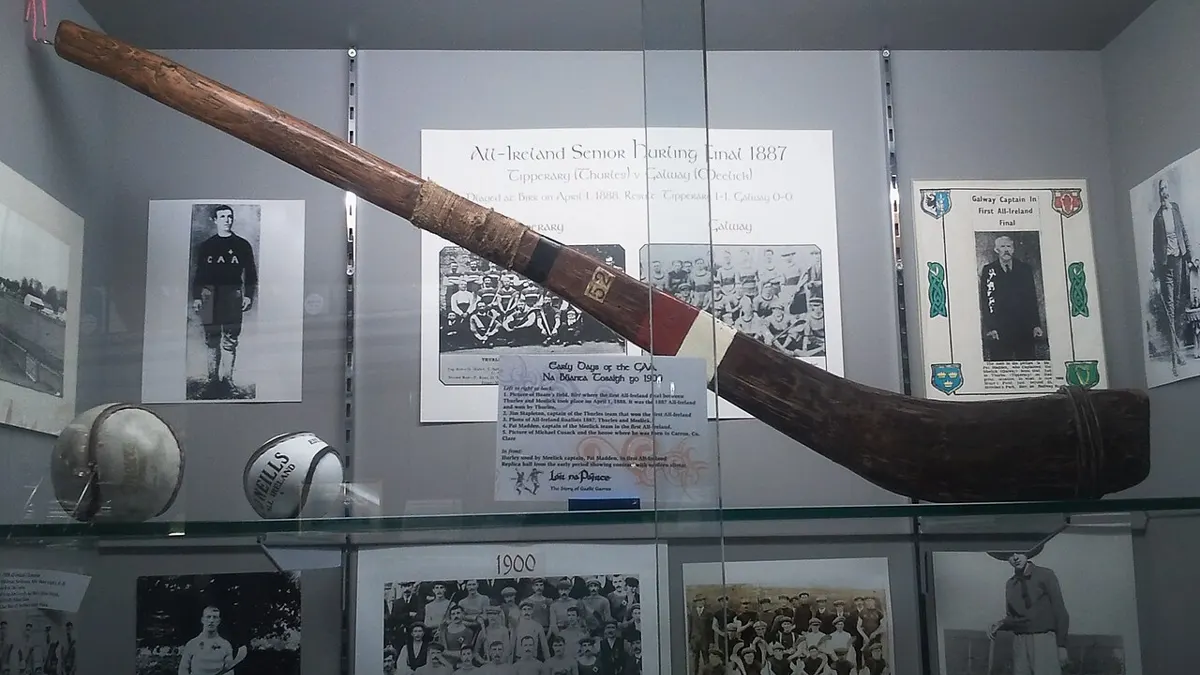
Hurling is a brilliant game to watch and a tricky one to bet on. Scores come every minute, a single goal swings a handicap by three points, the wind at one end of a ground can be worth a few scores, and the team the county names on Thursday night isn't always the fifteen that run out on Sunday. The good news is that a lot of punters bet on hurling with their heart rather than their head, which leaves room for anyone willing to do a bit of homework. These tips won't hand you winners. They'll help you stop making the mistakes that cost most people money, and show you where the sums actually matter.
18+ only. General information, not betting or financial advice. Every price, line and stake below is made up to show how the maths works; none of it is a tip on a real match. Cloudbet, which we link to, is licensed in Curaçao and is not licensed by the Gambling Regulatory Authority of Ireland (GRAI), so Irish complaint routes don't cover it. If gambling is causing you problems, ring Gambling Care, free and confidential, 24/7, on 1800 936 725 (Northern Ireland: 08000 886 725).
Quick version: ten hurling betting tips worth keeping
- Bet on prices, not on counties. The question is never "will they win?" but "is this price bigger than their real chance?"
- Learn handicaps and totals properly. They're where most hurling betting happens, and where the margin is often lowest.
- Remember a goal is worth three points. One green flag moves a handicap or total more than any other single event.
- Wait for team news, and then wait a bit more. Named teams and starting teams often differ.
- Check the forecast for the actual ground. Strong wind and heavy rain change scoring.
- Know who's taking the frees. A reliable free-taker is worth more to a total or top-scorer bet than almost anything else.
- Don't treat the league like the championship. Motivation, experimentation and conditions are different.
- Be careful live. Scores come quickly, and in-play prices react faster than you can.
- Stake small and flat. One to two percent of a betting bank per bet is plenty.
- Keep a record. If you can't show you're beating the closing price, you probably aren't.
How hurling markets work
Before any tip makes sense, it's worth being clear on what you're actually betting on. Here are the main markets you'll see on an inter-county or big club game, with what each one really depends on.
| Market | What wins it | What drives it |
|---|---|---|
| Match result (1X2) | Home win, draw or away win | Overall strength, venue, team news. Draws are rare, so the draw price is usually long. |
| Handicap | One side gets a start of a few points | Expected winning margin. Goals cause the big swings. |
| Total points (over/under) | Combined score above or below a line | Pace, weather, free-takers, goal chances. Goals count as three points. |
| Winning margin bands | Win by 1–3, 4–6, 7–9 and so on | Same as the handicap, split into slices. Margins are usually bigger. |
| Half-time/full-time | Leader at half-time and at the end | Wind direction for each half, early-season fitness. |
| Top scorer / first scorer | A named player scores most or first | Free-taking duties, minutes on the pitch. |
| Outrights | Provincial title, All-Ireland, league | Draw, fixture schedule, depth of panel. |
| Player awards | Hurler of the Year, Young Hurler and similar | Who gets to the latter stages and stands out there. |
A tip that applies to one market can be useless for another. Wind might matter hugely for half-time/full-time and barely at all for the overall result. A free-taker's injury might move a top-scorer price a lot and a match price only a little. Always ask which market your bit of knowledge actually touches.
Scoring basics that change the betting
A goal is worth three points and a point is worth one, and scores are shown in the form goals–points. So 2-22 means two goals and 22 points, a total of 28. When a bookmaker sets a "total points" line, it almost always means the combined total including goals at three each. Double-check that in the market rules, because a few specials count only points from play, or only goals.
Senior inter-county games run for 70 minutes, two halves of 35, plus stoppage time. Club and underage games can be shorter. Handicap and total markets are generally settled on normal time, but rules for drawn knockout games, extra time and any shoot-out vary by bookmaker and by competition. Read the settlement rules before you bet on a knockout match, especially if you're backing a team "to qualify" rather than "to win in normal time."
Turning prices into chances
Every price is a probability in disguise. For decimal odds, divide 1 by the price. For fractional, add one first: 10/11 becomes 1.91, which is 52.4%. That 52.4% is the number to remember for hurling handicaps and totals, because most of them are priced around 10/11 each way.
If both sides of a market are 10/11, the two implied chances add up to about 104.8%. That extra 4.8% is the bookmaker's margin. It means you need to be right about 52.4% of the time at 10/11 just to break even. Win 50% of your handicap bets at 10/11 and you'll lose about 4.5% of everything you stake over the long run. That's the bar any "tip" has to clear. Our odds calculator handles the conversions if you'd rather not do them by hand.
Handicaps: the market that matters most
Hurling handicaps work like this. If County A is −4.5 against County B, A must win by five or more for a bet on A to win. A bet on B at +4.5 wins if B wins, draws or loses by four or fewer. The half-point stops ties. Some bookmakers offer whole-number lines too, where a tie returns your stake or splits it, depending on the rules.
The handicap is the bookmaker's estimate of the winning margin. So the useful question is: what do I think the margin will be, and how spread out are the possible margins around that figure? Hurling margins are quite spread out. Here's an illustrative model: suppose you rate County A as three points better on average, with a typical spread (standard deviation) of nine points either side. Those numbers are made up but realistic for a mid-table championship game.
| Bet | Model chance | Fair price | At 10/11 (1.91), EV per €10 |
|---|---|---|---|
| A −2.5 | 52.2% | 1.92 | about −€0.03 (break-even) |
| A −4.5 | 43.4% | 2.30 | about −€1.71 |
| B +5.5 | 60.9% | 1.64 | about +€1.63 |
| A to win (no draw) | 60.9% | 1.64 | depends on price |
Notice how much one or two points of handicap change things. Moving from −2.5 to −4.5 drops the chance by almost nine percentage points. That's why the line matters more than the side. Many punters decide "A will win" and then take whatever handicap is offered. Better practice is to work out your expected margin first, then shop for the line that gives you the biggest cushion.
Why goals make hurling handicaps lumpy
A late goal can turn a two-point lead into a five-point lead in seconds. That makes some margins more likely than a smooth model suggests: games that look tight with five minutes left often finish with a gap of three to six points either way, depending on who gets the last goal. Two practical consequences follow. First, be wary of thin handicaps on teams that create lots of goal chances, because the variance is higher. Second, if you've a strong view that a game will be tight, the underdog with a few points' start often holds more value than a "to win" bet on either side.
The dead rubber trap
In round-robin stages, a county that's already qualified, or already out, may rest players or try fringe lads. Big handicaps against weakened sides can look generous on paper. The problem is that you often don't know how weakened until the starting fifteen is confirmed. If a game is a likely dead rubber, either wait for the team or leave it alone.
Totals: reading the over/under
Total points lines in top-level hurling are high, often well into the forties or fifties, because scoring has risen a lot in modern hurling. Using the same idea as the handicap, suppose your model expects a combined 48 points with a spread of nine.
| Line | Model chance of over | Fair price for over | At 10/11, EV per €10 on over |
|---|---|---|---|
| 46.5 | 56.6% | 1.77 | about +€0.81 |
| 48.5 | about 48% | about 2.10 | negative |
| 50.5 | 39.1% | 2.56 | about −€2.53 |
Four points of line take you from a decent bet to a poor one. That's the whole game with totals: you're not predicting "high-scoring" or "low-scoring," you're comparing your number with theirs.
What pushes totals up or down
- Weather. A wet, heavy sliotar travels less and is harder to strike cleanly from distance. A strong crosswind makes long-range points and frees harder. Both tend to drag totals down.
- Free-takers. A side with a deadly free-taker turns fouls into points. If he's missing, totals and top-scorer markets should move.
- Style. Sides that play a sweeper or pack their defence tend to concede fewer goals, but the game often becomes a long-range point-scoring contest. Short puck-out teams can slow games down.
- Mismatch. Very one-sided games can go either way on totals: the strong side runs up a score, or eases off once it's safe.
- Time of season. Early-season league games in cold, wet conditions often see lower scoring than summer championship games on firm ground.
Team news: the Thursday-night problem
Counties usually name their team a few days before a game. Every hurling follower knows that the named team and the team that starts can be different. Players named on the team might not start, and lads named among the subs sometimes run out in the fifteen. Some managers do it to keep opponents guessing; sometimes it's a genuine late injury or a fitness call.
For betting, that has three effects:
- Prices often move late. When the actual starting team appears just before throw-in, handicaps and scorer markets can shift.
- Early prices carry hidden risk. If you bet on Thursday on a team named at full strength, you're also betting that it really is full strength.
- Local knowledge is worth something, but less than it used to be. County board news, club form and local reporting reach the market quickly now.
A practical rule: for match bets that rely on one or two key players, wait until the starting fifteen is confirmed, even if it costs you a slightly worse price. For outright or season-long bets, team news matters less, though a long-term injury to a key forward or the main free-taker still does.
Weather and the ground
Hurling is played in the open, mostly in spring and summer, in a country that doesn't always keep to the script on weather. A few things to look at before a game:
- Wind strength and direction. Check a proper forecast for the town, not the county. A strong wind blowing straight down the pitch can make one end much easier for long-range points. That matters for half-time/full-time and first-half markets.
- Rain. A wet day tends to mean more handling errors, more turnovers and fewer points from distance.
- Pitch size. Pitches vary from ground to ground. Wider pitches can suit teams that like to spread the play; tighter ones can suit physical sides.
- Toss and choice of ends. The team that wins the toss usually chooses whether to play with or against the wind first. That's announced just before throw-in, so it's a live-betting factor rather than a pre-match one.
Weather alone is rarely enough to bet on. Bookmakers can read forecasts too. Where it helps is when it combines with something else you know, like a side that relies heavily on long-range scoring having to face a gale in the second half.
Free-takers and scorer markets
In most hurling teams, one player takes the bulk of the frees, and often the 65s as well. That player usually ends up as his side's top scorer, because frees from the opposition half are converted at a high rate by good strikers. So when you look at a top-scorer or player points market, the first question is always: who's on frees today?
A rough illustration: say a free-taker scores on average about three points from play and seven from placed balls in a championship match. If he's taken off after 50 minutes, he misses more than a quarter of the game, and his expected tally might drop from around ten to around seven. That's a meaningful shift for a player points line set at 9.5. Equally, if the usual free-taker is out injured, his replacement's scoring line can be too low if the market hasn't caught up.
First-scorer markets are tougher. With scores coming so fast, the first score is close to random among the main forwards and free-takers, and bookmaker margins on these markets are usually high. Treat them as a bit of fun, not a serious angle.
League versus championship
The National Hurling League runs in spring, the championship in late spring and summer. They're different betting environments. Our page on Allianz Hurling League odds goes into the league in more detail, but the short version is:
| Factor | League | Championship |
|---|---|---|
| Team selection | Managers often experiment and rest players | Strongest available fifteen, usually |
| Motivation | Varies: promotion, relegation and pride matter, but some games mean little | High almost every time |
| Conditions | Often cold, wet and windy | Usually firmer ground and better weather |
| Form value | Useful but noisy | Stronger, though a few games is a small sample |
| Market sharpness | Prices can be softer on lower-profile games | Big games are heavily bet and well priced |
A common mistake is to treat a heavy league defeat as a sign a team is in trouble for the summer. Sometimes it is. Often it's a manager trying out a new full-back line in February. Read the team sheet before reading the result.
For the summer, the provincial round-robins in Munster and Leinster lead into the All-Ireland series. The format has its own betting quirks, like qualification maths in the final round and the dead rubbers mentioned above. For the bigger picture, see our guide to All-Ireland hurling winner odds.
18+. Crypto deposits. Cloudbet is licensed in Curaçao and is NOT licensed by the GRAI. Irish gambling law changed in 2026: only GRAI-licensed operators may lawfully take bets from Irish customers. Ad: we may earn a commission. Bet only what you can afford to lose.
Outright bets: patience, and the draw
Outright markets on the provincial titles, the Liam MacCarthy Cup or the league reward patience. A few habits help:
- Think about the path, not just the team. The fixtures and draw shape how hard the route is. A side with a kinder schedule can be value even if it's not the best team.
- Compare against the favourite. If the favourite is priced at, say, 6/4 (40%), the rest of the field combined has to share roughly the other 60% minus the margin. Ask whether your pick's share is fair.
- Each-way terms. Some outright markets pay each-way, usually a fraction of the odds for reaching the final. Check the terms; each-way can suit a solid second-tier county.
- Don't over-trade. Backing a team, then hedging, then backing again eats margin every time.
Award markets like Hurler of the Year almost always go to a player from one of the finalists, very often from the winning county. That's a useful filter: an outstanding player on a team that's likely to go out early is rarely a good bet, however good he is.
Live betting on hurling
In-play hurling is fast. A score every minute or so means prices move constantly. That creates opportunities and traps.
The trap: the feed you're watching is often a few seconds behind the bookmaker's data, and in a game this quick that matters. Many bookmakers pause betting after scores and may reject or reprice your bet. Chasing a game you're watching on a delay is rarely a winning plan.
The opportunities are slower-moving facts the market might underweight:
- A strong wind that one side has played into in the first half and will have behind them in the second.
- A sending-off, especially a straight red rather than a second yellow, which changes the shape of the game for the rest of it.
- An early goal in a game where you expected few goals. The total line will jump, sometimes further than it should.
- A key free-taker coming off injured.
Even then, set a limit before throw-in for live bets and stick to it. In-play betting is where people lose track of what they've spent quickest.
Club hurling and lower-profile games
Club championships and lower-tier inter-county games (the Joe McDonagh Cup and below) sometimes appear on bookmakers' lists. Prices here can be softer because less money and less data go into them. That's tempting, but there are real downsides: margins are usually higher, limits are lower, team information is patchier and form is hard to judge across divisions. If you genuinely know a club scene well, there can be a small edge. If you're guessing, the higher margin eats you alive.
A word of caution on integrity: if you're involved with a club or team, as a player, mentor or official, check the GAA's rules on betting before placing any bet on competitions you're connected to. Betting on your own games, or passing on inside information, can lead to serious sanctions, and our page on gambling harm among GAA players covers why the association takes it seriously.
Staking: the dull bit that matters most
Most hurling punters lose money not because their picks are terrible but because their staking is. A few hard rules:
- Set a bank. Decide how much you can afford to lose over the season and keep it separate from everything else. Say €200.
- Flat stakes. Bet one to two percent of that bank on each selection: €2 to €4. Don't double up because you "really fancy" one.
- Accumulators, sparingly. The bookmaker's margin gets multiplied with every leg. Say each of four 10/11 handicap picks is really a 50% shot. As singles, you lose about 4.5% of what you stake on average. As a four-fold, it pays about 12.3 to 1 (1.91 × 1.91 × 1.91 × 1.91 ≈ 13.31 back for every €1) but only lands 6.25% of the time, so you lose about 17% of your stake on average. Singles keep the maths on your side, if you have an edge at all.
- Never chase. A losing Sunday isn't a reason to bet bigger on Monday night's game.
Here's what a realistic month might look like for someone betting €4 handicap singles at 10/11:
| Bets | Win rate | Staked | Profit/loss |
|---|---|---|---|
| 20 | 50% (10 wins) | €80 | about −€3.60 |
| 20 | 55% (11 wins) | €80 | about +€4.04 |
| 20 | 45% (9 wins) | €80 | about −€11.24 |
The difference between a good month and a bad one is a single bet either way. That's why 20 bets tell you almost nothing about whether you're any good. You need hundreds.
Keep records, and check against the closing price
The best measure of whether your hurling bets are any good isn't your profit over a few weeks. It's whether you're consistently getting bigger prices than the final price just before throw-in, known as closing line value. If you back County A at +5.5 on Wednesday and the line closes at +3.5, you've got two points of value regardless of what happens on the pitch. Do that week after week and profits tend to follow. Fail to do it and any profit is probably luck. Our guide to value betting explains the idea in more detail.
A simple spreadsheet is enough: date, game, market, line and price taken, closing line and price, stake, result. Review it every month.
Worked example: putting it together for one game
Here's how the checklist might play out on an illustrative championship game, with made-up numbers. On Tuesday the bookmakers make County A a 4.5-point favourite over County B, with the total at 49.5. You rate A about three points better and expect a total around 47, because the long-range forecast shows a strong wind and A's main free-taker picked up a knock in training.
- Tuesday: your margin estimate (3) is below the line (4.5), so B +4.5 looks interesting. Your total (47) is below 49.5, so the under is on your radar. You don't bet yet, because both views depend on team news and weather.
- Thursday night: A name their usual free-taker in the team. That might be genuine or might not. You still wait.
- Saturday: the forecast firms up: strong wind, showers. That supports the under. The total has drifted to 48.5 as other punters spot the same thing, so some of the value has gone.
- Sunday, an hour before throw-in: the starting team shows the free-taker is fit and starting. You trim your margin estimate to 3.5. B +4.5 is still a little bigger than your number, but only by a point, which isn't much after the margin, so you pass. The under at 48.5 still beats your 47 by a point and a half; you take a small flat stake.
The point isn't the result of that one bet. It's that every step was about comparing your number with the market's, and that waiting for information saved you from a handicap bet that stopped being value once the facts came in.
Common mistakes
- Betting on your own county with your heart. If you can't imagine betting against them, don't bet on them either.
- Taking any handicap because "they'll win." The line matters more than the winner.
- Ignoring the named-team shuffle. Thursday's team isn't Sunday's team.
- Treating league form as gospel. February results come with big asterisks.
- Overrating one big performance. One great day in a championship game is one data point.
- Chasing live. Fast scoring makes in-play betting feel urgent. It isn't.
- Building long accumulators. The margin multiplies with every leg.
- Following tipsters blindly. If someone won't show a full, timestamped record of every tip, assume the record isn't good.
A pre-bet checklist
- Which market does my opinion actually affect?
- What's my own number: expected margin or expected total?
- How does it compare with the line on offer, after the margin?
- Is the starting team confirmed, or am I betting on a named team?
- What's the forecast at the ground itself?
- Who's taking the frees?
- Have I checked a few bookmakers or an exchange for the best line?
- Is my stake within one to two percent of my bank?
- Would I be fine losing this?
Is it legal to bet on hurling in Ireland?
Yes, betting is legal in Ireland for adults 18 and over, and it's now regulated by the GRAI. The first remote betting licences under the new regime took effect on 1 July 2026. Bookmakers licensed in Ireland come under Irish rules and complaint routes. Operators licensed elsewhere, including Cloudbet (Curaçao), are not licensed by the GRAI, and the GRAI has warned that promoting unlicensed operators can be an offence. Our pages on whether online betting is legal in Ireland and Ireland's new gambling law explain more.
Gambling winnings generally aren't taxed for punters in Ireland. If you bet with crypto, though, selling or swapping it can trigger capital gains tax, so keep records.
Keep it fun
Hurling is the best game in the world to watch, and a small bet can add to it. It shouldn't take over. Set limits on time and money, take breaks, and don't bet to win back losses. If you're betting more than you planned, hiding it, or feeling stressed about it, talk to someone. Gambling Care is free and confidential, 24/7, on 1800 936 725 (Northern Ireland: 08000 886 725). See our responsible gambling page for more support.
My take
The best hurling betting tip is boring: work out your own number for the margin or the total, compare it with the line, and only bet when the gap is clear after the bookmaker's cut. Wait for the real starting team, check the wind at the ground, know who's on the frees, and keep your stakes small and flat. Do that and you'll avoid most of the ways people lose money on hurling. Whether you'll actually win is another matter. The edges are thin, the swings are big, and the market is sharper than it looks from the stand.
Questions players ask
What's the best market for hurling betting?
Handicaps and total points are the main markets and usually carry lower margins than specials like first scorer. They also reward having your own view of the margin or total.
How do goals count in hurling total points betting?
In most total points markets, a goal counts as three points and a point as one, so 2-22 is a total of 28. Always check the market rules.
Should I bet before or after team news?
For match bets that depend on key players, wait for the confirmed starting team. Named teams in hurling often change before throw-in.
Does weather really matter in hurling betting?
Strong wind and heavy rain can reduce long-range scoring and affect half-by-half markets. It's most useful combined with other information, since bookmakers see the forecast too.
Are hurling accumulators a good idea?
Usually not. The bookmaker's margin is multiplied with every leg, so long accumulators lose value fast. Singles are better if you have an edge.
Is Cloudbet licensed in Ireland?
No. Cloudbet holds a Curaçao licence and is not licensed by the GRAI, so Irish complaint routes don't apply.
Where can I get help with gambling in Ireland?
Ring Gambling Care on 1800 936 725, free and open 24/7. In Northern Ireland, call 08000 886 725.
18+. Crypto deposits. Cloudbet is licensed in Curaçao and is NOT licensed by the GRAI. Irish gambling law changed in 2026: only GRAI-licensed operators may lawfully take bets from Irish customers. Ad: we may earn a commission. Bet only what you can afford to lose.
If betting is costing you more than money, free and confidential help is there 24 hours a day, 365 days a year: the Problem Gambling Helpline run by Dunlewey Addiction Services for Gambling Care, on 1800 936 725 (from Northern Ireland: 08000 886 725). Source: grai.ie.