Ante-Post Betting Explained: How Early Prices, Non-Runners, Each-Way Terms and Hedging Really Work (Irish Guide)
Welcome bonus for new players + fast crypto payouts. Just helping a brother out.
18+. Crypto deposits. Cloudbet is licensed in Curaçao and is NOT licensed by the GRAI. Irish gambling law changed in 2026: only GRAI-licensed operators may lawfully take bets from Irish customers. Ad: we may earn a commission. Bet only what you can afford to lose.
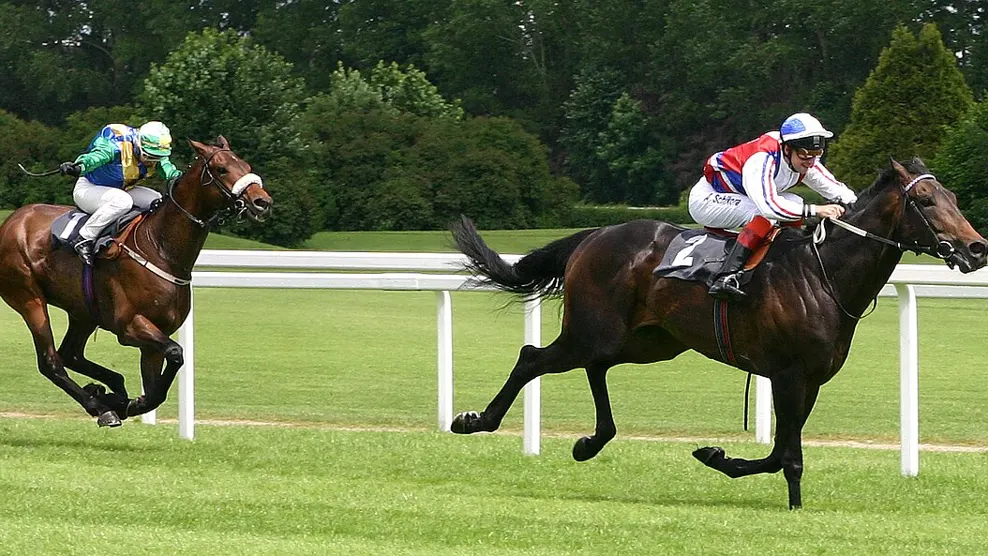
Ante-post betting is the oldest trick in the book: back something weeks or months before the event, grab a bigger price than you'll see on the day, and hope it turns up and goes well. Sometimes that's genuinely clever. Often it's just paying for risk you didn't notice. This guide explains how ante-post works across racing, golf, GAA championships and football league winners, puts real numbers on the non-runner problem, and shows when the early price is worth it. No horse lists, no dated tips.
18+ only. Every example is invented and worked out by calculator. Cloudbet is licensed in Curaçao and is not licensed by the Gambling Regulatory Authority of Ireland (GRAI). Gambling Care: 1800 936 725 (NI: 08000 886 725). If you want the festival-specific version, see Cheltenham ante-post tips; for the place maths, each-way betting explained.
The short version
- Ante-post means betting on an event before the final field or line-up is confirmed, usually days to months ahead.
- The early price is bigger because you carry extra risk: your pick might not take part, might change targets, or might be injured.
- The classic rule in racing is that an ante-post bet on a horse that doesn't run is a loser. Some books offer non-runner no bet (NRNB) on certain races, which refunds you, usually at a shorter price.
- In golf, football and GAA outrights the "doesn't take part" risk is smaller, but injuries, withdrawals and format changes still matter.
- Ante-post only makes sense if the price is bigger than the extra risk deserves. The table further down shows how quickly that edge disappears.
- Stake small, keep a list, and never top up a losing ante-post position just because you're "already in".
Where the phrase comes from
The term grew out of British and Irish racing. Before the runners were confirmed and numbered on the day, early bets were struck "before the post", and the name stuck. Today you'll see the label on racing, but the idea is the same anywhere a book prices an outright long before the event: the All-Ireland winner in spring, a golf major weeks out, the Premier League title in August, a Six Nations winner in the autumn.
What all of these share is time. Between your bet and the result, information keeps arriving. Injuries, form, ground, draws, team news, a trainer picking a different race. Every piece of news moves the price. If the news is good you look smart; if it's bad your bet is dead money that you can't undo without paying for it.
The non-runner problem, with numbers
Here's the bit most people skip. Say you think a horse has a 10% chance of winning a big race if it runs. The ante-post price today is 12.00 (11/1), with the normal racing rule: if it doesn't run, you lose. Closer to the race, a book offers 9.00 (8/1) with non-runner no bet. Which is better? It depends entirely on the chance the horse turns up.
| Chance it actually runs | Ante-post €10 @ 12.00, no refund | Same €10 @ 9.00 with non-runner refund |
|---|---|---|
| 100% | +€2.00 | −€1.00 |
| 90% | +€0.80 | −€0.90 |
| 85% | +€0.20 | −€0.85 |
| 70% | −€1.60 | −€0.70 |
| 55% | −€3.40 | −€0.55 |
Read that slowly. At 100% certainty of running, the 12.00 is clearly better (+€2.00 average per €10). But the edge evaporates fast. The break-even point is 83.3%: unless you're more than about five-in-six sure the horse lines up, the big early price is worse than it looks. At 70%, the "value" bet loses €1.60 per €10 on average, while the refunded version loses only €0.70 because you get your money back on the non-runner.
Notice the NRNB column is negative everywhere too. That's because 9.00 on a 10% shot is a slightly bad price on its own. The point isn't that NRNB is magic; it's that the refund removes one whole layer of risk, so you can judge the bet purely on the horse.
Horses with more than one target
Good horses often hold entries in several races. A trainer might pick between two festivals, two distances or two championship races depending on ground and form. Each extra option chips away at the chance your race is the one. The table below asks: if the horse has a 12% chance of winning when it runs, what price do you need, without a refund, just to break even?
| Chance they go for this event | Price you need with no refund (12% win chance if they run) | Price that is fair if they definitely run |
|---|---|---|
| 30% | 27.78 | 8.33 |
| 50% | 16.67 | 8.33 |
| 70% | 11.90 | 8.33 |
If there's only a 50/50 chance it goes for your race, you need roughly 16.67 just to stand still, compared with 8.33 if it was guaranteed to run. That's why genuinely clever ante-post bettors spend more time on entries, trainer comments and ground than on raw form. The price is only as good as the chance it applies.
Non-runner no bet: what it actually covers
NRNB is a concession some books give on selected races, usually in the final weeks before a big meeting. When it's on, a selection that doesn't run is treated as void and your stake comes back. A few points worth checking every time:
- Which races. It is normally race-specific and time-limited. A book saying "NRNB on the Gold Cup" doesn't mean every race at the festival.
- When it starts. Bets struck before the concession started may not be covered. Read the date on the offer.
- Each-way terms. Place terms on NRNB markets can differ from the day.
- Withdrawals after declarations. Late withdrawals on the day are a different thing again and may trigger deductions under Rule 4 instead.
Rule 4 deserves a line of its own: when a runner is withdrawn late, winning bets on the others can be cut by a set number of cents per euro, because the remaining field got easier. Ante-post bets struck before the final declarations are usually not subject to those deductions. That's one small upside of betting early. Check your book's own rules, because the wording varies.
Each-way ante-post: place terms change the maths
Ante-post each-way can make sense in big fields because one bad break doesn't kill both halves of the bet. Example: €5 each way (total €10) at 21.00 (20/1), paying 1/5 the odds for four places. The place half is effectively a bet at 5.00.
If you think the selection has a 5% chance of winning and an 18% chance of placing, the win half averages +€0.25 and the place half −€0.50, so the whole bet is a small loser despite the win part looking fine. Place terms are where many each-way ante-post bets are quietly lost. Shop for an extra place, or skip the place half and just back the win part if that's where your opinion actually is.
Golf is the other big each-way ante-post market. The same logic applies: places paid and the fraction (1/4, 1/5) change your real price more than the headline odds do. Our golf betting guide works through that in detail.
Outright boards and the margin
Any long-range outright, ante-post or not, carries a margin. Here's an invented eight-side outright for a league or championship:
| Selection | Book price | Implied | Fair after demargin |
|---|---|---|---|
| Side A | 3.50 | 28.6% | 3.68 |
| Side B | 4.50 | 22.2% | 4.74 |
| Side C | 6.00 | 16.7% | 6.31 |
| Side D | 8.00 | 12.5% | 8.42 |
| Side E | 10.00 | 10.0% | 10.52 |
| Side F | 15.00 | 6.7% | 15.79 |
| Side G | 21.00 | 4.8% | 22.10 |
| Side H | 26.00 | 3.8% | 27.36 |
Add up the implied chances and you get 105.2%, so about 5.2% built in for the book. That's actually tight; many long-range outrights run well above it, especially once you include a long tail of outsiders priced at 51.00, 101.00 and beyond. The demargin column is your starting point. If you can't argue that a side is better than its fair price, you don't have a bet, you have a hunch.
For GAA, the same logic is laid out on All-Ireland hurling winner odds and Sam Maguire odds explained.
When ante-post works best, sport by sport
| Sport | Main ante-post risk | Where an early price can help |
|---|---|---|
| National Hunt racing | Non-runners, alternative targets, ground, injuries | Big festival races where you have a strong view on the target race |
| Flat racing | Trainer chooses between Classics, distance doubts | When the horse has one clear target and the ground suits |
| Golf | Withdrawals, form slumps, injury | Each-way on players with course fit before the market catches on |
| GAA championships | Format and draw, injuries to key forwards, long gaps between games | Before the provincial draw shapes the path |
| Football league winners | Manager changes, injuries, transfer windows | Pre-season, if you trust your view more than the market's |
| Rugby tournaments | Squad injuries, fixture order, home advantage | Before squads are named, if you can read depth |
The common thread: ante-post rewards an opinion about structure (path, target, conditions) more than one about raw ability. The market usually prices ability quite well. It's slower to price things like "this horse only runs on soft ground and the forecast is wet" or "this county's draw avoids the strongest province".
18+. Crypto deposits. Cloudbet is licensed in Curaçao and is NOT licensed by the GRAI. Irish gambling law changed in 2026: only GRAI-licensed operators may lawfully take bets from Irish customers. Ad: we may earn a commission. Bet only what you can afford to lose.
Locking in a profit when the price collapses
The fun part of ante-post is when your bet shortens. Say you backed something at 15.00 for €20. It's now 4.00. Your ticket returns €300 if it wins. What is it worth today?
If 4.00 is roughly fair (25% chance), the ticket's fair value is about €75. A cash-out offer of €68 would be charging you about 9.3% for the convenience. That's not necessarily wrong, but you should know the price you're paying.
The alternative is a hedge on a betting exchange. Laying it at 4.10 for about €73.17 (a liability of about €226.83) with 2% commission leaves you roughly +€53.17 if it wins and +€51.71 if it loses. Either way you lock in a profit, and you skip the cash-out margin. Exchanges have their own rules and licensing questions, so see betting exchanges in Ireland before you go that route.
Partial hedges are fine too. You can lock in your stake back and let the rest ride. The only bad hedge is the one you make in a panic after a rumour you haven't checked.
Ante-post doubles and trebles
Combining ante-post bets multiplies prices, but it also multiplies your edge, good or bad. If each leg has a genuine +4% edge, a double averages about +8.2%. If each leg is a typical −5% bet, the double averages about -9.8% and a treble about -14.3%. Layer non-runner risk on top and multiples get ugly quickly: if either horse misses the race, the whole thing is gone. Keep ante-post multiples for the rare occasion you have two strong, independent views, and stake them like the long shots they are. Our accumulator calculator will show you the combined price.
The hidden cost: your money is locked up
An ante-post stake is out of your pocket for weeks or months. The cost is small but real:
| Days your stake is locked | Rough cost at 3% a year savings rate |
|---|---|
| 30 | 0.24% |
| 90 | 0.73% |
| 180 | 1.47% |
Under 1.5% even for six months, so it rarely changes the decision. The bigger issue is psychological: a pile of open ante-post tickets makes your bankroll look healthier than it is. Count open stakes as spent until they settle.
A simple ante-post process
- Name the target. Which event, which market, which settlement rule. Write it down.
- Estimate the chance it applies. Will the horse run, the player tee off, the county reach that stage? Put a number on it.
- Estimate the chance it wins if it does. Separately. Don't blend the two.
- Multiply. That's your real chance under no-refund rules. Compare it with 1 divided by the price.
- Check for NRNB or better place terms. A shorter price with a refund can beat a bigger price without one.
- Stake as if it's a long shot. Most ante-post bets lose, even good ones.
- Log it. Date, price, reason, what would make you hedge.
Keep an ante-post ledger
A notebook or spreadsheet with five columns does the job: date struck, selection, price, stake, and "what I need to see" (ground, target confirmation, team news). When the event comes round, add the starting price or closing price. Over a season you'll see if your early prices beat the late ones. If they consistently don't, you're paying for the excitement of betting early rather than earning anything from it, and that's useful to know.
The closing price check is the honest one. If you backed at 12.00 and the selection started at 6.00, your read was good, even if it lost. If you backed at 12.00 and it drifted to 20.00 on the day, the market disagreed and the result doesn't change that.
Common ante-post mistakes
- Backing a horse for a race it's only entered in "just in case".
- Taking a big each-way price without checking how many places the book pays.
- Assuming cash-out is a fair price. It's a product with a margin.
- Chasing a drifting bet with more money "to average down". In ante-post, a drift usually means real bad news.
- Forgetting the bet entirely, so a late change in target passes you by.
- Ignoring the rulebook on dead heats, abandoned events and format changes.
- Treating an outright as a long-term investment. It's a bet; the clock just runs slower.
Is ante-post betting legal from Ireland?
Betting itself is legal in Ireland for adults. The Gambling Regulation Act set up the GRAI, which began issuing new remote betting licences from 1 July 2026. Cloudbet is licensed in Curaçao and is not on the GRAI register, so it is not licensed in Ireland. That means Irish consumer protections such as GRAI complaint handling won't apply to it. Read our Irish betting law guide for the details and make your own choice with that in mind. Northern Ireland has its own rules.
Keep it fun
Ante-post can feel like "investing" because the wait is long and the tickets look valuable when prices shorten. It isn't. Set a season budget for outrights and stick to it, don't chase, and walk away if open tickets start to stress you out. Free, confidential support is available 24/7 from Gambling Care on 1800 936 725 (NI: 08000 886 725), and our responsible gambling page lists more tools.
My take
Ante-post is where a punter with a genuinely specific view (on a target race, a draw, a course, a ground preference) can beat the market before it wakes up. For everyone else it's a way of paying extra margin for the pleasure of waiting. If you only remember one thing, remember the break-even table: a big early price without a refund needs you to be very sure your pick turns up. When you're not, a shorter price with non-runner no bet is usually the smarter play, and there's no shame in waiting until the field is known.
Questions players ask
What does ante-post mean in betting?
It means betting on an event well before it happens, usually before the final field or line-up is confirmed. Prices are often bigger, but in racing your stake is normally lost if your selection does not run.
Do I get my money back if my ante-post horse does not run?
Not normally. Standard ante-post rules treat a non-runner as a loser. Only bets placed under a non-runner no bet concession, on the races and dates the book specifies, are refunded.
Is Rule 4 applied to ante-post bets?
Ante-post bets placed before final declarations are usually not subject to Rule 4 deductions for late withdrawals, but check your book’s own rules because wording varies.
Is ante-post only for horse racing?
No. The term started in racing, but the same idea applies to any long-range outright: golf majors, GAA championships, football league winners and rugby tournaments.
18+. Crypto deposits. Cloudbet is licensed in Curaçao and is NOT licensed by the GRAI. Irish gambling law changed in 2026: only GRAI-licensed operators may lawfully take bets from Irish customers. Ad: we may earn a commission. Bet only what you can afford to lose.
If betting is costing you more than money, free and confidential help is there 24 hours a day, 365 days a year: the Problem Gambling Helpline run by Dunlewey Addiction Services for Gambling Care, on 1800 936 725 (from Northern Ireland: 08000 886 725). Source: grai.ie.