Cheltenham Betting Specials Explained: Ireland v Britain, Top Trainer, Winning Favourites and Other Festival Novelty Markets
Welcome bonus for new players + fast crypto payouts. Just helping a brother out.
18+. Crypto deposits. Cloudbet is licensed in Curaçao and is NOT licensed by the GRAI. Irish gambling law changed in 2026: only GRAI-licensed operators may lawfully take bets from Irish customers. Ad: we may earn a commission. Bet only what you can afford to lose.
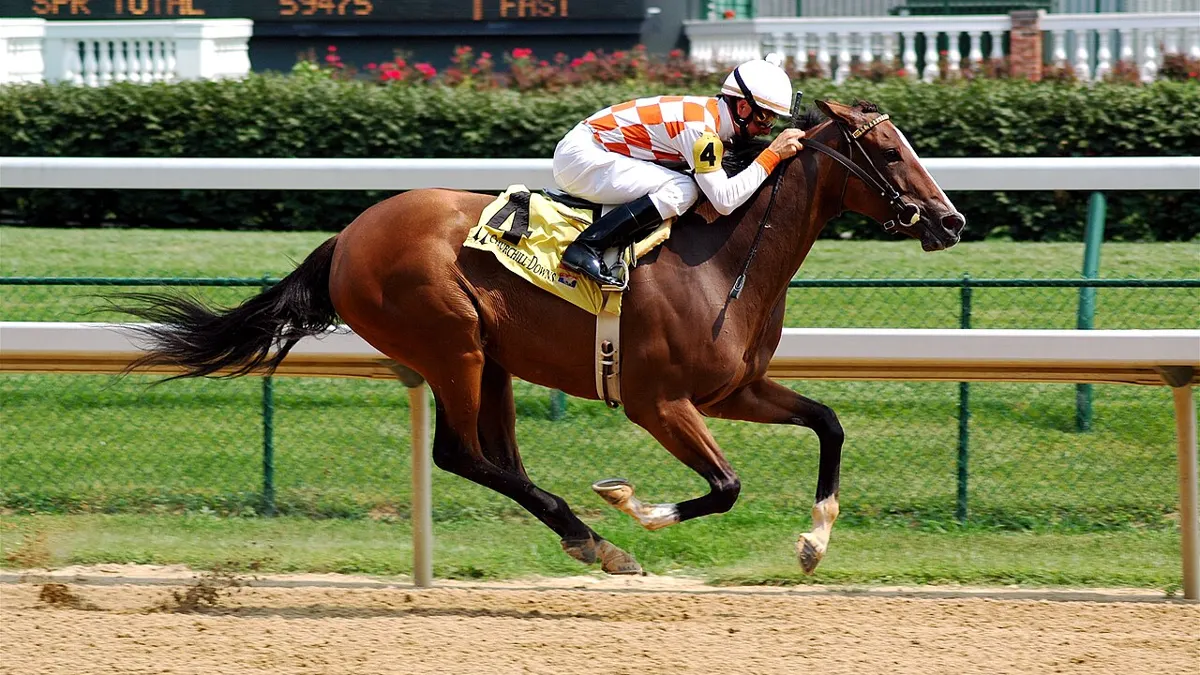
Once you've had a look at the big races, the bookies start waving a different kind of market at you: how many races Irish-trained horses will win, how many favourites will oblige across the week, which trainer finishes top, whether a horse in Tuesday's race finishes ahead of one in Thursday's. These are Cheltenham specials. They can be good fun and, now and again, decent value. They can also be some of the fattest-margin bets on the whole Festival. Here's how to tell the difference.
18+ only. There are no selections here, and every price, stake and percentage on this page is invented to show the maths. Cloudbet, which we link to, is licensed in Curaçao and is not licensed by the Gambling Regulatory Authority of Ireland (GRAI).
What counts as a "special"?
A special is any market that isn't simply "who wins this race". Some cover the whole Festival, some link two races together, and some are one-off novelty bets a bookmaker dreams up for the week. They tend to fall into a few families:
| Type | Example question | Settles |
|---|---|---|
| Festival totals | How many races will Irish-trained horses win? | After the last race on Friday |
| Ireland v Britain | Which side trains more winners over the week? | After the last race |
| Top trainer or jockey | Who trains or rides the most winners? | After the last race |
| Favourites count | How many winning favourites will there be? | After the last race |
| Cross-race match bets | Will horse X finish closer to the winner than horse Y in a different race? | After the second race |
| Race-day specials | Will there be a winner at 20/1 or bigger today? | End of that day |
| Price boosts | A short-priced double offered at a bigger price | When the legs finish |
The common thread is that you're betting on a pattern across several races, not on one horse in one race. That changes how you think about the maths.
Why specials can carry a big margin
In a normal race market, lots of money and lots of sharp punters keep prices fairly tight. Specials get far less attention. Fewer people bet them, fewer people price them carefully and they're often marketed as fun bets. That gives the bookmaker room to build in a bigger margin.
The quick check is the same one you'd use on any market: turn each price into a chance and add them up. On an over/under special like "Irish-trained winners over 16.5" at 5/6 and under at 5/6, each side is 54.5%, so the total is 109.1%. That's a 9.1% overround on a two-way market, much fatter than a fair coin flip would suggest. On a fair book it would be close to 100%, meaning roughly evens each way.
| Prices (over / under) | Implied chances | Total | Margin feel |
|---|---|---|---|
| 10/11 and 10/11 | 52.4% + 52.4% | 104.8% | Normal for a big two-way market |
| 5/6 and 5/6 | 54.5% + 54.5% | 109.1% | Fat |
| 4/5 and 5/6 | 55.6% + 54.5% | 110.1% | Very fat |
| 8/11 and evens | 57.9% + 50.0% | 107.9% | Fat, and tilted to one side |
A fat margin doesn't automatically mean don't bet. It means you need a stronger reason to think one side is wrong before it's worth it.
Ireland v Britain: the Festival's big rivalry
The best known of the specials is the Ireland-versus-Britain battle for the most Festival winners, often linked to the Prestbury Cup. Irish stables have been very strong at recent Festivals, which is why Irish punters love this market, and why the prices often reflect that strength already.
There are usually two ways to bet it:
- Match bet: Ireland, Britain, and sometimes a tie price.
- Handicap or line: Irish-trained winners over or under a number such as 15.5 or 16.5.
The trick is to stop thinking about "Ireland are flying" and start thinking race by race. Go through the card and, for each race, ask roughly how likely it is that an Irish-trained horse wins. Then add those chances together. That sum is your expected number of Irish winners.
| Race group (made-up) | Number of races | Chance an Irish horse wins each | Expected Irish winners |
|---|---|---|---|
| Championship races | 4 | 65% | 2.6 |
| Other Grade 1s | 10 | 60% | 6.0 |
| Graded and novice races | 6 | 55% | 3.3 |
| Handicaps | 8 | 45% | 3.6 |
| Total | 28 | 15.5 |
In this invented example your expected total is 15.5. If the line is 16.5, under looks worth a look. If it's 14.5, over does. If it's 15.5, there's nothing in it for you once the margin comes off. Always check the actual card: the number of races and the mix of race types can change, and our numbers above are only an illustration.
How spread out can these totals be?
An expected total of 15.5 doesn't mean 15 or 16 is a near-certainty. Each race is a separate yes-or-no event, so the final count can land a few either side. A handy rule of thumb: for 28 races where each has a chance of around 55%, the typical swing is roughly two and a half winners either way. In plain words, you'd not be shocked by anything from 13 to 18.
That's why a one-winner gap between your number and the line is usually not much of an edge. You want a clear gap, ideally two winners or more, before getting excited, and a reason you trust for why the market has it wrong.
Number of winning favourites
Another popular special asks how many favourites will win over the week. The method is the same: go race by race. A heavy odds-on favourite in a small Grade 1 field might win far more often than a 6/1 favourite in a 24-runner handicap.
| Favourite's price | Rough chance (from price) | Typical race type |
|---|---|---|
| 1/2 | 67% | Small-field Grade 1 |
| evens | 50% | Grade 1 or graded race |
| 2/1 | 33% | Novice race |
| 4/1 | 20% | Bumper or big novice field |
| 7/1 | 12.5% | Big handicap |
Those chances still include the bookmaker's margin, so the real ones are a bit lower. Add up the rough chance for each favourite across the week (you'll only know the real prices close to the day) and you get an expected number of winning favourites. Compare that with the line. Remember too that favourites can change during the week as the market moves, and the special settles on whoever is favourite at the off, which is usually based on the starting price. Check which rule your book uses, especially for joint favourites.
Top trainer and top jockey specials
These markets ask who trains or rides the most winners over the week. They work a lot like the Ireland v Britain line, except the question is about one yard or one rider. We've gone through the jockey version in detail in our Cheltenham top jockey guide, so here's the short version for trainers:
- Count how many runners the yard is likely to have and in which races.
- Estimate a rough chance for each runner and add them up to get expected winners.
- Compare the leading yards' expected totals with the prices on offer.
- Check the tie rule: is it decided on number of seconds, prize money, or dead-heat rules?
The big yards with dozens of runners usually dominate this market, and their prices are often short. The value, if there is any, tends to be in "without the favourite" versions or in match bets between two yards, where you're comparing two numbers instead of trying to beat the whole field.
If you follow Irish racing closely all year, our pages on the Irish trainers' championship and the Irish champion jockey markets use the same thinking over a full season.
Cross-race match bets
These are clever little markets. The bookmaker pairs two horses that aren't even in the same race and asks which will perform better, often measured by finishing position or distance behind the winner. They're settled once both races are run.
Before you bet one, find out exactly how it's settled:
- Is it the finishing position, or the distance behind the winner?
- What happens if one horse is a non-runner? Usually the bet is void, but not always.
- What happens if a horse falls or is pulled up? Often that counts as finishing behind any horse that completes.
- If both don't finish, is it a void or a tie?
A horse in a big-field handicap faces far more traffic and bad luck than one in a small Grade 1, so a straight finishing-position match can be lopsided even between horses of similar ability. Distance-behind-the-winner versions can be fairer, but they depend on margins that are hard to predict.
Race-day and novelty specials
Bookmakers like running specials that make you think about the whole day: "will there be a winner at 20/1 or bigger today?", "will any race be won by more than ten lengths?", or "how many odds-on winners today?". These can be fun but they're very hard to price well, which is exactly why the margin tends to be high.
If you want to have a go, use the same race-by-race thinking. For "a 20/1+ winner today", estimate the chance of a big-priced winner in each race, then work out the chance of none at all. Say over seven races you think the chance of a 20/1+ winner in each is 8%, 5%, 12%, 3%, 15%, 6% and 10%. The chance of none is 0.92 × 0.95 × 0.88 × 0.97 × 0.85 × 0.94 × 0.90 ≈ 0.54, so the chance of at least one is about 46%. If the special pays evens, it's close to fair on your numbers. If it pays 4/6, it isn't.
18+. Crypto deposits. Cloudbet is licensed in Curaçao and is NOT licensed by the GRAI. Irish gambling law changed in 2026: only GRAI-licensed operators may lawfully take bets from Irish customers. Ad: we may earn a commission. Bet only what you can afford to lose.
Price boosts dressed up as specials
Many "specials" at Cheltenham are really boosted doubles or trebles: two well-fancied horses offered together at a price a bit bigger than you'd get by multiplying their odds. They can be genuinely good, but only if the boosted price beats what you could get by backing the legs at the best odds elsewhere. Our Cheltenham bet boosts guide has a quick test for these, including stake caps that limit how much they're really worth. If you prefer building your own combinations, see our Cheltenham bet builder page.
Settlement rules that catch people out
Specials often have rules that differ from normal race betting. Before staking anything, check:
| Situation | What to check |
|---|---|
| A race is abandoned or moved | Does the special stand, void, or count fewer races? |
| Dead heat for first | Does each horse count as a winner, half a winner, or does it depend on the market? |
| Joint favourites | Do both count, neither, or does the book split the bet? |
| Stewards' inquiry or disqualification | Is it settled on the first result or the amended one? |
| Ties on totals or in top trainer | Is there a push, dead-heat rules, or a tie-break like number of seconds? |
| Where a horse is trained | For Ireland v Britain, is it the trainer's licence country on the day? |
Take a screenshot of the special and its rules when you place it. Festival-long markets can sit for days, and you'll want proof of exactly what you bet.
When specials can actually be good value
Despite the margins, there are moments when specials make sense:
- Your race-by-race view clearly differs from the line, by two or more winners, not half a winner.
- Something big changes after the special is priced, such as a major yard's runners being withdrawn or the going changing a lot, and the line hasn't moved.
- Mid-Festival, when one or two days have been run and the remaining races are clearer. Some books keep prices up on totals as the week goes on, and you can recount with fewer unknowns.
- Match bets between two yards or two jockeys, where comparing two numbers is easier than beating a whole market.
Sizing your specials
Because specials settle late and often have bigger margins, keep stakes smaller than your normal race bets. A sensible approach is to set aside a small slice of your Festival pot, say 10%, for specials and novelty bets, and not top it up when you lose. If your Festival pot is €200, that's €20 for specials across the week, perhaps four bets of €5. That way they stay a bit of fun alongside your main betting.
Common mistakes with Cheltenham specials
- Betting the headline, not the maths: "Ireland always win" isn't a reason to take a short price on over.
- Ignoring the margin: two-way specials at 5/6 each side are much worse than they look.
- Not reading the tie and dead-heat rules: these decide more specials than you'd think.
- Too many novelty bets: each has a fat margin, and they add up over four days.
- Forgetting non-runners: late withdrawals can wreck cross-race match bets and totals.
- Chasing on Friday: loading up on specials late in the week to win back Tuesday and Wednesday.
A quick specials checklist
- Work out the overround. If it's well over 105% on a two-way market, you need a strong reason.
- Build your own number race by race.
- Only bet if the gap is clear, not marginal.
- Read the rules on ties, dead heats, joint favourites and abandoned races.
- Screenshot the bet and rules.
- Keep stakes small and inside a set specials budget.
New to Festival betting? Start with our Cheltenham betting guide, then look at ante-post betting and backing outsiders. Our page on how horse racing betting works covers the basics, and the bet calculator helps you check returns.
Licensing and where you bet
In Ireland, gambling is regulated by the GRAI. Cloudbet, which we link to, is licensed in Curaçao and is not licensed by the GRAI, so you won't get the same protections you'd have with an Irish-licensed operator. Make your own choice with that in mind. Our page on whether online betting is legal in Ireland covers the legal side in more detail.
Keep it fun
Cheltenham week is great craic, and specials can add to it, but four days of betting can get away from anyone. If you notice you're betting more than you planned, chasing losses or hiding bets, stop and talk to someone. Gambling Care is free, confidential and open 24/7 on 1800 936 725 (Northern Ireland: 08000 886 725). Our responsible gambling page has more support options.
Questions players ask
What are Cheltenham betting specials?
Markets beyond simple race winners: festival totals, Ireland v Britain, top trainer or jockey, number of winning favourites, cross-race match bets and race-day novelty bets.
How does the Ireland v Britain special work?
You bet on which side trains more Festival winners, or on Irish-trained winners going over or under a set number. It settles after the last race.
How do I price a festival total?
Go race by race, estimate the chance of the outcome in each race, then add those chances up. Compare your total with the bookmaker's line.
Do specials have bigger margins?
Often, yes. Fewer people bet on them, so bookmakers can build in more margin. Add up the implied chances to check.
What happens if a race is abandoned?
It depends on the bookmaker. Some specials stand, some void, and some count fewer races. Read the rules before betting.
How are joint favourites treated in winning-favourite specials?
Rules vary. Some books count both, some count neither and some split the bet. Check before you bet.
Are cross-race match bets fair?
They can be, but horses in big-field handicaps face more bad luck than those in small Grade 1s. Check how the match is settled.
Is Cloudbet licensed in Ireland?
No. Cloudbet is licensed in Curaçao and is not licensed by the GRAI.
Where can I get help with gambling in Ireland?
Call Gambling Care on 1800 936 725, free and open 24/7. In Northern Ireland, call 08000 886 725.
18+. Crypto deposits. Cloudbet is licensed in Curaçao and is NOT licensed by the GRAI. Irish gambling law changed in 2026: only GRAI-licensed operators may lawfully take bets from Irish customers. Ad: we may earn a commission. Bet only what you can afford to lose.
If betting is costing you more than money, free and confidential help is there 24 hours a day, 365 days a year: the Problem Gambling Helpline run by Dunlewey Addiction Services for Gambling Care, on 1800 936 725 (from Northern Ireland: 08000 886 725). Source: grai.ie.