Leopardstown Christmas Festival Betting Tips: Winter Ground, Small Grade 1 Fields, Each-Way Maths and a Four-Day Budget
Welcome bonus for new players + fast crypto payouts. Just helping a brother out.
18+. Crypto deposits. Cloudbet is licensed in Curaçao and is NOT licensed by the GRAI. Irish gambling law changed in 2026: only GRAI-licensed operators may lawfully take bets from Irish customers. Ad: we may earn a commission. Bet only what you can afford to lose.
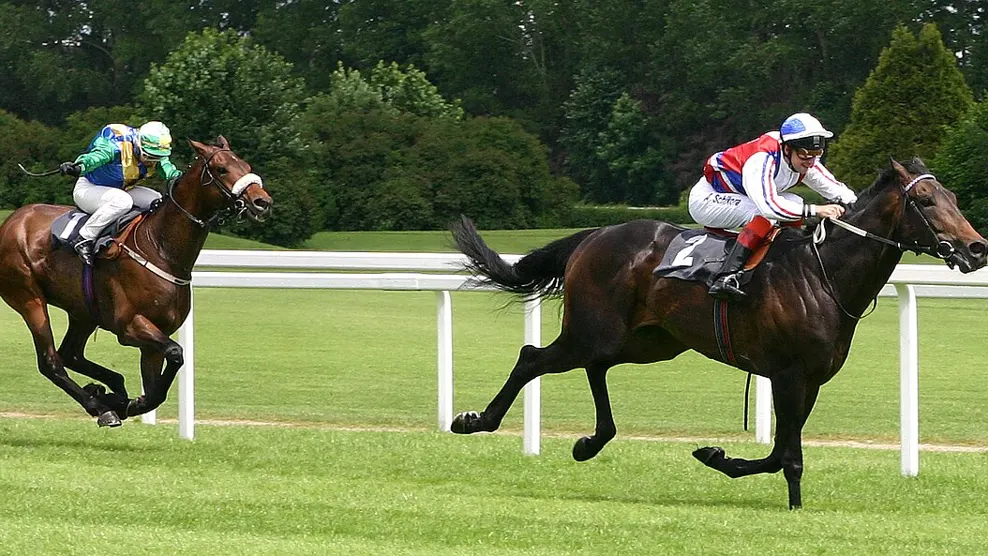
For a lot of us, Christmas racing at Leopardstown is as much a part of the holidays as the turkey and the row over the telly. St Stephen's Day comes, the house empties out, and half the country ends up in Foxrock or in front of a screen with a few quid on. It's a brilliant few days of jumps racing. It's also a meeting where people lose more than they meant to, because the cards are packed, the ground is heavy, the fields are odd sizes and there's usually a drink or two involved. This isn't a list of horses to back. It's the stuff that helps you bet the four days with a clear head: how the meeting works, what winter ground does, how to price a small Grade 1, how each-way terms really pay, and how to keep a budget alive until the last race on the 29th.
18+ only. This is general information, not betting or financial advice. Every price, field and stake below is an example we made up to show the method, not a tip for a real race. Cloudbet, which we link to, holds a Curaçao licence and is not licensed by the Gambling Regulatory Authority of Ireland (GRAI), so Irish consumer protections don't apply there. Gambling Care: 1800 936 725 (NI: 08000 886 725), free, confidential and 24/7. New to racing bets? Start with how horse racing betting works.

The short version
- It's four days of National Hunt racing, usually from St Stephen's Day, 26 December, to 29 December, with several Grade 1 races spread across the week and big handicaps alongside them.
- Winter ground changes everything. Soft or heavy going rewards stamina and proven form on the surface, and it can turn a "good thing" on paper into a long afternoon.
- Grade 1 fields are often small. Five, six or seven runners is common, which changes each-way terms and makes the favourite's price look more generous than it is.
- Handicaps are the opposite: big fields, big margins built into the book, and the best each-way terms of the week.
- Read the each-way terms before every race. The same horse at the same price can be a fair bet in a 16-runner handicap and a poor one in a 6-runner chase.
- Set a four-day budget before the 26th and split it across the days. In our simulations, betting four races a day at break-even prices still left you down after the week more often than up.
What the Christmas festival actually is
Leopardstown is the racecourse in south Dublin, out by Foxrock, and it's one of the main jumps tracks in the country. Its Christmas meeting runs over four days straight after Christmas, starting on St Stephen's Day. It's National Hunt racing, so hurdles, chases and the odd bumper, not the flat. Across the four days you'll usually see a handful of Grade 1 races (the top level in jumps racing), a feature three-mile chase that gets the headlines, novice races where the up-and-coming horses meet for the first time at the top level, and a run of competitive handicaps with big fields.
The meeting matters beyond the Christmas cheer for two reasons. First, the big Irish yards tend to send their best horses to it, so the Grade 1 races are often a real test of who's the best around at that point in the season. Second, it's a staging post. The same track hosts the big Dublin Racing Festival in February, and both meetings feed into Cheltenham in March. A lot of what you read in January and February about Cheltenham chances starts with what happened at Leopardstown at Christmas.
The exact race order, distances and conditions can change from year to year, and sponsors' names come and go. Always check the official race card for the year you're betting on. We don't name races by sponsor here on purpose, because those names change and the betting logic doesn't.
Why Christmas racing is different from the rest of the season
You can't bet this meeting like a summer evening at Bellewstown. A few things make it its own animal.
The ground
Late December in Dublin is usually wet and cold. Going descriptions of soft, or soft to heavy in places, are common, and a dry spell can bring yielding. Heavy ground is a different sport. Horses tire, races are run at a slower pace, finishing positions spread out, and the ones that handle it can win by a distance. Form on good ground in October tells you less than you'd think.
The fields
The Grade 1s are often small because the best horses frighten off the rest. Five or six runners isn't unusual. The handicaps, meanwhile, can fill up to big fields with lots of horses rated close together. You're switching between two completely different betting problems on the same card, sometimes within half an hour.
The timing in the season
Some horses come to Christmas with one or two runs under their belt since the autumn. Others are having their first run of the season. A horse returning from a long break can be fit and ready, or it can be using the race as a stepping stone towards February and March. Trainers know which. Punters mostly don't.
The crowd and the mood
It's a social meeting. People bet with friends, bet on names, bet because they're bored between races, and bet more after a couple of pints. None of that is a crime. It's just worth knowing that the hardest opponent at Christmas is usually your own mood, not the bookmaker.
Reading the going in winter
The going is the official description of how firm or soft the ground is. In Ireland you'll see terms running roughly from good, through good to yielding, yielding, yielding to soft, soft, soft to heavy, and heavy. Courses often publish a going-stick reading too, which is a number that measures how much the ground gives. Neither is perfect, and the ground can change through the day if it rains.
Here's how we'd use it:
- Check the going on the morning, and again before each race. Rain overnight on the 25th can change the whole week.
- Look at each horse's form on similar ground. A horse that's only ever won on good ground and finished tired on soft is a question mark on heavy, whatever the price.
- Stamina gets more valuable on soft and heavy ground. A horse running at a trip it's never tried, on deep ground, is taking a risk.
- Watch the earlier races. If every winner is coming from the front, or every horse is finishing exhausted, that tells you something about the day.
- Expect non-runners. When the ground changes, trainers withdraw horses that won't handle it. That's where Rule 4, further down, comes in.
Our page on how going affects betting goes into the ground in more detail. The same principles apply in Dublin as in Gloucestershire.
Odds basics, in one table
Most Irish punters still think in fractional odds, while crypto books like Cloudbet show decimal. Here's the conversion for the prices you'll see most at a jumps meeting. The implied chance is just one divided by the decimal odds.
| Fractional | Decimal | Implied chance |
|---|---|---|
| Evens (1/1) | 2.00 | 50.0% |
| 6/4 | 2.50 | 40.0% |
| 2/1 | 3.00 | 33.3% |
| 5/2 | 3.50 | 28.6% |
| 3/1 | 4.00 | 25.0% |
| 4/1 | 5.00 | 20.0% |
| 5/1 | 6.00 | 16.7% |
| 8/1 | 9.00 | 11.1% |
| 12/1 | 13.00 | 7.7% |
| 20/1 | 21.00 | 4.8% |
| 33/1 | 34.00 | 2.9% |
If fractions still trip you up, our decimal vs fractional odds guide and the odds calculator will sort you out.
Pricing a small Grade 1 field
Let's take a made-up five-runner Grade 1 chase. Here's an example book:
| Horse | Decimal odds | Implied chance | Chance after removing margin | Fair odds |
|---|---|---|---|---|
| A | 1.80 | 55.6% | 47.6% | 2.10 |
| B | 3.50 | 28.6% | 24.5% | 4.08 |
| C | 6.00 | 16.7% | 14.3% | 7.00 |
| D | 9.00 | 11.1% | 9.5% | 10.50 |
| E | 21.00 | 4.8% | 4.1% | 24.50 |
Add up the implied chances and you get about 116.7%. That extra 16.7% is the bookmaker's margin, often called the overround. To get a rough "fair" chance for each horse, you divide each implied chance by 1.167. That's the fourth column. The fair odds are what the prices would be with no margin at all.
What does that tell you? The favourite at 1.80 is priced as if it wins 55.6% of the time, but once you strip out the margin the market only really rates it at about 47.6%. That doesn't mean it's a bad bet, it means the price includes a slice for the bookmaker. To bet it with any confidence, you'd want to believe it wins more than 55.6% of the time, not just "more than half".
The bigger lesson with small fields is that one horse can dominate the book. If you think A is a bit vulnerable on heavy ground, the value is usually spread across B, C and D, not piled onto the 20/1 outsider. Outsiders in five-runner Grade 1s are often there because they're simply not good enough, not because the market has missed something.
A seven-runner example book we built came out at about 116.3%. Small-field jumps races often carry margins in that kind of range, but it varies a lot between bookmakers and between races. That's why shopping around for the price matters, which we'll come back to.
Big handicaps: wide-open races with fat margins
The Christmas handicaps are the opposite problem. You might get twenty runners, plenty of them at 10/1 to 33/1, and lots of horses that could win if things fall right. We built a made-up 20-runner book with prices from 6/1 down to 66/1, and the implied chances added up to about 125%. That's a margin of about 25%, far bigger than in the small Grade 1 above.
That big margin is spread across all twenty horses, so any single price is likely to be a fair bit short of its true chance. The upside of handicaps is that the each-way terms are at their most generous, and the market is much less sure of itself. When the bookmaker's opinion is weaker, a punter who has done real homework on ground, trip and handicap marks has more room to find an edge.
If you want to dig into how handicap marks work, our guide to Irish handicap ratings walks through it. The short version: a horse dropping in the weights after a couple of quiet runs, on ground it likes, is worth a second look. A horse that's gone up a lot after winning on quick ground in the autumn is worth a second look for the opposite reason.
Each-way terms: the bit most people never read
An each-way bet is two bets of the same stake: one on the horse to win, and one on it to place. The place part pays a fraction of the win odds if the horse finishes in the paid places. The number of places and the fraction depend on the race. The standard terms used by most Irish and UK bookmakers look roughly like this, but they vary, especially on enhanced "extra places" offers, so always check before you bet:
| Race type and field size | Places paid | Fraction of win odds |
|---|---|---|
| Up to 4 runners | Win only | No each-way |
| 5 to 7 runners | 2 | 1/4 |
| 8 or more runners (non-handicap) | 3 | 1/5 |
| Handicap, 12 to 15 runners | 3 | 1/4 |
| Handicap, 16 or more runners | 4 | 1/4 |
Now watch how this plays out with real maths. The table below shows the place odds you get, and the chance a horse needs to finish in the places for the place part to break even.
| Win odds | Terms | Place odds | Place chance needed to break even |
|---|---|---|---|
| 13.0 (12/1) | 1/4, 4 places (big handicap) | 4.00 | 25.0% |
| 9.0 (8/1) | 1/5, 3 places (8+ runners) | 2.60 | 38.5% |
| 6.0 (5/1) | 1/4, 2 places (5 to 7 runners) | 2.25 | 44.4% |
| 21.0 (20/1) | 1/5, 3 places | 5.00 | 20.0% |
| 34.0 (33/1) | 1/4, 4 places | 9.25 | 10.8% |
The place odds are worked out as 1 plus the win profit times the fraction. So 12/1 at a quarter the odds gives a place profit of 3/1, which is 4.00 in decimal.
Worked examples with a €5 each-way bet (€10 total)
We put made-up chances on a few horses to show how the expected value moves. Expected value is what you'd win or lose on average per bet if you could repeat it many times.
- 12/1 in a 20-runner handicap, 4 places at 1/4. If you rate it a 7% winner and 25% to place, the win part averages about −€0.45 and the place part breaks even at €0.00. Overall about −€0.45 per €10. Nudge your rating to 8% to win and 30% to place and it swings to about +€1.20 per €10. Small differences in your opinion make a big difference, which is why you need to be honest with yourself.
- 8/1 in an 8-runner novice race, 3 places at 1/5. Rated 10% to win and 33% to place, the win part is about −€0.50 and the place part about −€0.71. Total about −€1.21 per €10. Three places at a fifth the odds in an eight-runner race is a tough place bet.
- 5/1 in a 6-runner Grade 1, 2 places at 1/4. Rated 17% to win and 40% to place, the win part is about +€0.10 and the place part about −€0.50. Total about −€0.40. The win part was fine; the place part dragged it down.
- 3/1 in a 5-runner Grade 1, 2 places at 1/4. Rated 25% to win and 55% to place, the win part breaks even and the place part is about −€0.19. Small fields with short-priced horses rarely make good each-way bets.
The pattern is clear. Each-way bets tend to work best on bigger prices in big-field handicaps with four places. In small Grade 1 fields, if you like a horse, a win-only bet is usually the cleaner option. Our each-way betting guide goes deeper on this.
The field-size trap
Here's one that catches people every Christmas. You back a horse each-way the night before in a race with eight declared runners, expecting three places. On the day, two horses are withdrawn because of the ground. Now there are six runners, and your bet settles on two places, not three. Same horse, same price, much worse bet. If the ground is likely to cause withdrawals, think twice about each-way bets placed early on races near the eight-runner line.
Rule 4: what happens when horses come out
When a horse is withdrawn after you've taken a fixed price, the bookmaker usually applies a Rule 4 deduction to your winnings. The idea is that the race got easier for everyone else, so the price you took was bigger than it should have been. The size of the deduction depends on the withdrawn horse's price. Under the standard scale, roughly speaking, a withdrawn favourite around 2/1 can cost about 25 cent in the euro off your winnings, a 5/1 shot about 10 cent, and a horse at 10/1 or bigger usually nothing. Check your bookmaker's own table.
Here's what that does to a €10 win bet at 8/1 (9.0):
| Rule 4 deduction | Profit if it wins | Effective decimal odds |
|---|---|---|
| None | €80.00 | 9.00 |
| 5c in the euro | €76.00 | 8.60 |
| 10c in the euro | €72.00 | 8.20 |
| 20c in the euro | €64.00 | 7.40 |
| 30c in the euro | €56.00 | 6.60 |
The deduction comes off your profit, not your stake. On a week where the ground changes and trainers pull horses, Rule 4 can quietly take a big slice of any early prices you were proud of. Betting on the day, after the final declarations and once the ground's settled, avoids most of it.
Early prices, the morning, or the off?
You've got three broad times to bet: early (days before, sometimes called ante-post), on the morning of the race, and just before the off. Each has trade-offs at Christmas.
- Early: bigger prices if you're right, but you risk the horse not running, the ground changing, and losing your stake entirely if it's an ante-post bet where non-runners lose. Our ante-post guide covers the rules.
- Morning: runners are confirmed, but the ground can still change. Some bookmakers offer "best odds guaranteed" on the day, which pays the starting price if it's bigger than what you took. If you're betting with a book that offers it, that's worth having, and our best odds guaranteed explainer shows how it works. Not every bookmaker offers it, and crypto books often don't.
- Close to the off: you know the ground, the non-runners and how earlier races were run. The price may have shortened if the money came for your horse. But you're betting with the most information.
Here's a simple illustration. Take 7/1 (8.0) in the morning and the horse goes off at 5/1 (6.0). On a €10 win bet that wins, you collect €70 profit instead of €50. Do that consistently and you're beating the closing price, which is one of the best signs that your judgement is decent. More on that in the records section.
Dutching a big handicap
Dutching means splitting your stake across several horses so you get roughly the same return whichever one wins. It's useful in handicaps when you've narrowed a big field down to a few you like but can't separate them.
Example: you like three horses at 4/1 (5.0), 6/1 (7.0) and 10/1 (11.0), and you want to stake €30 in total. To get the same return from each, you stake in proportion to one divided by the odds:
| Horse | Odds | Stake | Return if it wins |
|---|---|---|---|
| Horse 1 | 5.0 | €13.83 | €69.16 |
| Horse 2 | 7.0 | €9.88 | €69.16 |
| Horse 3 | 11.0 | €6.29 | €69.16 |
If any of the three wins, you get back about €69.16 for your €30. The implied chance of one of the three winning, at those prices, is about 43.4%. So the dutch is only good value if you genuinely think your three have a better than 43.4% chance between them. Dutching doesn't remove the margin. It just spreads your risk. If each horse isn't value on its own, the dutch isn't value either.
Reading the form at Christmas
Some things we look at for every Christmas race, roughly in this order:
- Ground form. Has the horse run well on soft or heavy before? Not just won, but run well.
- Trip. Is it proven at the distance? Has it shown stamina at the end of races? Deep ground makes every trip play longer.
- Track form. Leopardstown is a left-handed track. Some horses go better one way round, and some just seem to run well at certain courses. A good run at Leopardstown before is worth noting.
- Recent runs and freshness. When did it last run? Is this a planned target or a prep for later in the season? Long absences aren't always bad, but they add uncertainty.
- Jumping. In chases especially, a horse that makes mistakes is a big risk in a competitive race, and more so when tired on heavy ground.
- Class. Is it stepping up or down in grade? A handicapper going into a Grade 1 for the first time is a big ask.
- The handicap mark. In handicaps, how does its current mark compare with its winning marks in the past?
- The market. Has the price moved a lot since the morning? A big drift isn't always bad news, but it's worth asking why.
None of this needs fancy software. A race card, the form figures and a bit of patience go a long way. If you're newer to this, our beginners' guide to betting on horse racing explains how to read the card.
Novice races: the riskiest and the most interesting
Novice hurdles and chases are for horses still early in their careers over obstacles. At Christmas, some of the most exciting horses of the season meet each other for the first time in Grade 1 novice races. That makes them great to watch and hard to bet, because the horses have limited form, often haven't met each other, and may not have been tested on deep ground.
A few rules of thumb for novice races:
- A short price in a novice chase is a bet on jumping, not just ability. One mistake can end it.
- Unbeaten horses look shiny, but "unbeaten in two runs in small fields" isn't the same as proven at the top level.
- The market leans heavily on reputation. Sometimes that's justified, sometimes it isn't. Price them yourself first.
- Keep stakes smaller here than in races where the form is clearer.
18+. Crypto deposits. Cloudbet is licensed in Curaçao and is NOT licensed by the GRAI. Irish gambling law changed in 2026: only GRAI-licensed operators may lawfully take bets from Irish customers. Ad: we may earn a commission. Bet only what you can afford to lose.
Bumpers and the last race of the day
Bumpers are flat races under National Hunt rules, for young horses who haven't raced over obstacles yet. They're often the last race on the card. They're also where people chase losses, because it's the last chance to get back what the day has taken. The form is thin, the horses are young, and many have never run before. If you're betting the bumper because you're down, that's the moment to stop. If you're betting it because you've actually looked at it, keep the stake small.
A four-day budget that survives until the 29th
The single most useful thing you can do at Christmas is decide your budget before the 26th and split it. Here's a simple plan with an example €100 budget:
| Day | Budget | Bets | Typical stake |
|---|---|---|---|
| Day 1 (St Stephen's Day) | €30 | Up to 5 | €5 to €6 |
| Day 2 | €25 | Up to 4 | €5 to €6 |
| Day 3 | €25 | Up to 4 | €5 to €6 |
| Day 4 | €20 | Up to 4 | €5 |
The rules that make it work:
- Unused budget doesn't roll over. If you skip races on Day 1, that's money saved, not money to fire at Day 2.
- Winnings don't get added to the budget until the week is over. Take them out, or set them aside.
- Each-way bets count as two stakes. A €5 each-way is €10 of your day's money.
- No chasing. If a day's budget is gone, you watch the rest of the card for fun.
Our bankroll management guide covers this in more detail for the whole season.
What four days of betting actually looks like
We simulated the week 20,000 times: 16 win bets of €5 each (€80 total), spread across prices from 2/1 to 12/1. We ran it at four different levels of skill: a punter who loses 15% on average (typical of betting into big margins without shopping around), one who loses 5%, one who breaks even, and one with a genuine 5% edge.
| Edge | Average result | Middle result | Weeks finishing ahead | Bad week (1 in 10) | Good week (1 in 10) | Lost all €80 |
|---|---|---|---|---|---|---|
| −15% | −€11.69 | −€20.00 | 35.1% | −€65.00 | +€52.50 | 6.7% |
| −5% | −€4.30 | −€12.50 | 41.3% | −€65.00 | +€60.00 | 4.9% |
| 0% | +€0.47 | −€5.00 | 45.4% | −€57.50 | +€67.50 | 3.9% |
| +5% | +€4.10 | €0.00 | 48.6% | −€57.50 | +€70.00 | 3.4% |
Two things jump out. First, even the punter with a real edge finished ahead in fewer than half the weeks. Racing at these prices is lumpy: a few winners make the week, and most weeks the middle result is a small loss. Second, the gap between the good and bad weeks is huge compared with the difference skill makes. Over one Christmas, luck dominates. Skill only shows over many meetings.
Losing runs
How likely is it to back no winners at all in 16 bets? At 2/1 shots it's rare, about 0.2%. At 5/1 it's about 5.4%. At 12/1 it's about 27.8%, more than one week in four, even if every price was fair. If you like bigger prices, you'll have weeks with nothing. That's not a sign you're doing it wrong. It's just how the numbers work.
Accumulators, multiples and pool bets
It's tempting to string a few fancies together into a double or treble across the festival. The maths is unkind: the margins multiply. If each of your picks is a bit short of fair, an accumulator compounds that. You can see how fast returns and risks grow with our accumulator calculator and the accumulator explainer.
Pool bets, like a placepot where it's offered, work differently: you pick a horse to place in each of several races, and the pool is shared among winners after the operator's cut. The appeal is a big return for a small stake. The catch is that even a good chance in each leg compounds quickly. If you have a 60% chance of a place in each of six legs, the chance of getting all six is only about 4.7%. At 70% per leg it's about 11.8%. At 50% it's about 1.6%. Fun for a few euro, not a plan.
Live betting during the races
Some bookmakers offer in-running prices on racing. It moves fast, and the pictures you see can be a few seconds behind the action, especially on a phone stream. Other people with faster feeds are betting against you. For most punters, in-running betting at a jumps meeting is a way to lose money quickly. If you do try it, use tiny stakes, and never try to "save" a losing pre-race bet in running. Our live racing betting guide explains the pitfalls.
Cash out and laying off
If you took a big early price on a horse that's now favourite, you might be offered a cash out. Cash out is a price for your bet that includes another margin for the bookmaker. Sometimes taking it makes sense, if you'd honestly rather lock in a smaller profit than ride the race. But accepting cash out as a habit costs money over time. Our cash out guide shows how to work out whether an offer is fair. An alternative, if you use a betting exchange, is to lay the horse at the shorter price to lock in a profit. Our page on betting exchanges in Ireland explains how.
Shopping for prices
Different bookmakers price the same race differently, and over a week of betting the difference adds up. If one book offers 9/2 and another 4/1, the 9/2 pays 12.5% more profit for exactly the same bet. Do that across 16 bets and you've added a decent chunk to your results without any extra skill. If you have a couple of accounts, check them before every bet. If you're betting with crypto, our page on crypto horse racing betting explains how deposits, withdrawals and prices compare.
Cloudbet, which we link to, covers horse racing alongside other sports. It takes crypto deposits, and according to its help centre when we checked, withdrawals are typically processed within 24 hours, network fees are shown before you confirm, and identity verification kicks in once cumulative deposits reach about US$2,200. Its welcome package is a 30-day rewards programme worth up to US$2,500, but the rakeback part of it is earned on casino play, not sports, so for a racing punter the sports cash drops matter more. Check the current terms yourself, and remember it isn't licensed in Ireland.
Keep a record, even a rough one
Write down every bet: the race, the horse, your price, the starting price, the stake, the result and a one-line reason. After the meeting, look at two things:
- Your profit or loss. Obvious, but most people never add it up honestly.
- Whether you beat the starting price. If you took 7/1 (8.0) and it went off 11/2 (6.5), your price was about 23.1% better than the market's final view. If you took 4/1 (5.0) and it drifted to 9/2 (5.5), you were about 9.1% worse. If you took 10/1 (11.0) and it went off 8/1 (9.0), about 22.2% better.
Beating the starting price consistently is one of the best signs that you're betting well, even in weeks when the results go against you. Losing to it consistently is a sign that the market knows more than you, and that's worth knowing too.
Mistakes we see every Christmas
- Betting every race. Four days at seven or eight races a day is thirty-odd races. Nobody has an opinion worth money on all of them.
- Ignoring the going. The ground on the day matters more than a horse's reputation.
- Each-way on short prices in small fields. As the examples showed, the place part often drags the bet down.
- Taking early prices on horses that might not run. If the ground's uncertain, waiting can save you from non-runners and Rule 4.
- Following tips from "insiders". Anyone selling Christmas racing certainties is selling something else. There are no certainties on heavy ground.
- Chasing losses in the bumper. The last race of the day is not a rescue mission.
- Betting more after a drink. If you wouldn't do it sober on a Tuesday in October, don't do it at Christmas.
- Not shopping around. A quarter-point here and there is real money over a week.
Your Christmas racing checklist
- Set your four-day budget before the 26th and split it by day.
- Check the going on the morning and before each race.
- Pick the races where you actually have an opinion, and skip the rest.
- Price the horses yourself before looking at the odds.
- Check field size and each-way terms before any each-way bet.
- Think about non-runners and Rule 4 before taking early prices.
- Compare prices across your accounts.
- Write down every bet and the starting price.
- Stop when the day's budget is gone.
- Enjoy the racing.
Licensing and where you bet
Betting on horse racing is legal in Ireland. The Gambling Regulatory Authority of Ireland, the GRAI, now regulates gambling here: it began accepting licence applications for remote and in-person betting in February 2026, and its first remote betting licences took effect from 1 July 2026. Bookmakers licensed by the GRAI have to follow Irish rules on things like advertising, limits and complaints.
Cloudbet, which we link to, holds a Curaçao licence and is not licensed by the GRAI. That means Irish consumer protections and the GRAI's complaint process don't apply to it. If that matters to you, and for many people it should, use a GRAI-licensed bookmaker. Our guide to horse racing betting sites in Ireland covers what to look for, and the legal overview has the full picture. For how betting duty works on the bookmaker side, see our betting duty explainer.
Keeping it fun over the holidays
Christmas can be a hard time for people who struggle with gambling. There's time off, money from presents or bonuses, family stress, drink, and racing on the telly all day. If you notice you're betting more than you planned, hiding it, borrowing to bet, or feeling low after a bad day, take a break. Use your bookmaker's deposit limits and time-outs, and set them before the 26th, not after a bad day.
If it's gone past that, talk to someone. Gambling Care is free, confidential and open 24/7, including over Christmas, on 1800 936 725 (NI: 08000 886 725). There's more support on our responsible gambling page.
My take
Leopardstown at Christmas is one of the best weeks of the Irish racing year, and the best way to enjoy it is to bet less, but better. Decide your budget before the 26th. Treat the small Grade 1s and the big handicaps as two different problems. Respect the ground, read the each-way terms every single time, and think about non-runners before you grab an early price. Keep a record, check yourself against the starting price, and stop when the day's money is gone. Do that, and whatever happens on the track, you'll still be smiling when the last race on the 29th goes off.
Questions players ask
When is the Leopardstown Christmas Festival?
It usually runs over four days from St Stephen's Day, 26 December, to 29 December. Check the official race card for the year you're betting on, as dates and race order can change.
What kind of racing is it?
National Hunt racing: hurdles, chases and bumpers. Across the four days there are usually several Grade 1 races plus big-field handicaps.
Are each-way bets good value at Leopardstown at Christmas?
They can be in big-field handicaps with four places at a quarter the odds, especially on bigger prices. In small Grade 1 fields with only two places paid, the place part often makes the bet worse, so a win-only bet is usually cleaner.
What is Rule 4?
A deduction from your winnings when a horse is withdrawn after you've taken a fixed price. The size depends on the withdrawn horse's price. A favourite around 2/1 can mean about 25 cent in the euro off your profit, while a horse at 10/1 or bigger usually means nothing.
How does the ground affect Christmas racing?
Winter ground is often soft or heavy, which favours stamina and horses with proven form on deep ground. Check the going on the morning and before each race, and expect non-runners if it changes.
Can I bet on Leopardstown from Ireland with crypto?
Yes, some crypto sportsbooks like Cloudbet cover Irish racing. Cloudbet is licensed in Curaçao and isn't licensed by the GRAI, so Irish consumer protections don't apply there.
18+. Crypto deposits. Cloudbet is licensed in Curaçao and is NOT licensed by the GRAI. Irish gambling law changed in 2026: only GRAI-licensed operators may lawfully take bets from Irish customers. Ad: we may earn a commission. Bet only what you can afford to lose.
If betting is costing you more than money, free and confidential help is there 24 hours a day, 365 days a year: the Problem Gambling Helpline run by Dunlewey Addiction Services for Gambling Care, on 1800 936 725 (from Northern Ireland: 08000 886 725). Source: grai.ie.