How to Bet on Snooker from Ireland: Formats, Frame Maths, Handicaps, Centuries and Live Betting
Welcome bonus for new players + fast crypto payouts. Just helping a brother out.
18+. Crypto deposits. Cloudbet is licensed in Curaçao and is NOT licensed by the GRAI. Irish gambling law changed in 2026: only GRAI-licensed operators may lawfully take bets from Irish customers. Ad: we may earn a commission. Bet only what you can afford to lose.
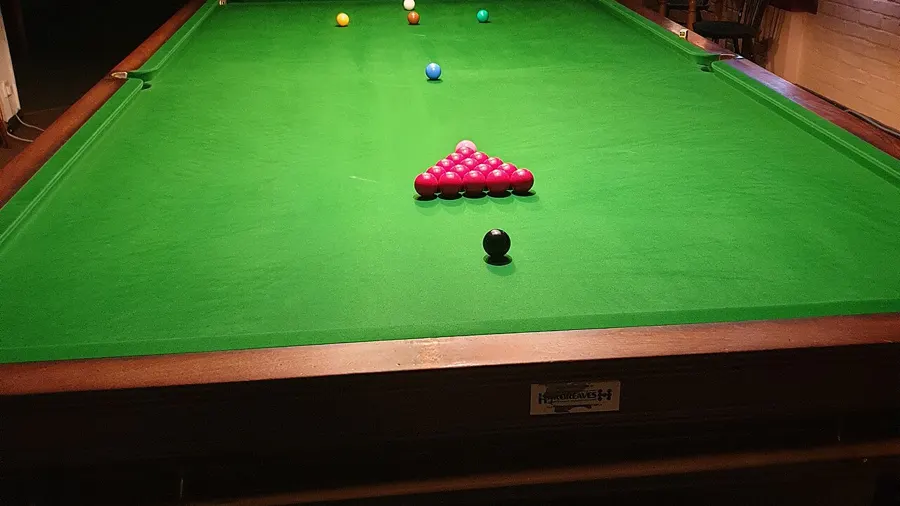
Snooker is a lovely sport to bet on if you like thinking things through. There are no draws in a match, no referees deciding games, and no weather. It's two players, one table and a fixed number of frames. That makes the maths cleaner than football or racing, and once you understand how the length of a match changes the odds, you'll read snooker prices very differently. This guide walks you through it the way a mate who's done the sums would: the formats, the markets, the numbers behind them, the traps, and how to keep it fun.
18+ only. This is general information, not a tip or a promise of profit. Every price, player and result below is a made-up example, and the probabilities come from our own simple model, worked out with a script. Ireland's regulator, the Gambling Regulatory Authority of Ireland (GRAI), began licensing online betting in 2026. Cloudbet, which we link to, holds a Curaçao licence and is not licensed by the GRAI, so no Irish regulator can help if there's a dispute. If betting stops being fun, Gambling Care is free, confidential and open 24/7 on 1800 936 725 (Northern Ireland: 08000 886 725).
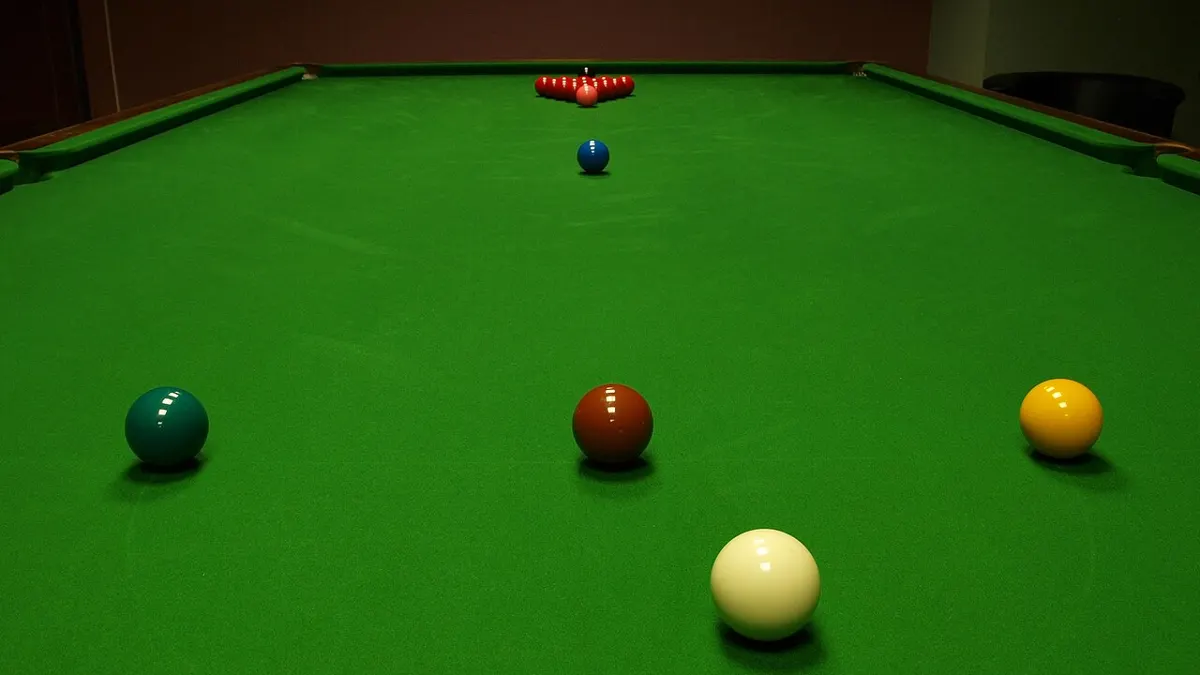
The short version
- Snooker matches are a race to a number of frames. A "best of 9" means first to 5. Every match has a winner, so the main market has two outcomes.
- Match length changes everything. A player who wins 60% of frames wins a best-of-7 about 71% of the time, but a best-of-35 about 89% of the time. Short formats help the underdog.
- Use frame probability to compare prices across formats. A price that's fair in a long match can be poor in a short one, and the other way round.
- Handicaps and total frames are where the shape of a match matters. A big favourite in a short match often wins by less than you'd guess.
- Centuries and maximums are fun but low-information markets for most of us. Know the rough maths before you pay a big margin for them.
- Live betting between frames and sessions can be useful, but scorelines swing prices less than you might think when the better player is behind early in a long match.
- Keep stakes small and records honest. Snooker has lots of matches. That's a lot of chances to slowly bleed money if you bet every one.
Why snooker suits a thinking punter
Most sports have messy scoring. In football, one deflected goal changes a match. In horse racing, there are a dozen runners and a draw, the ground and the pace to think about. Snooker is simpler in structure. Two players take turns at the table and each frame has a winner. String enough frames together and the better player usually comes through. That structure lets you put real numbers on things, which is exactly what you want when you're trying not to overpay.
It's also a sport Irish fans know well. Snooker has been on Irish television for decades, the big events fall at sociable times on Irish clocks because they're mostly played in the UK on the same time as us, and there's a long line of players from both sides of the border who've done well at the top level. That familiarity helps, but it can also tempt you to bet with your heart. We'll come back to that.
The calendar in plain words
The professional season runs most of the year. You don't need to know every event, just the shape of it:
- The World Championship is the biggest event, played in spring at the Crucible Theatre in Sheffield. The main draw has 32 players. The first round is best of 19 frames, the second round and quarter-finals are best of 25, the semi-finals are best of 33 and the final is best of 35, played over two days.
- The UK Championship and the Masters make up the rest of the "Triple Crown". The Masters is an invitational for the top players in the rankings, so every match is between strong players.
- Ranking events fill the rest of the season, many with short best-of-7 or best-of-9 matches in the early rounds and longer matches later on.
- Invitational and shorter-format events pop up too. Some use single-frame shootouts or very short matches, which behave almost like coin flips.
Because formats change from event to event and even from round to round, the first thing to check before any bet is the match length. It's printed on the bookie's market or on the event's draw. Don't assume.
The main snooker markets
Match winner
The simplest bet: who wins the match. There's no draw, so it's a two-way market. Prices usually show as decimal odds such as 1.40 and 2.88. If you're more used to fractions from the bookies' windows, 1.40 is 2/5 and 2.88 is roughly 15/8. Our decimal vs fractional odds guide covers the conversion.
Frame handicap
The favourite gives the underdog a start of a number of frames, usually with a half (like −1.5 or −2.5) so there's no tie. If you back the favourite at −2.5 in a best of 9, they need to win by three frames or more: 5–2, 5–1 or 5–0.
Total frames
Over or under a number of frames played in the match, such as over 7.5 in a best of 9. That bet wins if the match goes 5–3 or 5–4 either way.
Correct score
The exact final score. Big prices, lots of outcomes, and usually a fat margin built in. Fun in small doses.
Frame betting
Who wins the first frame, or a specific frame. Close to a coin flip between evenly matched players, with the margin eating into you every time.
Century breaks and highest break
Will there be a century break (100 or more in one visit) in the match? Over or under a number of centuries? Who makes the highest break? These depend heavily on the players' scoring styles and table conditions, which are hard to judge from the sofa.
Maximum break (147) specials
Will there be a 147 in a match or a tournament? Very popular, very swingy, and usually priced with a healthy margin for the bookie.
Outrights
Who wins the whole tournament. Often offered each-way, meaning half your stake goes on the win and half on the player reaching a certain stage, at a fraction of the odds. See our each-way guide for the mechanics, and our ante-post guide for betting well before the event.
Live (in-play) markets
Prices that update between frames and sometimes during them. Snooker's slow pace makes live betting more manageable than in fast sports, but the margins can still be wider than pre-match.
The single most important idea: frames add up
Think of each frame as a small contest. Say Player A, a strong player, wins 60% of frames against Player B. That's a real but modest edge in any one frame. Over a whole match, it compounds. The longer the match, the more often the better player comes through.
We worked this out with a simple model that treats each frame as independent with the same chance. Real snooker isn't quite that tidy (players have momentum, nerves and long sessions), but the model is a very good starting point. Here's the chance the stronger player wins the match:
| Frame win % | Best of 7 | Best of 9 | Best of 11 | Best of 19 | Best of 25 | Best of 33 | Best of 35 |
|---|---|---|---|---|---|---|---|
| 50% | 50.0% | 50.0% | 50.0% | 50.0% | 50.0% | 50.0% | 50.0% |
| 52% | 54.4% | 54.9% | 55.4% | 57.0% | 58.0% | 59.2% | 59.4% |
| 55% | 60.8% | 62.1% | 63.3% | 67.1% | 69.4% | 71.9% | 72.5% |
| 58% | 67.1% | 69.0% | 70.8% | 76.2% | 79.2% | 82.4% | 83.1% |
| 60% | 71.0% | 73.3% | 75.3% | 81.4% | 84.6% | 87.9% | 88.6% |
| 65% | 80.0% | 82.8% | 85.1% | 91.3% | 94.0% | 96.2% | 96.6% |
| 70% | 87.4% | 90.1% | 92.2% | 96.7% | 98.3% | 99.2% | 99.4% |
Read across the 60% row. The same player, with the same edge in each frame, goes from about 71% in a best of 7 to nearly 89% in a best of 35. That's why upsets happen far more often in the short early rounds of ranking events than in a World Championship final.
It also tells you something about prices. If you see a big name at 1.30 in a best of 7, ask whether they really win that format three times in four. They might in a best of 19. In a best of 7, they'd need to win around 64% of frames, which is a very big edge between two professionals.
Turning match odds into a frame probability
You can run the table backwards. Take a match price, remove the bookie's margin, and work out what frame-win chance that price implies for the format. Then you can ask: "If that's right, what should the price be in a different format?"
Here's what different match chances imply about frame strength:
| Match win chance | Implied frame % (best of 9) | Implied frame % (best of 19) | Implied frame % (best of 35) |
|---|---|---|---|
| 60% | 54.1% | 52.9% | 52.1% |
| 70% | 58.4% | 55.9% | 54.4% |
| 80% | 63.4% | 59.4% | 57.0% |
A worked example
Say a bookie prices a best-of-19 first-round match at 1.30 for the favourite and 3.75 for the underdog. Add up the implied chances (1 ÷ 1.30 plus 1 ÷ 3.75) and you get 103.59%. That extra 3.59% is the margin. Strip it out and the favourite's fair chance is about 74.3%.
In a best of 19, that implies the favourite wins roughly 57.3% of frames. Now imagine the same two players meet later in the season in a best of 7. With the same frame strength, the favourite only wins about 65.7% of the time, so a fair price would be nearer 1.52 than 1.30. In a best of 35, the same frame strength gives about 81%.
That's the habit worth building: think in frames, then convert to the format in front of you. It won't make every bet a winner, but it stops you paying a long-match price for a short-match coin flip.
Bookie margins on snooker
The margin is the bookie's built-in cut. You can measure it by adding the implied chances of every outcome. A few made-up two-way examples:
- 1.30 and 3.75 add up to about 103.6%, a margin of about 3.6%.
- 1.62 and 2.30 add up to about 105.2%, a margin of about 5.2%.
That gap matters. On a 5% margin, you're paying roughly five cents on every euro staked before skill comes into it. Comparing prices across bookies, and skipping markets with fat margins, is the cheapest edge you'll ever find. Our odds calculator works margins out for you.
As a rule of thumb, the main match market on big events has the tightest margins. Correct scores, specials and smaller events tend to be wider.
Frame handicaps: how often does the favourite cover?
Handicaps let you back a strong favourite at a bigger price, or take frames with the underdog. Our model gives the chance the favourite wins by more than the handicap:
Best of 9 (first to 5)
| Favourite frame % | −1.5 | −2.5 | −3.5 | −4.5 (5–0) |
|---|---|---|---|---|
| 55% | 47.7% | 31.6% | 16.4% | 5.0% |
| 60% | 59.4% | 42.0% | 23.3% | 7.8% |
| 65% | 70.6% | 53.2% | 31.9% | 11.6% |
Best of 19 (first to 10)
| Favourite frame % | −1.5 | −2.5 | −3.5 | −4.5 |
|---|---|---|---|---|
| 55% | 57.8% | 47.4% | 36.6% | 26.1% |
| 60% | 73.7% | 64.1% | 52.7% | 40.3% |
| 65% | 86.1% | 78.7% | 68.8% | 56.4% |
Two things jump out. First, in a short match even a clear favourite struggles to cover big handicaps. A 60% frame player covers −2.5 in a best of 9 only about 42% of the time, so you'd want a price better than about 2.38 just to break even. Second, longer matches give the favourite room to pull away, so handicaps there behave more like you'd expect.
The flip side: backing a decent underdog at +2.5 in a short match can be a sensible bet when the price is right, because "lose by two or fewer, or win" happens more than people think.
Total frames: will it go the distance?
Total frames depend on how close the match is. Close matches run long; one-sided ones finish early. From our model:
| Favourite frame % | Best of 9: over 6.5 | Best of 9: over 7.5 | Best of 19: over 16.5 |
|---|---|---|---|
| 50% | 78.1% | 54.7% | 54.6% |
| 55% | 76.7% | 53.1% | 51.0% |
| 60% | 72.6% | 48.4% | 41.5% |
| 65% | 65.9% | 41.2% | 28.9% |
| 70% | 56.9% | 32.4% | 16.8% |
So between two evenly matched players, over 7.5 in a best of 9 is a little better than a coin flip. As the gap between the players grows, the under becomes more likely. If you've a view that a match will be one-sided, total frames is often a cleaner way to say so than a big handicap.
A word of caution: real matches have more "streaks" than our model, because a player in form can rattle off several frames in a row and a struggling player can fade. That tends to make lopsided scores a bit more common than the model suggests. Treat the table as a guide, not gospel.
Correct score: where the value hides and where it doesn't
Here's how a best of 9 between a 60% frame player and a 40% one shakes out in our model:
| Score (fav first) | Chance | Fair decimal price |
|---|---|---|
| 5–0 | 7.8% | 12.8 |
| 5–1 | 15.6% | 6.4 |
| 5–2 | 18.7% | 5.3 |
| 5–3 | 17.4% | 5.7 |
| 5–4 | 13.9% | 7.2 |
| 4–5 | 9.3% | 10.8 |
| 3–5 | 7.7% | 13.0 |
| 2–5 | 5.5% | 18.2 |
| 1–5 | 3.1% | 32.3 |
| 0–5 | 1.0% | 100 |
The most likely single score is 5–2, and even that happens less than one time in five. Correct-score markets often carry margins of 15% or more, so the "fair" prices above are usually trimmed hard. If a bookie offers 5–2 at 4.50 when our model says about 5.3 is fair, that's poor value however confident you feel.
In a best of 19 between the same two players, the most likely scores are 10–5 and 10–6 at about 12.4% each, then 10–7 at about 11.3% and 10–4 at about 11.1%. The longer the match, the more spread out the scores, and the harder correct score becomes.
For more on how these markets are priced in other sports, see our correct score tips.
Centuries and 147s: understand the maths before you pay for the thrill
Century breaks
The number of centuries in a match depends on the players, the match length and the table. A handy way to think about it is to pick an average number of centuries you'd expect, then look at how the chances spread around it. Using a standard counting model (a Poisson distribution, which suits rare events that happen independently):
| Average centuries expected | At least 1 | Over 1.5 | Over 2.5 | Over 3.5 |
|---|---|---|---|---|
| 1.5 | 77.7% | 44.2% | 19.1% | 6.6% |
| 2.5 | 91.8% | 71.3% | 45.6% | 24.2% |
| 3.5 | 97.0% | 86.4% | 67.9% | 46.3% |
The averages here are made up for illustration. The point is the shape: a small change in your expected average makes a big difference to the over/under. Unless you've a solid reason to think your average is better than the bookie's, these markets are mostly entertainment.
Maximum breaks
A 147 is rare in any one frame. If you assume, purely as an example, one maximum per 1,000 frames and a tournament of 350 frames, the chance of at least one 147 is about 29.5%. Change that to one per 1,500 frames and it drops to about 20.8%. A smaller event of 150 frames at one per 1,000 gives about 13.9%. One per 3,000 frames over 350 frames gives about 11.0%.
Those swings show how much the answer depends on an assumption nobody knows precisely. If a "147 in the tournament: yes" price looks tempting, ask what rate it implies and whether that rate makes sense for the field and format. When in doubt, it's a fun bet for a fiver, not a plan.
Outrights and each-way betting
Backing a player to win a whole tournament means they must come through every round. In a 32-player draw, that's five matches. Even a player who's a solid favourite in each round can have a modest chance overall, because the chances multiply. If a player had a 75% chance of winning each of five matches (a made-up figure), their chance of winning all five is about 24%, or a fair price of about 4.2.
Each-way bets split your stake in two. A made-up example: a €5 each-way bet (€10 total) on a player at 33/1, with terms of 1/4 the odds for reaching the final. If they win, the win part returns €170 and the place part returns €46.25, so you're €206.25 up after the €10 stake. If they lose the final, only the place part pays, and you're €36.25 up. If they go out earlier, you lose €10. Each-way terms vary by bookie and event, so always check them on the bet slip.
Outright prices tie your money up for days or weeks. With crypto, the coin's value can move a lot over that time, which is one reason many people use a stablecoin for longer-term bets. More on that below.
Live betting on snooker
Snooker's slow pace makes live betting feel calmer than in football. Prices update between frames, and sometimes after each visit to the table. Here's how our model sees a best of 19 (first to 10) from different scores, for a 60% frame player and for two evenly matched players:
| Score (A first) | A wins if A is a 60% frame player | A wins if evenly matched |
|---|---|---|
| 0–0 | 81.4% | 50.0% |
| 2–6 | 29.6% | 11.3% |
| 4–4 | 75.3% | 50.0% |
| 6–2 | 97.1% | 88.7% |
| 7–9 | 21.6% | 12.5% |
| 9–7 | 93.6% | 87.5% |
Look at 2–6. If the better player falls four frames behind early, they're still alive at around 30% in our model. Live markets sometimes overreact to a bad first session, especially in long matches. But be honest with yourself: maybe the player is genuinely off form that day, in which case the 60% figure is no longer right. Live betting rewards a cool head, not stubbornness.
Another example: a best of 25 (first to 13) where the stronger player trails 3–5 after the first session. If they're truly a 60% frame player, they still win about 64% of the time. If they're really only a 55% player, it's about 47%. The difference between those two beliefs is the whole bet, which is why your pre-match view needs to be sound before you act on a score.
Practical live tips
- Know the format before the match starts. A 2–6 deficit means very different things in a best of 11 and a best of 25.
- Watch, don't just read the score. Missed easy pots and safety errors tell you more than one lost frame on a fluke.
- Mind the delay. TV and streaming pictures can run behind the real action, and bookies may suspend markets or reject bets during a frame.
- Set a limit before the match. Live betting can turn one bet into ten. Decide your total for the match beforehand.
Our cash out guide explains why cashing out is usually a slightly worse deal than letting a bet ride or hedging yourself.
Deciders: how often does it go all the way?
A decider is the last possible frame, when the score is level at 3–3 in a best of 7, 4–4 in a best of 9 or 9–9 in a best of 19. They're great to watch and they matter for total-frames and correct-score bets. Our model gives these chances of reaching a decider:
| Match-up | Best of 7 | Best of 9 | Best of 19 |
|---|---|---|---|
| Evenly matched (50% frames) | 31.2% | 27.3% | 18.5% |
| Favourite wins 60% of frames | 27.6% | 23.2% | 12.8% |
So even between two equal players, fewer than one short match in three goes to a decider, and fewer than one in five long ones do. If a "match to go to a decider" special is priced as though it's a near coin flip, it usually isn't. Once you're in a decider, the frame is close to a coin flip between good players, with a small nudge to whoever is stronger, so the price on each player should usually be near evens.
18+. Crypto deposits. Cloudbet is licensed in Curaçao and is NOT licensed by the GRAI. Irish gambling law changed in 2026: only GRAI-licensed operators may lawfully take bets from Irish customers. Ad: we may earn a commission. Bet only what you can afford to lose.
Does the first frame matter?
People love to say the first frame "sets the tone". In pure numbers, it shifts things but doesn't decide them. In a best of 9 where Player A wins 60% of frames, our model gives A about 82.6% to win the match after taking the first frame, and still about 59.4% after losing it. Even 0–3 down, A is alive at about 23.3%.
That's useful in two ways. First, first-frame bets are close to coin flips with a margin attached, so they're rarely where the value is. Second, if the market treats one lost frame as a disaster for a clearly stronger player, the live price on that player might be worth a look. Just make sure what you saw in that frame doesn't change your opinion of how well they're playing.
Snooker accumulators: why short favourites add up to a long shot
It's tempting to string together a few favourites from the early rounds. Here's the honest maths with made-up numbers. Say four favourites each have a real 70% chance of winning and each is priced at 1.36. As single bets, each one returns about 95.2 cents per euro over time, a loss of about 4.8%. Put all four in an accumulator and it pays 3.42 times your stake, but all four only win together about 24.0% of the time. The expected loss on the accumulator jumps to about 17.9%, because the margin on each leg multiplies.
And remember the formats. Four favourites in best-of-7 matches are far less safe than four in best-of-19 matches, even at similar-looking prices. If you enjoy accumulators, keep them small and treat them as a bit of fun rather than your main bets.
What actually moves a snooker match
Numbers give you a structure. These are the things that bend it:
- Form over the last few events. Snooker players go through hot and cold spells. A player's long-term reputation can lag behind how they're actually potting.
- Long-format experience. Some players are at their best in long matches with sessions spread over two days. Others prefer quick formats.
- Scoring power vs safety. Heavy break-builders tend to produce more centuries and quicker frames. Tactical players drag frames out, which affects live betting and timing.
- Travel and schedule. Players with a late finish the night before, or a long trip, can be a little flat.
- Table conditions. Some tables play tight with heavy cushions; others run fast. Commentators often mention it, and it affects how many big breaks you'll see.
- Head-to-head records. Interesting, but often based on few matches across many years. Don't let a small sample override a clear difference in current form.
- Motivation. Ranking points, a place in a later event or a home crowd can all matter at the margins.
Times: good news for Irish punters
Most professional snooker is played in the UK, which shares Ireland's time zone all year. That means sessions usually fall in the afternoon and evening on Irish clocks, so you can watch live without setting an alarm. Events in other parts of the world can run overnight for us, which is worth remembering if you like to bet live: a tired 2 a.m. bet is rarely your best one. Check the session times on the event's schedule and convert if needed.
A sensible snooker betting routine
- Check the format. Write down the match length before you look at a price.
- Form your own frame view. Based on recent form, how often do you think each player wins a frame against the other?
- Convert to a match chance using the table above.
- Remove the margin from the bookie's price and compare.
- Only bet when your number is clearly better than the fair price, not when it's a tiny bit better.
- Pick the market that fits your view. Confident it'll be one-sided? Consider the handicap or the under. Think it'll be close? The underdog with a start or the over.
- Stake a small, fixed share of your betting money.
- Record everything. Format, price, stake, your estimated chance, result.
Our value betting guide goes deeper on comparing your number with the bookie's.
Staking: what a season of small bets looks like
We simulated 20,000 seasons of 300 bets at €10 each, all at 1.91 (roughly evens with a margin), starting with €500. Here's what happened at three different win rates:
| Win rate | Average finish | Seasons ending ahead | Bottom 10% finish | Top 10% finish | Typical worst drop from a high |
|---|---|---|---|---|---|
| 50.0% (no edge) | €363.50 | 18.9% | €154.90 or less | €575.10 or more | €251.70 |
| 52.36% (break-even) | €502.10 | 48.2% | €288.60 or less | €708.80 or more | €180.60 |
| 55.0% (a real edge) | €652.80 | 81.1% | €441.40 or less | €861.60 or more | €134.20 |
Even with a genuine edge, nearly one season in five still ended down. Without one, the margin quietly takes more than a quarter of the money over 300 bets. And even break-even punters saw a typical drop of about €180 from their high point at some stage. That's normal variance, not proof you're doing it wrong, but it's also why stakes should be small.
How big should a stake be?
The Kelly formula gives a theoretical "maximum sensible" stake based on your edge. At a price of 1.91, it suggests 3.45% of your bank if your real chance is 54%, 7.65% at 56% and 11.85% at 58%. Most experienced bettors use a quarter or half of that, because nobody's estimates are that precise. If you're not sure you have an edge, 1% to 2% of your betting money per bet is plenty. Our bankroll management guide has more.
A worked evening: Galway, a best of 9 and a fiver budget
Made-up example. Aoife in Galway has set herself €30 for a night of snooker. The early-round match on TV is a best of 9 between Player A, in good form, and Player B, who's been patchy.
- Her view: A wins about 58% of frames against B right now.
- Her match number: the table says about 69% in a best of 9, a fair price of about 1.45.
- The bookie's prices: A at 1.36, B at 3.20. Those add up to about 104.8%, and A's price is shorter than her fair number. She skips it.
- The handicap: A −1.5 at 1.95. At 58% frames, our model gives A about 54.7% to cover. Break-even at 1.95 is about 51.3%. That's a small edge, so she stakes €5.
- Mid-match: B leads 2–1. Her phone pings with a live price on A that's drifted. She sticks to her plan and doesn't double up, because her budget is set and one frame doesn't change her view.
- Result: A wins 5–3. She's up €4.75 on the night and still has €25 of her budget untouched, which she leaves for another day.
The point isn't the result. It's the routine: format, frame view, convert, compare, small stake, no chasing.
Betting on snooker with crypto
If you use a crypto sportsbook, a few practical points:
- Coin price risk. If you bet in Bitcoin and the price falls while your outright runs for two weeks, your winnings are worth less in euro. A stablecoin like USDT, which tracks the US dollar, takes most of that out of the picture, though it then moves with the euro–dollar rate. See how to bet with USDT in Ireland.
- Network fees. Moving coins costs a fee that depends on the network. Small, frequent deposits can lose a surprising share to fees.
- Withdrawals. Cloudbet says withdrawals are typically processed within about 24 hours, with any fee shown before you confirm. Identity checks can apply once you've moved roughly US$2,200 in total, based on what we read when we checked. Details can change, so read the current terms. Our Cloudbet KYC page explains more.
- Coverage. Before you deposit anywhere, check that its snooker section actually lists the events and markets you want. Coverage of smaller events varies a lot between bookies.
- Send to the right network. Crypto sent on the wrong network or to the wrong address is usually gone for good. Double-check every time.
New to buying coins? Our guide on buying crypto for betting in Ireland walks you through it.
Common mistakes on snooker
- Ignoring the format. Backing a big name at a short price in a best of 7 as if it were a best of 19.
- Betting with your heart. Backing a favourite Irish player in every match because you like them. Enjoy cheering. Bet with your head.
- Chasing correct scores. Big prices feel exciting, but the margins on these markets are often steep.
- Accumulating every favourite. Five short-priced favourites in short-format matches multiply into a long shot. Each leg's margin multiplies too. See what an accumulator really costs.
- Overreacting live. Dumping a long-match position after one bad session, or doubling down out of frustration.
- Trusting small head-to-head samples. A 4–1 record over eight years says little about this week.
- Betting every match on the schedule. There are lots. Most won't offer you value.
Is it legal to bet on snooker from Ireland?
Betting is legal for adults in Ireland. Under the Gambling Regulation Act 2024, the GRAI began accepting licence applications in February 2026, and the first remote betting licences started on 1 July 2026. Cloudbet holds a Curaçao licence and is not licensed by the GRAI. That means Irish complaint routes and protections don't apply if something goes wrong, and it's your decision whether that's a risk you're comfortable with. Our Irish betting law guide has the detail.
On tax, betting winnings for individual punters in Ireland are generally not taxed, but if you use crypto, gains on the coins themselves may be subject to capital gains tax. Check with Revenue or a tax adviser for your situation. Our page on crypto betting and tax in Ireland covers the basics.
Snooker betting glossary
- Best of 9 / best of 19: the maximum number of frames. The winner needs just over half (5 or 10).
- Frame: one game of snooker, from the break-off until all balls are potted or a player concedes.
- Session: a block of frames in a longer match, with a break between.
- Frame handicap: a head start in frames given to the underdog.
- Century: a break of 100 points or more in one visit.
- 147: the maximum break, potting all 15 reds with blacks and then all the colours.
- Decider: the final frame when the score is level, like 4–4 in a best of 9.
- Margin: the bookie's built-in cut, shown when implied chances add up to more than 100%.
- Each-way: a bet split into a win part and a place part.
- Outright: a bet on who wins the whole tournament.
Quick checklist before every snooker bet
- What's the format, and is it the same in every round?
- What frame-win chance do I honestly believe?
- What match chance does that give for this format?
- What's the fair price after removing the margin?
- Is my number clearly better, not just slightly?
- Does a handicap or total frames fit my view better?
- Is the stake a small share of my betting money?
- Have I written it down?
- Am I still within tonight's budget?
Questions to ask before a big tournament
- How does the draw fall? A player in a tough quarter of the draw can be a worse outright bet than a slightly weaker player in an easier one.
- How long are the early rounds? Short early rounds mean more upsets, which hurts favourites in the outright market.
- Who has played recently? Players coming straight from another event may be sharp, or tired.
- What are the each-way terms? The fraction of the odds and the number of places paid can make a big difference to whether an each-way bet is worth it.
- How long will my money be tied up? An outright on a two-week event is two weeks of coin price risk if you bet in a volatile coin.
Keep it a game
Snooker matches can last hours, and with live betting available from the first frame to the last, it's easy to keep clicking. Set a budget before the match, never chase losses, and take breaks between sessions just as the players do. Most bookies let you set deposit limits, time-outs and self-exclusion. If betting is causing you stress or money worries, talk to someone: Gambling Care on 1800 936 725 is free and confidential, or see our responsible gambling page for more support.
Other sports guides that work the same way: darts, where sets and legs behave a lot like frames, and tennis, where games and sets add up in a similar way. Our in-play betting tips cover live betting across sports.
My take
Snooker rewards patience more than most sports. The structure is simple, the maths is honest, and once you start thinking in frames rather than in names, a lot of prices stop looking as obvious as they did. Short formats are where favourites are overrated and long formats are where they're usually right. Keep the margins in mind, steer away from the fat ones, use small stakes, and treat 147 specials as a bit of fun. Do that and snooker can be one of the more enjoyable and sensible ways to have a bet from Ireland.
Questions players ask
Is snooker easier to bet on than football?
The structure is simpler, because there are no draws and every match is a race to a set number of frames, so the maths is cleaner. That doesn't make it easier to win, since bookies know the maths too. Its main advantage is that you can reason about formats and frame strength in a way that's hard in football.
How do snooker bets work?
Most snooker bets are on who wins a match, which is a race to a set number of frames (a best of 9 is first to 5). There are no draws. You can also bet on frame handicaps, total frames, correct score, centuries, 147s, the tournament winner and live markets.
Why does the match length matter in snooker betting?
Because a small edge per frame adds up over more frames. In our model, a player who wins 60% of frames wins a best of 7 about 71% of the time but a best of 35 about 89% of the time. Short formats give underdogs a much better chance.
What is a frame handicap in snooker?
It gives the underdog a head start in frames. If you back a favourite at -1.5 in a best of 9, they must win by two frames or more, such as 5-3 or better.
Are 147 bets worth it?
They're mostly for fun. The chance of a maximum depends on a rate per frame that nobody knows precisely, and these specials often carry wide margins. In our example, one 147 per 1,000 frames over 350 frames gives about a 29.5% chance of at least one.
Is it legal to bet on snooker from Ireland?
Yes, for adults. The GRAI began licensing online betting in 2026. Offshore crypto sportsbooks like Cloudbet, licensed in Curaçao, are not GRAI-licensed, so Irish complaint routes don't apply.
What time is snooker on in Ireland?
Most professional events are played in the UK, which shares Ireland's time zone, so sessions usually fall in the afternoon and evening Irish time. Check each event's schedule, as overseas events can run overnight.
18+. Crypto deposits. Cloudbet is licensed in Curaçao and is NOT licensed by the GRAI. Irish gambling law changed in 2026: only GRAI-licensed operators may lawfully take bets from Irish customers. Ad: we may earn a commission. Bet only what you can afford to lose.
If betting is costing you more than money, free and confidential help is there 24 hours a day, 365 days a year: the Problem Gambling Helpline run by Dunlewey Addiction Services for Gambling Care, on 1800 936 725 (from Northern Ireland: 08000 886 725). Source: grai.ie.